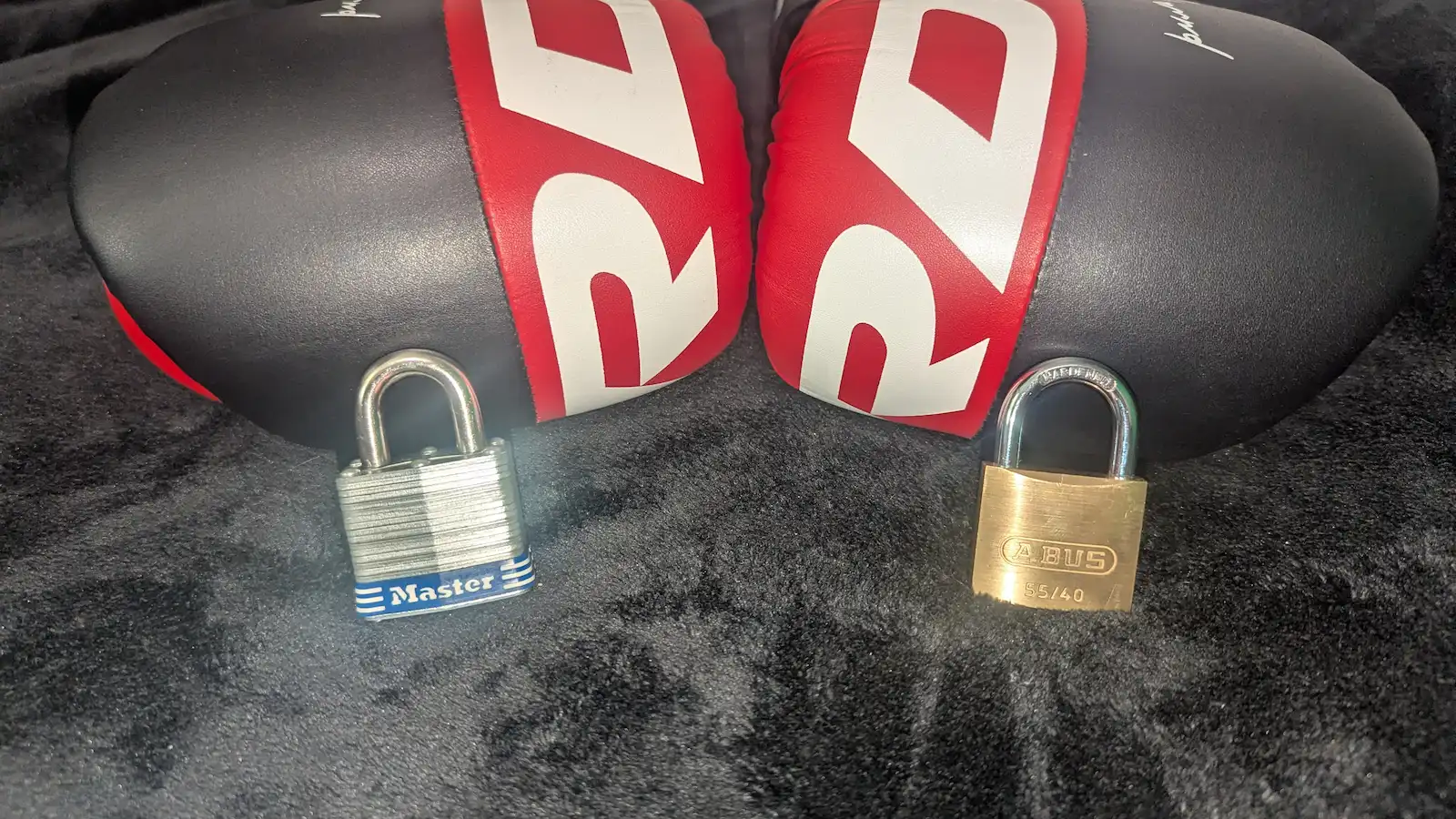
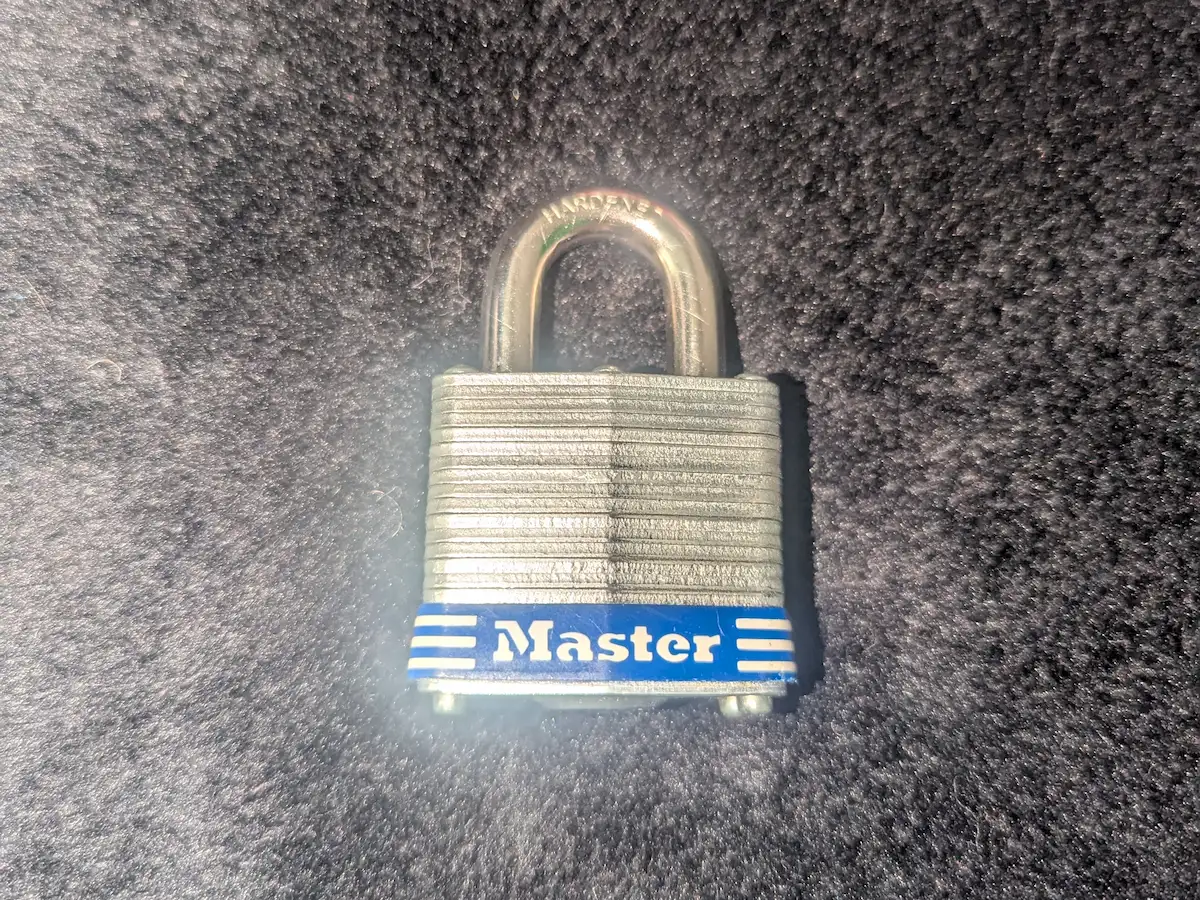
Decorative. Do not trust. A genuinely tough body wrapped around a cylinder that opens in under a second. Master Lock sells this one for construction sites and industrial gates, and the metalwork earns that — but the lock part of it does not.
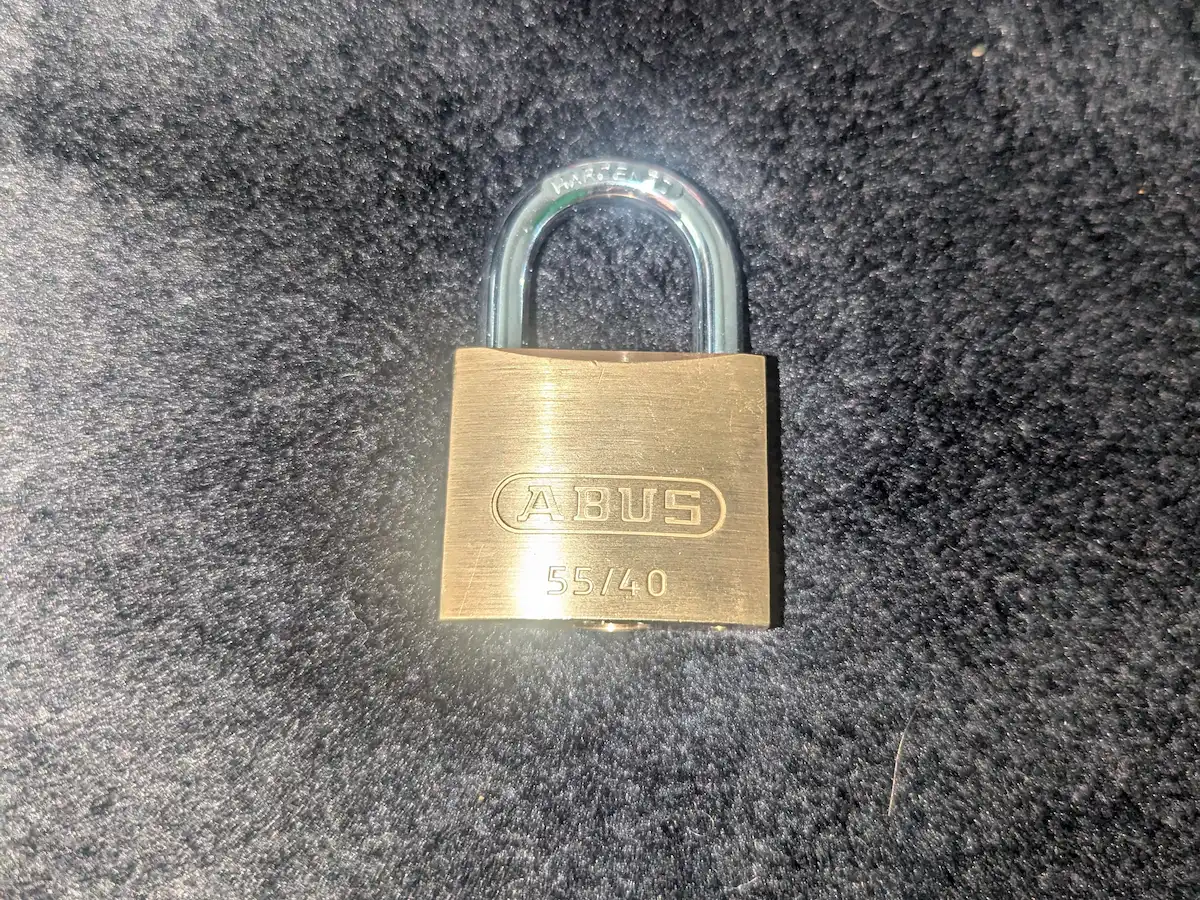
Solid for the money. Recommended. Smaller shackle, softer body, and a cylinder that will actually make somebody work. For sheds, lockers and casual everyday use it's the better lock by a distance — for reasons that have nothing to do with how it's built.
How to read this comparison
Sample sizes are stated plainly. We own three ABUS 55/40s and one Master Lock No. 3.
TestedPicked by hand, by us. Three ABUS units, one Master Lock.
DocumentedPublished specification. Linked at the bottom.
ManufacturerThe maker's own claim. A claim, not a fact.
CommunityLocksport consensus. Informed opinion.
Before anyone gets picked, look at what you're actually holding. Both measured from published specification: Documented
Read that and the surprise is obvious: the Master Lock has the thicker shackle. Nine thirty-seconds against a quarter inch — a full millimetre more steel in the part that gets cut. It also has dual ball-bearing locking for pry resistance, a reinforced laminated body, and Master Lock sells it into construction sites, industrial gates and tool cribs. Manufacturer
On every measure of metal, the No. 3 is the better-built object.
A correction to our own page
An earlier version of this comparison described the Master Lock's shackle as "not particularly thick" and scored it down for it. That was wrong. At 9/32 inch it is thicker than the ABUS 55/40 we recommend instead, and we had it the wrong way round.
The verdict doesn't change — but the reasoning does, and the corrected version is a stronger argument. The No. 3 isn't a bad lock because it's flimsy. It's a bad lock because Master Lock put a four-pin W1 cylinder inside a body that deserved better. It is armour around nothing.
Same pattern as the 140D, incidentally: decent hardware, economised cylinder. Master Lock is very good at making the part you can see.
You've seen this lock your whole life. School lockers, garden sheds, storage units, gym bags. It is basically America's default padlock.
Let's not bury the lede. The Master Lock 3 is one of the most-picked locks in the locksport community — and not as a compliment. It's a rite of passage. Beginners learn on it because it's so easy that it builds confidence fast. That is not great news if you're relying on one.
Picking it with a rake is almost embarrassing. Insert a tension wrench, apply light tension, run a rake through the keyway a couple of times and it just opens, like turning a key. Under a second, in most cases, once you have any feel for it at all. It offers almost no resistance, almost no feedback and no real challenge. Tested
And it isn't just raking. Single pin picking, jigglers, even a bobby pin with enough patience — the No. 3 doesn't put up much of a fight no matter what you throw at it.
The reason is the cylinder. Four pins, all standard drivers, no security pins to speak of — so there is nothing to produce a false set, nothing to detect, nothing to slow you down. Community The tolerances are loose enough that almost any upward pressure on the pins will get you a set.
Master Lock's own listing says the four-pin W1 cylinder "helps prevent picking." Manufacturer It is the lock the hobby uses to teach people that picking is possible.
What about the weather?
Here the honest answer is more mixed than our earlier version allowed. Master Lock markets laminated steel specifically for outdoor and industrial use, and the powder-coated variants are built for it. Manufacturer But laminated construction stacks steel plates, and water finds the seams between them — which is why the community view of laminated padlocks in genuinely wet conditions is less generous than the catalogue. Community Solid brass has no seams to rust in.
"It's built like a tank, so it must be secure."
The body genuinely is tough — thicker shackle than the ABUS, ball-bearing locking, reinforced laminate. None of that matters when the cylinder opens in under a second with a rake. An attacker does not need to defeat the strongest part of a lock; they need to defeat the weakest, and here the weakest is the bit you can't see.
VerdictThe tank has an unlocked hatch.
Verdict — Master Lock No. 3
It looks like a lock. It works like a lock with a key. With anything else it's basically decorative. Don't rely on this for anything you actually care about.
The ABUS 55/40 is a different story. It's a small lock — the 40 is the body width in millimetres, not the shackle — but it punches above its weight in the way that matters.
The first thing you notice picking it is that it actually has security pins. Spools. Community When you're single pin picking and you think you've set a pin, you may be hitting a false set on a spool — the plug rotates slightly, feels like progress, then drops back.
A note on that, since ABUS's own English literature says "mushroom counter pins": that's a translation of the German Pilzkopfstifte, which their marketing uses as a blanket term for anti-pick pins across the entire catalogue — it appears on their Euro cylinders too. Teardowns say spools. We've gone with the teardowns.
What tripped us up on our units was a chamber sitting well off its neighbours — a short key pin from a high, shallow cut, needing noticeably more lift than the pins either side of it. Tested Worth being clear that this is a property of the bitting, not of the model: any two keyed-different locks have different cuts and therefore different binding orders. It isn't an ABUS quirk, it's what a key is.
Which is a quiet disaster when you're learning, because you calibrate against the pins you've already set. Four chambers set at roughly the same height, the fifth wants half again as much, and your hands report a finished lock. It isn't. You've under-set one pin and you're now hunting for a fault somewhere else entirely. Once you know to look for it the lock becomes manageable — but it is a genuine hurdle and it adds real time.
A correction to our own page
An earlier version of this page described that chamber as "a very high cut biting — meaning the key cut at that position is deep, so the corresponding pin sits low." That sentence contradicts itself: a high cut is a shallow cut, which gives a short key pin needing more lift, not a deep one. Corrected above.
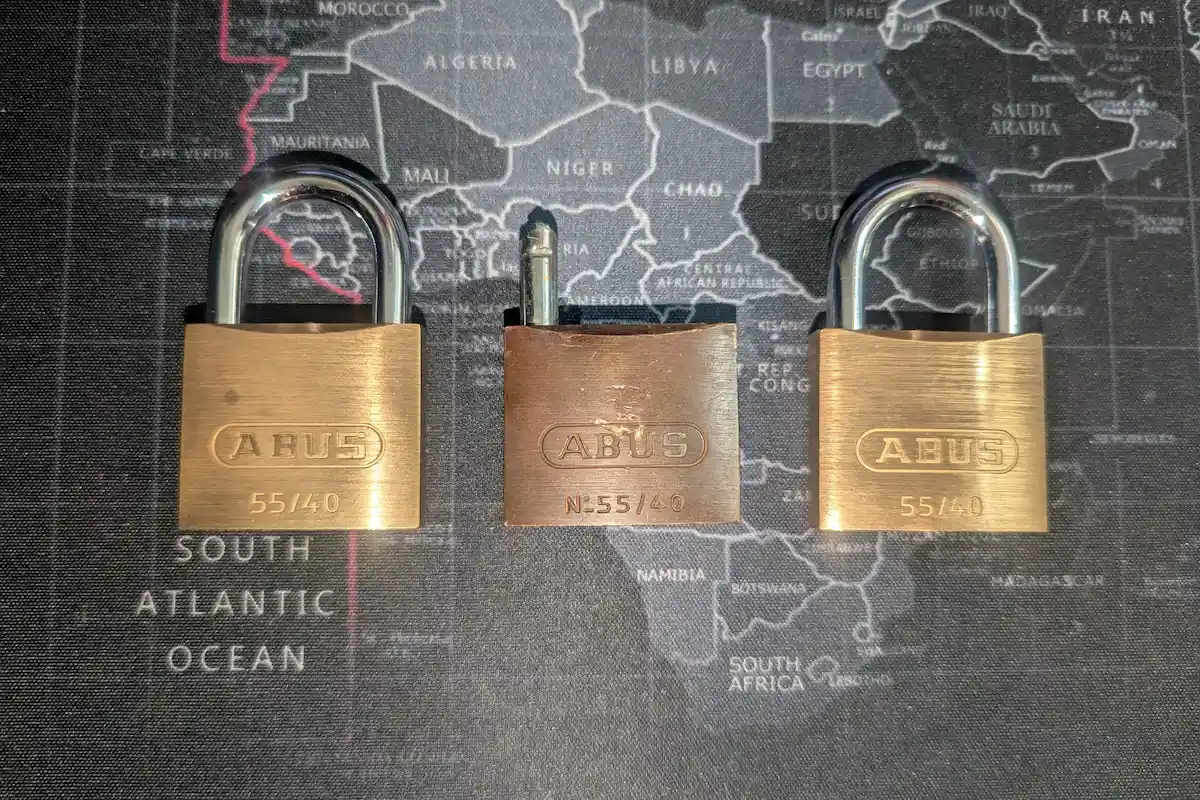
Also worth knowing: the outlier sits in a different position on each of our two units, and our third and oldest doesn't present it at all. Full detail in the standalone review — it's the reason we don't publish a single pick time for this lock.
Physically the ABUS feels more solid in the hand despite the thinner shackle — more weight for its size, tighter tolerances, a better keyway. It is not a high-security lock by any stretch. Experienced pickers open it, and there is video of it being comb picked and shimmed. But those methods need more knowledge and more specific tools than the average opportunistic thief turns up with.
Verdict — ABUS 55/40
A legitimately decent lock for the money. Not unbeatable, but it actually makes someone work for it. Recommended for sheds, lockers and casual everyday use.
A correction to our own page
An earlier version of this comparison stated that both locks were "tested across 4 copies each." That was not accurate and we've replaced it with the real figures: three ABUS 55/40s and one Master Lock No. 3, all owned and picked by hand.
It matters more here than almost anywhere, because unit-to-unit variation is a finding on this very page — our three ABUS units differ from each other. Claiming a sample we didn't have would have undercut the one thing this comparison genuinely knows.
Our three ABUS units. They do not all pick the same.
Not really. These two cost similar money but they're not in the same league — and the striking thing, having measured both, is that the Master Lock loses while holding the better hardware. Thicker shackle, ball-bearing locking, a body sold for industrial use. It loses on four pins and no spools.
If you currently have a Master Lock 3 on anything you actually care about — your shed, your bike, your storage unit — go and swap it out. Today.
The ABUS costs a few dollars more and will actually slow someone down. Neither of these is going to stop a determined, experienced picker. But a lock's job isn't to be unpickable — it's to be harder than the next target. The ABUS does that job. The Master Lock 3 doesn't.
And if you want the thing that matters more than either choice: on a shed or a gate, the hasp and its screws are usually weaker than whichever lock you hang on them. That argument is in the ABUS review, and the door version of it is in the frame guide.
The short version
The Master Lock No. 3 is a good body around a bad cylinder. The ABUS 55/40 is an average body around a decent one. Only one of those is a lock.