Storage unit theft is one of those crimes that feels invisible until it happens to you. No broken window, no kicked-in door — just a cut padlock and a cleaned-out unit.
Most facilities hand you the keys and tell you to bring your own lock. Most people grab whatever's cheapest at the hardware store. That's the mistake, and the gap between a lock that resists bolt cutters and one that doesn't is usually fifteen to thirty dollars.
How to read this guide
We do not own these locks. Recommendations are built from specification, mechanism and consensus, and tagged accordingly.
TestedPhysically in hand. Nothing on this page carries this tag.
DocumentedPublished specification or primary source.
ManufacturerThe maker's own claim. A claim, not a fact.
CommunityLocksmith and locksport consensus. Informed opinion.
Most security advice has to hedge because the threat could be anything. Storage units are the exception. The attack is bolt cutters, with angle grinders on higher-value targets, and almost nothing else. Community
That narrows the buying decision to three things:
- Shackle protection above all. Either a shrouded body, a disc design that leaves almost no shackle exposed, or a shackle hard and thick enough to stop 36-inch cutters. As we argue throughout the site, cut resistance is a matter of geometry before hardness — jaws that can't close on a shackle can't cut it, whatever it's made of.
- Weather. Storage corridors are frequently open-air. Your lock sits through rain, freeze-thaw and humidity all year. Corrosion-resistant materials and a sealed or covered keyway aren't luxuries here.
- Pick resistance barely matters. It's the thing every lock is marketed on and the thing least relevant to this specific door. A five-pin cylinder is fine. Spend the money on the body.
Check the facility's rules before you buy
Worth doing first, because it can decide the whole purchase. Many facilities require a disc-style lock, because their latch is built to accept one and to shield it — and some will refuse a standard padlock outright. Others sell an approved lock at the desk. Five minutes on the phone before ordering saves a return.
The lock is probably not the weakest part
This is the argument we make about door frames and about shed hasps, and it applies here too. A roll-up door's latch, the hasp welded to it, and the door's own bottom rail are all part of the system, and none of them are things you chose. A hundred-dollar lock on a latch that can be levered off is a hundred dollars spent on the wrong component.
Look at what your lock actually attaches to before you decide how much lock to buy. If the hasp is thin or the fixings are exposed, tell the facility — it's their hardware, and it's their problem to fix.
Anything with a thin, exposed laminated or brass shackle. Any combination lock from a checkout aisle. Anything marketed as "luggage" or "locker" grade.
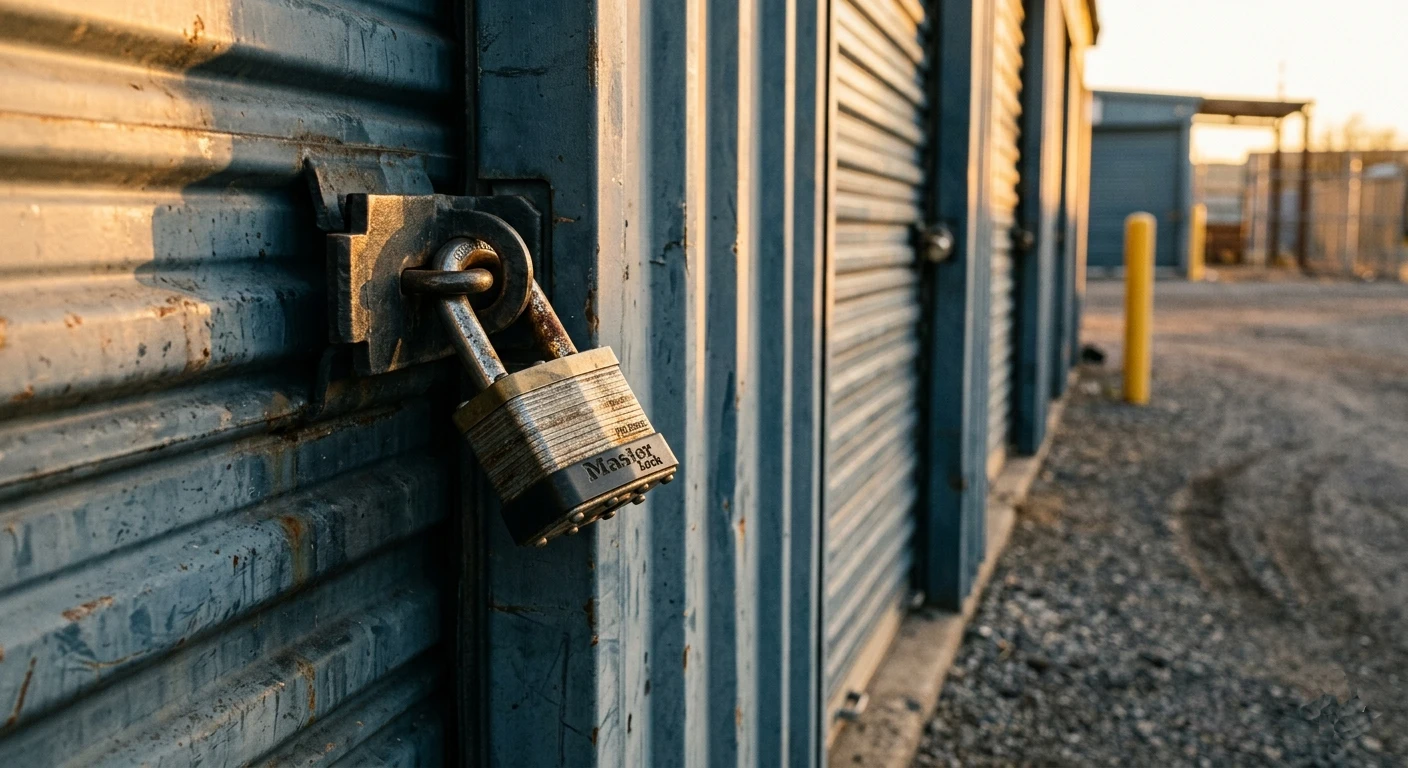
Master Lock No. 1, No. 3 and No. 5 are the specific offenders, because they're the ones people actually buy. All three can be cut in seconds with basic bolt cutters, and laminated padlocks of this type are the classic target for shimming — a strip cut from a drinks can, worked down the shackle, retracts the latch without any key at all. Community They have no business on a storage unit door.
Worth noting what the No. 3 actually is, since we've measured it: a genuinely tough laminated body with a 9/32″ shackle — thicker than an ABUS 55/40's — wrapped around a four-pin cylinder that opens to a rake in about a second. Good metal, wrong lock.
"It's disc-shaped, so it's a disc lock."
Be careful with no-name disc padlocks on marketplaces. The shape alone isn't magic. Cheap versions use soft steel that a grinder goes through quickly, the housings are pressed or screwed rather than welded so the halves can be split, and the cylinders can be crude enough to yield to a tension wrench and improvised pick. The shape buys time; material quality and construction decide how much. Community
VerdictJudge a disc lock on what's inside the disc, and on how the halves are joined.
Why nobody can tell you how often this happens
Every page on this subject, including the previous version of this one, quotes a break-in figure attributed to unnamed industry estimates. We went looking for the primary source and found something more useful than the number: a structural reason the number doesn't exist.
The FBI's Uniform Crime Reporting handbook contains what's known as the "hotel rule." Where a number of dwelling units under a single manager are burglarised, and the offences are most likely to be reported to police by that manager rather than by the individual tenants, the whole event is scored as one offence. Documented
As a retired police officer put it in a self-storage industry interview: if a burglar hits twenty units at one location and the manager calls the police, the number of burglaries recorded is one.
What that means for you
Storage unit burglary is systematically undercounted in the only national dataset that exists — not through anyone's dishonesty, but because the reporting rule was written for hotels and self-storage inherited it. Any confident national figure you read is either an extrapolation or an invention.
The one properly attributed figure we could find is old but real: the 2013 Self-Storage Almanac reported that 8.9% of surveyed facilities had experienced a break-in or theft during 2012. Documented Facility-level, not unit-level, and more than a decade out of date — but it is sourced, which is more than the numbers it competes with.
The attack your lock doesn't stop
Worth knowing before you spend fifty dollars on a padlock. A recurring pattern reported across the industry is that a thief rents a unit legitimately, then goes through the partition wall or over the top into the units either side — sometimes clearing an entire row without touching a single lock. Community
Nothing you hang on your door addresses that. What does: choosing a facility with interior climate-controlled units rather than drive-up doors, individual unit alarms, and access logging that ties entry to a specific tenant. When you're comparing facilities, those are worth more than the lock you bring — and it's the one part of this decision you make before you sign, not after.
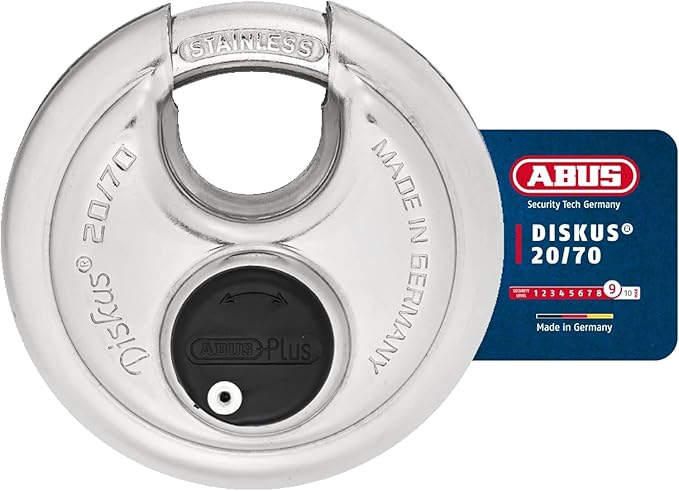
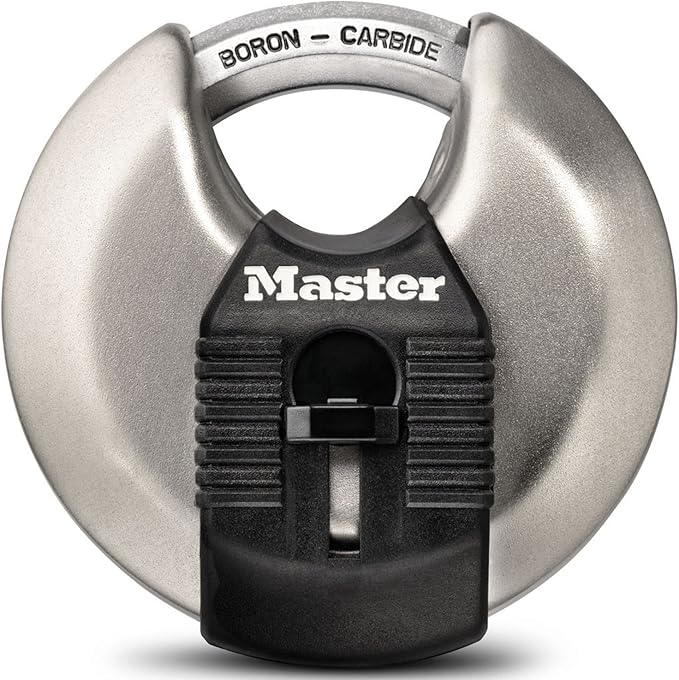
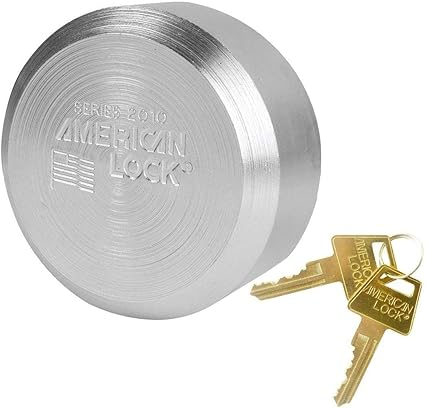
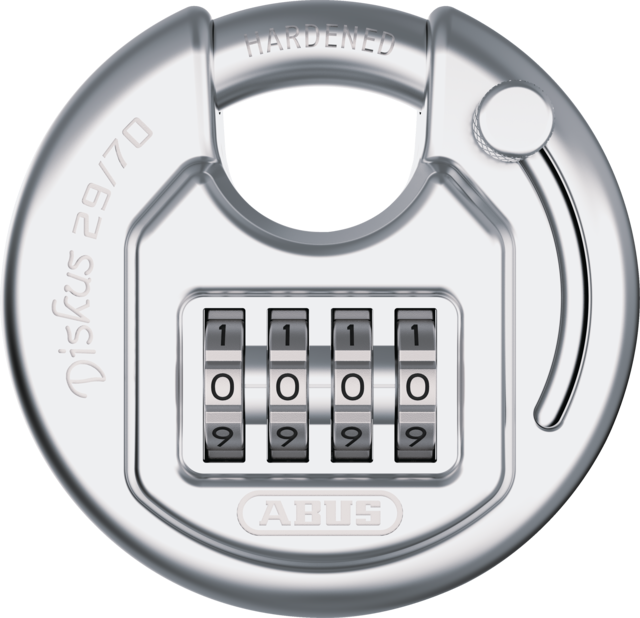
For most people the ABUS Diskus 20/70 is the right answer — the sweet spot of cut resistance, weather durability and price. If budget is tight, the Master Lock M40XD Magnum gives you most of the protection for about half. If several people need access and you may have to revoke it, the American Lock A2010 and its rekeyable cylinder is worth the exposed shackle.
Whichever you pick, you're doing better than most of the units on your corridor — and on a row of identical doors, being the harder target is most of the job.
The short answer
Diskus 20/70 if you can, Magnum if you can't, and five minutes checking what the lock actually hangs on before either.