Review
Safes
Fire
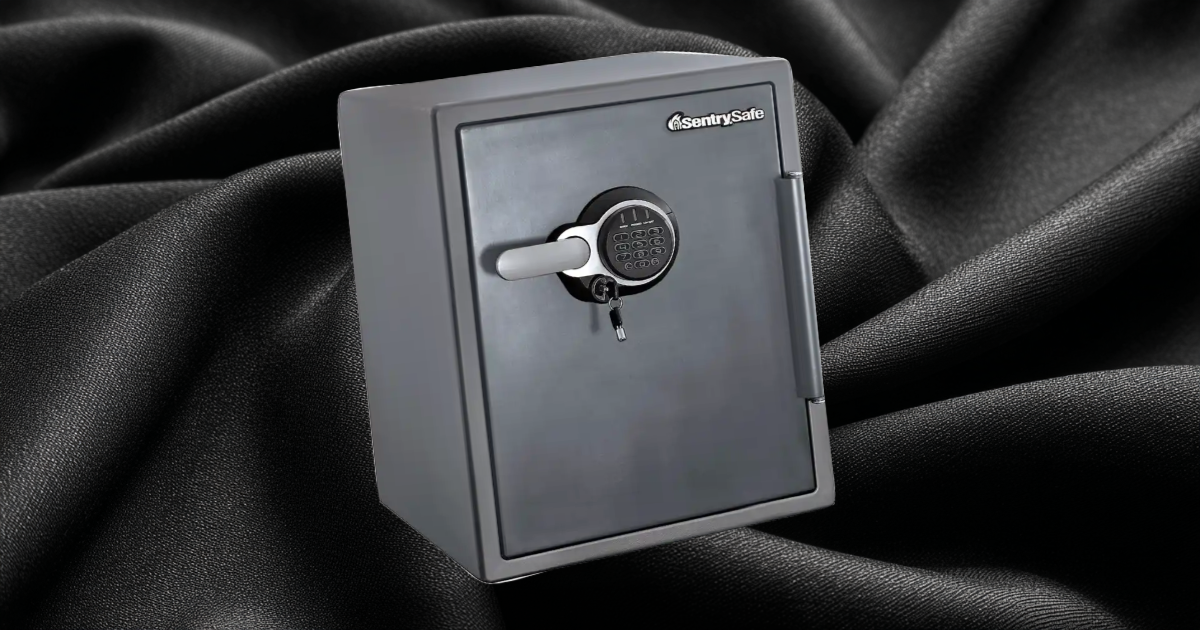
SentrySafe SFW205GQC: Everyone's First Real Home Safe.
A genuinely good fire box that people buy believing it's a security container. Those are two different standards, two different tests, and this safe holds one of them. Understand which, bolt it to the floor, and it's the right purchase for most households.
By Johnny T.
·
March 2026
·
11 min read
Some links on this page are affiliate links — we may earn a commission.
Researched — not tested
We do not own this safe. Everything below is specification, the certification standards, and the documented attack record — tagged so you can see which is which.
Buy it as a fire box and treat the lock as a lid. The fire protection is third-party certified and genuinely useful — for documents, passports, deeds, drives and the paperwork that is a nightmare to replace, this does the job for a reasonable price.
What it isn't is a burglary container. There is no meaningful burglary rating on a safe in this class, the steel is thin, and the SentrySafe line has a well-documented history of being opened without the key or code. Bolted down it stops opportunists. Unbolted it is a box that carries your valuables to the van.
Fire protection9
Water resistance8
Burglary resistance3
Lock & bypass resistance4
Value for what it's for9
How to read this review
Nothing here is hands-on. The value is in reading the certification standards properly and the attack record honestly.
TestedPhysically in hand. Nothing on this page carries this tag.
DocumentedPublished standard, specification, or recorded attack.
ManufacturerSentrySafe's own claim. A claim, not a fact.
CommunityLocksmith and locksport consensus. Informed opinion.
The short version
Fire resistance and burglary resistance are separate standards with separate tests. This safe holds one of them, and it isn't the one most buyers think they're paying for.
This is the part the safe is actually for, and it's the part it does well. But "fireproof" is a marketing word that appears in no standard, so start with what the certification actually says.
UL 72 is the Standard for Tests for Fire Resistance of Record Protection Equipment. It produces a rating in two halves — a class and a duration — and the class tells you what the safe can protect: Documented
Durations run 30 minutes, 1, 2, 3 or 4 hours, tested in a furnace reaching up to around 2,000°F. Documented For scale, a typical house fire burns at roughly 1,100–1,200°F. So a rating reads as a pair — "Class 350, 1 hour" — and both halves matter.
Three things in the fine print
Class 350 has no humidity requirement. Documented The only thing certified is the temperature ceiling. A Class 350 safe offers no guaranteed protection against moisture reaching your documents — which matters because fires are put out with water.
UL 72 certifies that the contents survive, not that the safe does. The standard is explicit that it is not intended to certify a safe as usable after a fire. Documented Expect to cut it open and replace it.
Paper is the easy case. A Class 350 safe will not protect a hard drive — drives fail far below 350°F. If you're storing backups, you want Class 125, which is a different and more expensive product.
ETL is not a downgrade
Many consumer safes carry an ETL Verified mark from Intertek rather than a UL listing, and buyers frequently read that as second-best. It isn't. ETL tests to the same UL 72 performance requirements, with unannounced follow-up audits, and the marks are treated as equivalent in rigour. Documented
What matters is that some independent laboratory tested it. What to be suspicious of is phrasing that sounds like certification and isn't: "tested to UL standards," "built to UL specifications," "UL-style construction." None of those mean a laboratory tested anything. Documented Only an actual listing in the UL or ETL database counts, and both are searchable.
On this safe, the fire and water protection is third-party certified and it is the reason to buy it. Verify the exact class and duration on the current model against the listing before you order — SentrySafe revise their line frequently and the number on the box is what you're paying for.
Here is the single most useful thing on this page, and it is not on the box.
Fire resistance and burglary resistance are certified under entirely different standards. UL 72 covers fire. Burglary is UL 1037, which defines the Residential Security Container (RSC) rating, and UL is explicit that it does not give an RSC a fire rating because the two are unrelated tests. Documented
And the RSC bar itself is lower than most people imagine:
"It's UL rated, so it's secure."
A baseline RSC — the rating carried by the large majority of consumer gun safes and home safes that carry a burglary rating at all — means the container withstood a five-minute attack by one person using common hand tools. Documented Higher tiers add time, more tools and a second technician. Five minutes against one person is a real benchmark against smash-and-grab, and it is not a vault. Meanwhile a fire rating tells you nothing whatsoever about attack resistance, because no one attacked it.
VerdictTwo standards, routinely conflated. Read which one is actually printed.
A fire safe in this price class is built the way fire safes are built: relatively thin steel wrapped around a thick insulating fill. The fill is what buys you the fire rating, and it does nothing at all against a pry bar. What deters a burglar here is weight, bulk, being fixed down, and not being visible — not steel thickness.
That is not a criticism of the product. It is a description of the category, and it is the thing to understand before you decide what to put inside.
Something worth knowing that rarely appears in reviews of this brand: SentrySafe has been owned by Master Lock since 2014. Community Readers of our Master Lock coverage will have a view on what that implies, and the documented record is broadly consistent with it.
The SentrySafe line has a substantial history of being opened without the key or the code. Three categories, all publicly documented: Documented
Tab. 01
Documented attacks on SentrySafe products
Why this doesn't sink the score
It would be easy to read the table above and conclude the safe is worthless. That would be the wrong conclusion, and it's worth explaining why the score is still a 6.5.
You are buying fire protection. That part is independently certified and works. A house fire does not know about solenoids, and the documents inside will survive one — which is the actual, likely event this product exists for.
What the record should change is what you put in it. Documents, yes. Passports, deeds, spare keys, backups, sentimental paperwork — all things whose loss to fire is catastrophic and whose theft is comparatively unlikely. Cash and jewellery in quantity, no. Not in a container with a lock this well documented and a burglary rating this absent.
Every safe in this class has the same defining vulnerability and it isn't the lock. It's portable.
A burglar who cannot open your safe in your living room does not need to. They carry it out, and every attack becomes available at leisure — angle grinder, crowbar, dropping it off a roof, all the time in the world and no neighbours. An unbolted safe is a convenient handle for gathering your valuables into one liftable package.
Bolting it down converts the problem entirely. Now the attack has to happen in your house, on your floor, in whatever time they're prepared to spend there — and against the same five-minute logic that underpins the RSC standard, that's usually enough.
The dilemma, honestly stated
Bolting down has real costs and the reviews that skip them aren't helping:
- You are drilling your floor. Renters generally can't, and it's a permanent change on concrete.
- The fire rating assumes an intact enclosure. Bolt holes are penetrations. Use the manufacturer's pre-drilled points and hardware rather than making your own — the holes are engineered into the fire performance.
- Know what's under the floor. Same warning as the frame guide: pipes and cable runs live in joist bays and under slabs, and a hammer drill finds them convincingly.
- Position matters as much as fixing. A safe visible from a doorway is a target. Inside a closet, behind something, on a lower floor, is a better outcome than a bolted safe in plain sight.
If you take one action from this review, it's this one. An unbolted fire safe is a fire safe. A bolted fire safe is a fire safe plus a genuine deterrent. The difference is four bolts and half an hour.
The obvious step up is a Gardall MS912, and the comparison is genuinely instructive because the two products are solving different problems.
The mistake is treating this as good/better. It isn't. A burglary safe with no fire rating will not save your documents from a house fire, and a fire safe will not stop a determined thief with time. They are different tools.
Most households' realistic worst case is fire, flood or a burst pipe destroying irreplaceable paperwork — not a targeted safe attack. For that, this is the right product and the Gardall is the wrong one. Reverse it if what you're storing is genuinely valuable and portable, and read the gun safe guide if the contents are firearms, where the calculus and the legal obligations are different again.
Is the SentrySafe SFW205GQC burglar proof?
No, and no safe at this price is. Fire resistance and burglary resistance are separate certifications — UL 72 for fire, UL 1037 for burglary. This is a fire safe. Bolted down it deters opportunists; unbolted it can be carried out and opened elsewhere at leisure.
What does a Class 350 fire rating actually mean?
That the interior stayed below 350°F for the stated duration in a furnace test. It protects paper — deeds, passports, cash, contracts. It will not protect hard drives or photographs, which need Class 125 or Class 150. Note also that Class 350 carries no humidity requirement at all.
Can a SentrySafe be opened without the code?
Models in the SentrySafe family have documented bypasses: a coat-hanger mechanical bypass published in 2020, a rare-earth magnet attack on the solenoid, and a researcher-published electronic bypass that opens Sentry and Master electronic safes with no PIN by talking directly to the internal board. The company reportedly never responded to that disclosure. We can't confirm which apply to a specific unit.
Do I really need to bolt it down?
Yes, and it's the single highest-value thing you can do. The defining vulnerability of a safe this size is that it can be carried out, after which the attacker has unlimited time and tools. Use the manufacturer's pre-drilled points, and check what's under the floor before drilling.
Is ETL certification worse than UL?
No. ETL tests to the same UL 72 requirements with unannounced follow-up audits, and the marks are treated as equivalent. What matters is that an independent lab tested it. Be wary of phrases like "tested to UL standards" or "UL-style construction" — those are not certifications.
Will the safe still work after a fire?
Probably not, and it isn't meant to. UL 72 certifies that the contents survive, not that the safe remains usable afterwards. Expect a fire-exposed safe to be a write-off that has to be cut open — which is the correct outcome if the paperwork inside came out readable.
Specification
Model
SentrySafe SFW205GQC fire and water safe
Brand ownership
SentrySafe has been owned by Master Lock since 2014
Fire certification
Third-party certified under UL 72 — verify class and duration on the current listing before buying
Fire classes explained
Class 350 paper · Class 150 film and photos · Class 125 digital media
Burglary rating
None in the UL 1037 RSC sense — this is a fire container
Water resistance
Third-party verified; confirm depth and duration on the current model
Construction
Thin steel shell with thick insulating fill — the fill provides the fire rating
Bolt-down
Pre-drilled points provided. Essential, not optional
Check the fire class and duration on the exact model you're ordering — SentrySafe revise the range often and the number on the box is what you're paying for.
Budget for anchor bolts and a masonry bit at the same time. An unbolted safe is a shopping basket for a burglar.
Amazon US
Widely stocked; compare against the current SentrySafe range
Most households buy a safe after a scare and put the wrong things in it. The realistic disaster is not a burglar working on a locked box in your bedroom — it's a kitchen fire, a burst pipe, or a flood taking out the deeds, the passports, the birth certificates and the only copy of something that took a decade to accumulate.
For that, this is the right purchase, it is independently certified for it, and it costs a fraction of a burglary container. The mistake is only in believing the second thing comes free with the first. It doesn't — different standard, different test, and this safe holds one of them.
So: documents in, jewellery box elsewhere, four bolts through the floor.
Verdict — 6.5 / 10
An excellent fire box with an ordinary lock, sold to people who think they're buying a vault. Know which one you're getting and it's very good value.
Sources & Method
- UL 72 fire classes and durations — Documented
UL 72, Standard for Tests for Fire Resistance of Record Protection Equipment. Class 350 (paper, no humidity requirement), Class 150 (film and tape, 85% humidity), Class 125 (digital media, 80% humidity); durations of 30 minutes to four hours in a furnace reaching approximately 2,000°F. The standard is explicit that it demonstrates performance during a fire and is not intended to certify a safe as usable afterwards.
Standard summarised
- UL 1037 and the RSC rating — Documented
Residential Security Container is a burglary rating under UL 1037, revised in 2016 to define performance tiers. A baseline RSC means the container withstood a five-minute attack by one person using common hand tools; higher levels add time, tools and a second technician. UL does not assign an RSC a fire rating, because fire and burglary are separate tests.
RSC explained
- ETL equivalence and false certification language — Documented
ETL Verified marks test to the same UL 72 requirements with unannounced follow-up audits and are treated as equivalent in rigour. Phrases such as "tested to UL standards," "built to UL specifications" and "UL-style construction" do not indicate certification; only a listing in the UL or ETL database does.
UL and ETL compared
- Electronic bypass of Sentry and Master electronic safes — Documented
Published research reverse-engineering the unencrypted serial link between the keypad board and the solenoid board, demonstrating opening without any PIN, together with a replacement PCB and firmware to remediate it. The researcher states the company was notified and did not respond.
Published analysis
- Mechanical and magnetic bypasses — Documented
A SentrySafe opened with a coat hanger, published January 2020 by a widely followed locksport channel; rare-earth magnet attacks on the solenoid demonstrated by locksmiths on electronic models in this family. We have not reproduced either, and cannot confirm which apply to specific models or production dates.
- Brand ownership — Community
SentrySafe, founded 1930 in Rochester, New York, has been owned by the Master Lock Company since 2014. Sourced from a general encyclopaedia entry carrying citation-needed markers, so treated as indicative.
- House fire temperatures — Community
Commonly cited at roughly 1,100–1,200°F, against UL 72 furnace testing up to around 2,000°F. Used for scale rather than as a precise figure.
We do not own this safe and no claim here is hands-on. The attack record describes the SentrySafe brand rather than your specific unit — model ranges are large and revised often. If you own one and have tested any of the above, tell us and you'll be credited.