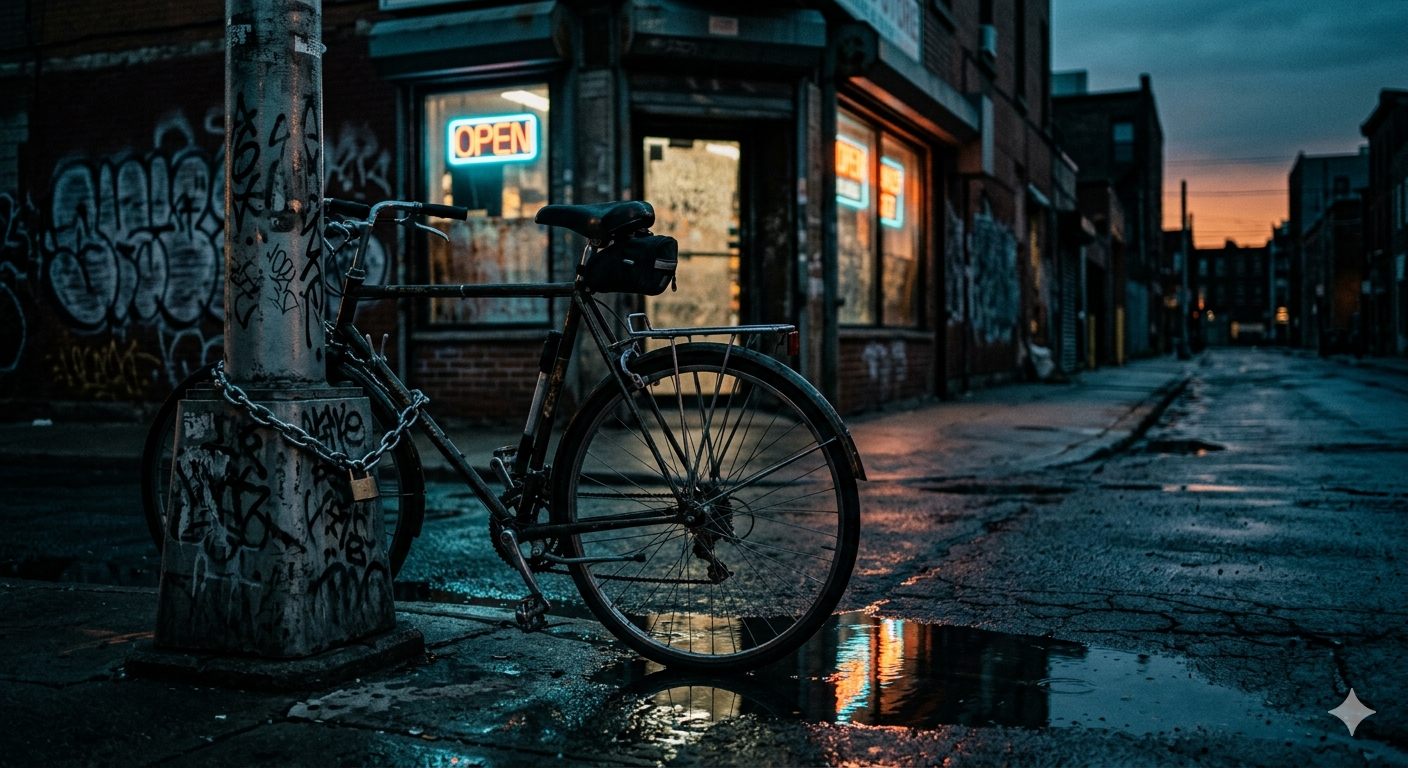
If you walk into any bike shop in North America, the lock wall looks reassuringly serious. Heavy U-locks. Thick chains. Glossy packaging promising "maximum security." And then, dominating the entire bottom shelf at Walmart and Target, the cheap coiled cable locks that everyone actually buys. Which is a problem, because most of those cable locks can be cut with a $12 pair of wire cutters in less time than it takes to read this sentence.
This guide ranks 12 bike locks by the only thing that matters: what tool a thief needs to defeat them, and how long it takes. We're going to be blunt about which products are real security and which are just packaging. We'll also cover the new generation of angle-grinder-resistant locks that, for the first time in bike lock history, can genuinely stop a determined thief with a battery grinder in their backpack. Here's the full breakdown.
⚡ The Verdict — Pick by Scenario
There is no single "best" bike lock — there's a best lock for your bike, your city, and your budget. Tap any tile to jump straight to the recommendation.
The Tier System
Bike locks aren't really a continuum — they're tiers. Each tier defeats a different category of attack tool. Move up a tier, you force the thief to bring a bigger, louder, more conspicuous tool. Here's the data, ranked by how long each lock survives the worst tool that can practically defeat it in public.
Sources: cutting-test data published by Cycling Weekly, Outdoor Gear Lab, Bikerumor, and The Best Bike Lock (2024–2026 tests). Hand-tool times for cable locks reflect documented forum tests; angle-grinder times reflect controlled vise-mounted cutting with a battery-powered grinder. A thief in the street, holding the lock with one hand, will generally take longer.
The takeaway is simple. Until you reach Tier 4 — the new angle-grinder-resistant class — every bike lock falls to a battery angle grinder in under two minutes. The difference between a $50 U-lock and a $130 U-lock is not whether a grinder beats it. It's whether bolt cutters beat it. That's the threshold most people actually need to clear, because most opportunistic thieves are carrying bolt cutters, not grinders.
Cable Locks: Theater, Not Security
Cable locks are by far the best-selling bike lock category in America. They are also nearly worthless. The braided steel cables that look so beefy in the package can be snipped by a pair of $12 wire cutters that fit in a jacket pocket. There are forum posts dating back to 2006 of people testing cable locks in their backyards and getting through them in under a minute and a half with a hacksaw, or seconds with bolt cutters. Some bike insurance providers will not pay out at all if your bike was stolen while secured with a cable lock.
If you only read one section, read this: A cable lock is fine for securing your front wheel or your saddle to your frame as a secondary defense. It is never an acceptable primary lock for any bike worth more than the lock itself. If your bike is currently secured with only a cable lock, you should treat it as effectively unlocked.
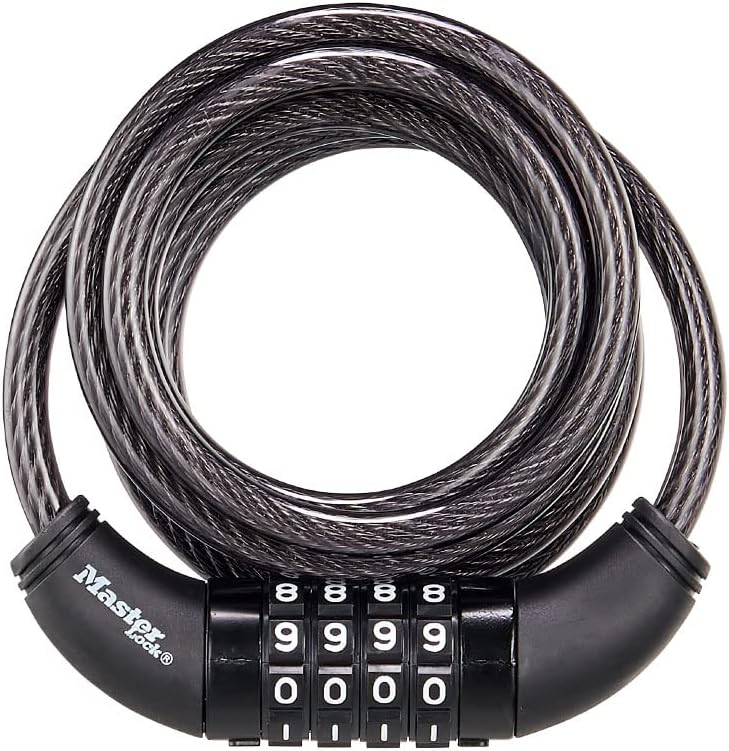
Master Lock 8114D Combination Cable Lock
Representative of the cable-lock category. Six feet of braided steel and a 4-digit combination. Defeated by hand-held wire cutters in seconds. Useful only as a secondary lock for wheels or accessories — never as your primary defense.
Check on Amazon →Budget U-Locks: The Real Entry Point
This is where bike security actually starts. A 13mm hardened steel U-lock with a Sold Secure Silver rating will defeat every hand tool a thief can practically carry — wire cutters, hacksaws, and most bolt cutters under 24 inches. Nothing in this tier will survive a battery angle grinder for long, but most opportunistic thieves don't carry one. For a sub-$1,000 commuter in a low-to-medium-risk area, this tier is honestly enough.
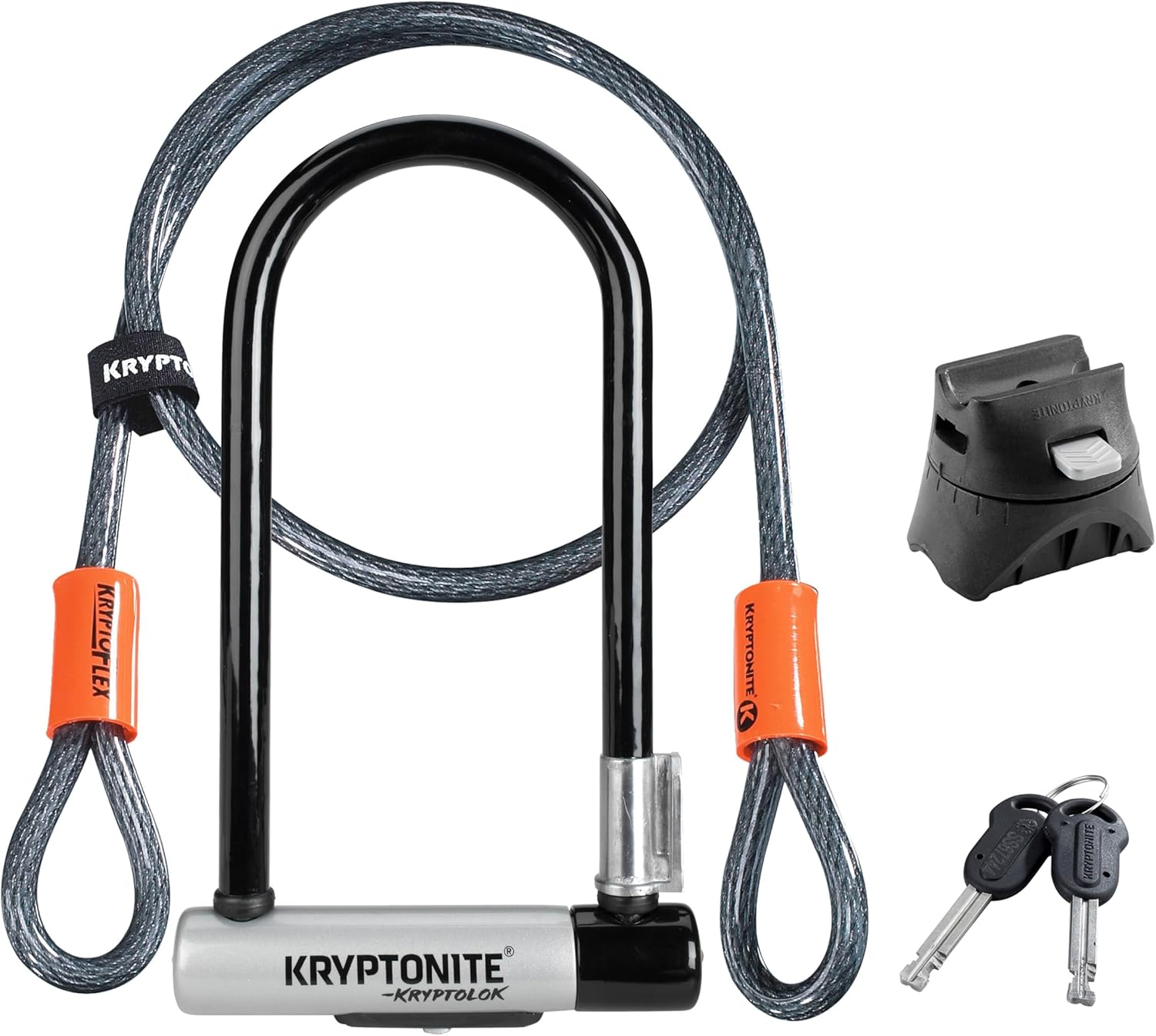
Kryptonite Kryptolok Standard BEST BUDGET
12.7–13mm hardened steel shackle, Sold Secure Silver, double deadbolt. Even 24" bolt cutters barely scratched it in testing. The genuine sweet spot of bike locks: cheap enough to buy without thinking, secure enough to actually mean something. Comes with the Flexframe-U bracket and lifetime warranty.
Check on Amazon →Mid-Tier U-Locks: The Sold Secure Gold Class
Move up to a 14mm shackle and you cross into Sold Secure Gold territory — the rating most bike insurance providers want to see. The shackle is now too thick for almost any bolt cutter a thief can practically carry, and the locks usually add a double-bolted shackle that requires two cuts instead of one. This is the right tier for a $1,000–$2,000 bike in a typical city.
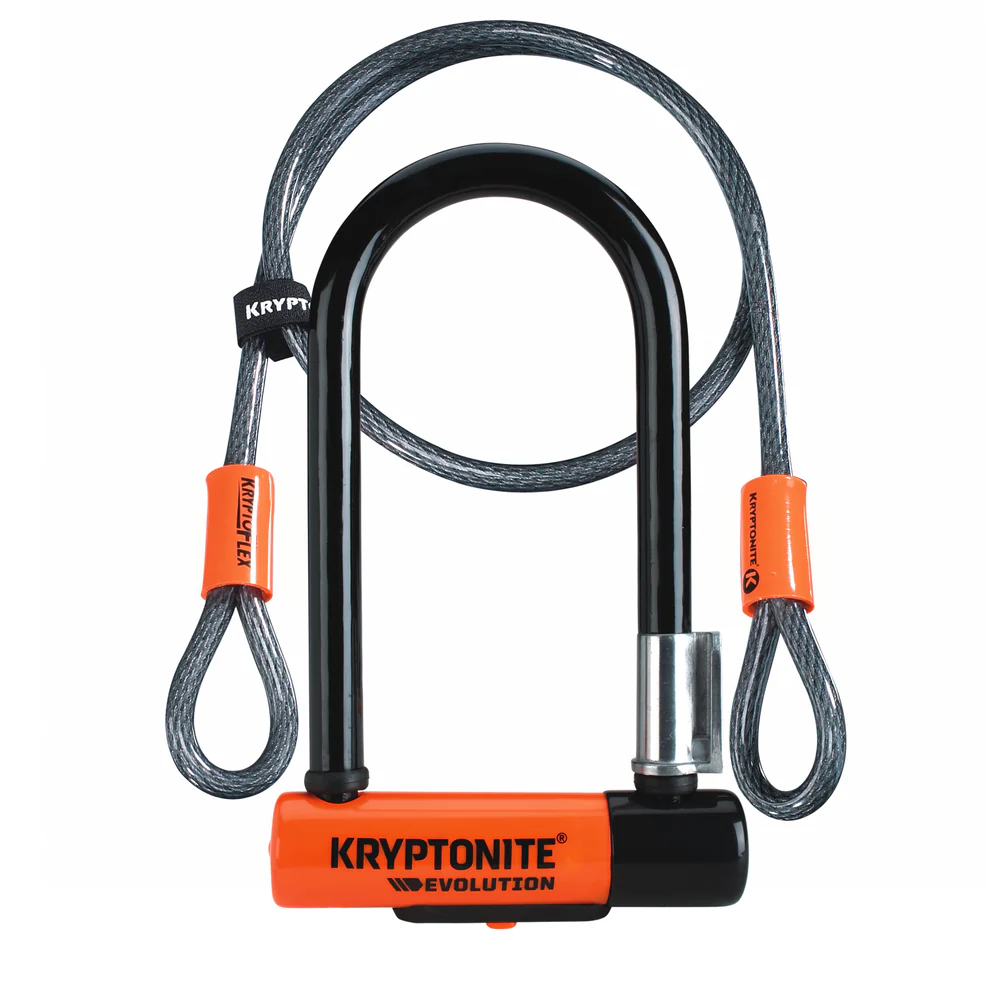
Kryptonite Evolution Mini-7
14mm Max-Performance steel, Sold Secure Gold, double deadbolt, ART 2-star rating. The longtime Wirecutter pick — small enough to be inconvenient for jacks and leverage attacks, but tight enough to limit your locking spots. Pair it with a cable for the front wheel.
Check on Amazon →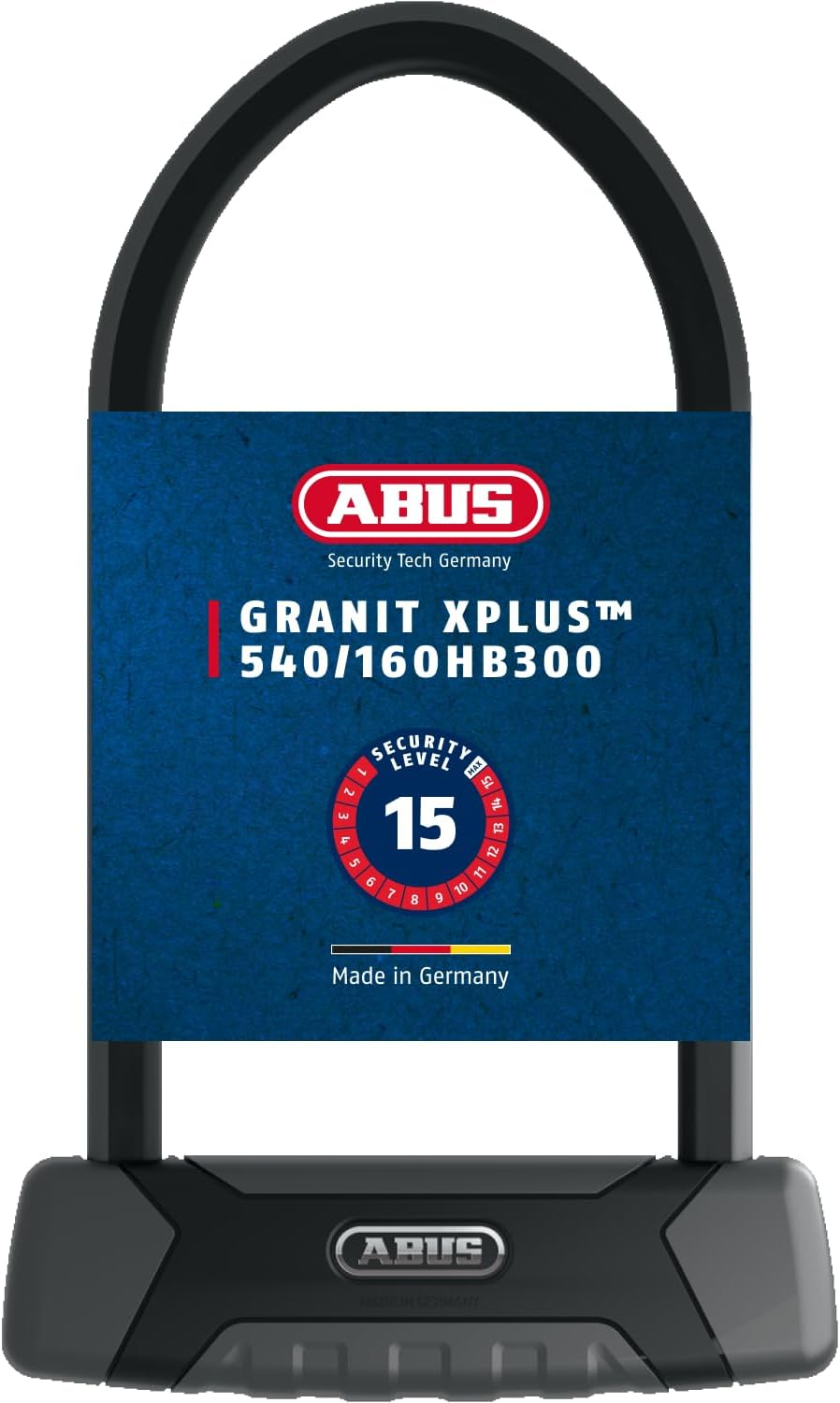
ABUS Granit X-Plus 540
13mm parabolic shackle (the parabolic shape resists bolt cutters far better than a round one of the same diameter), Sold Secure Gold, ABUS Plus disc-detainer cylinder. The thinking cyclist's choice — slightly more expensive, but the cylinder is genuinely pick-resistant in a way most U-locks aren't.
Check on Amazon →High-Security U-Locks: The 16–18mm Beasts
This is where U-locks become uncuttable by hand. A 16mm-plus hardened steel shackle laughs at hydraulic bolt cutters — there are videos of them shattering against ABUS and Kryptonite shackles. The only practical way through these is a battery angle grinder, and even then it usually takes two cuts because of the double-bolted shackle. For high-theft cities and bikes worth $2,000–$5,000, this tier is the standard answer.
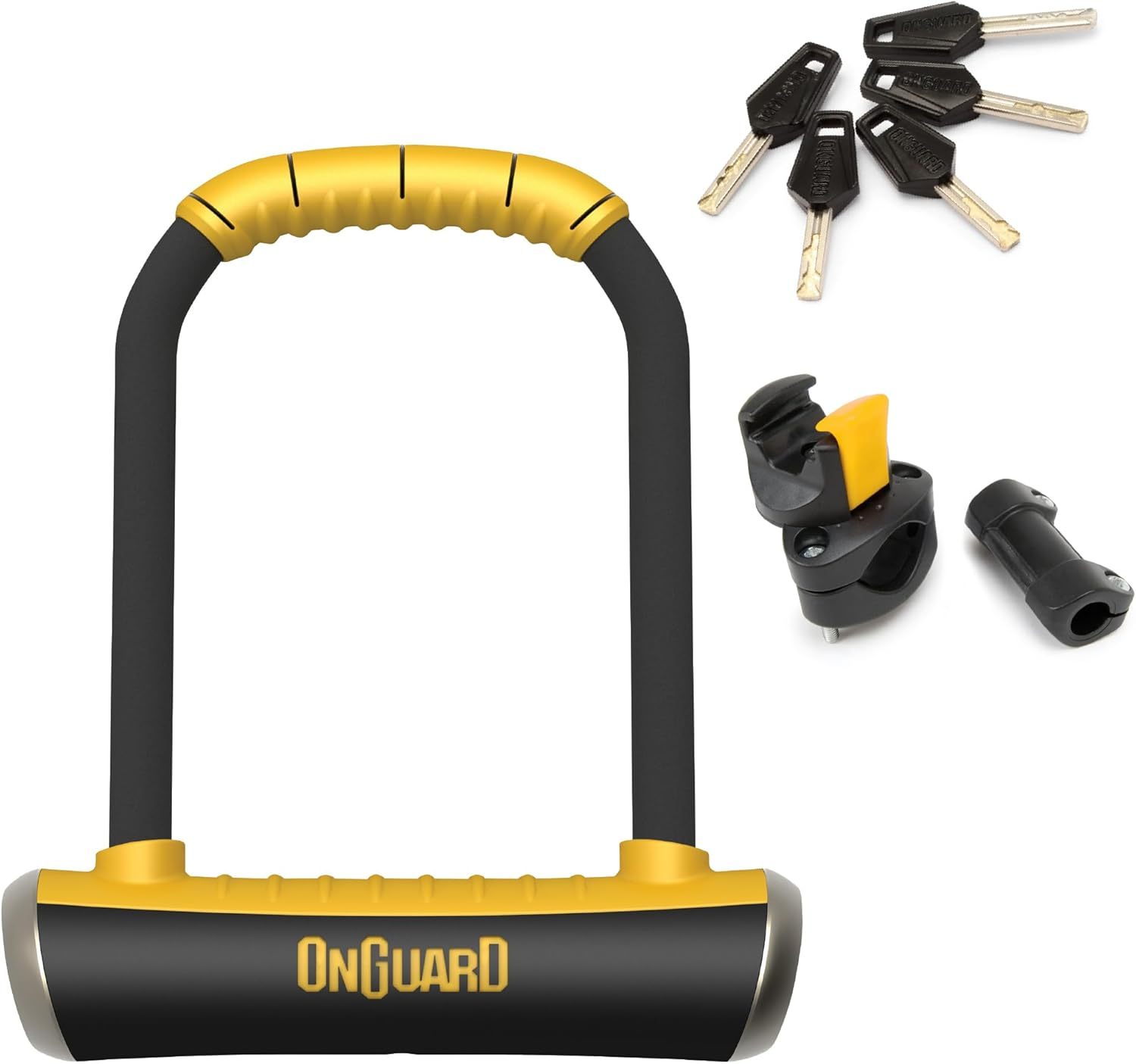
OnGuard Brute STD 8001 BEST VALUE
16.8mm hardened steel TriRadius shackle, Sold Secure Diamond rating, X4P quad-bolt locking mechanism. Punches absolutely above its weight class — Diamond-rated security at a price that undercuts most Gold-rated locks. The frame mount is mediocre and the keys can stick, but the lock itself is exceptional. Includes a $5,001 anti-theft protection program (US only).
Check on Amazon →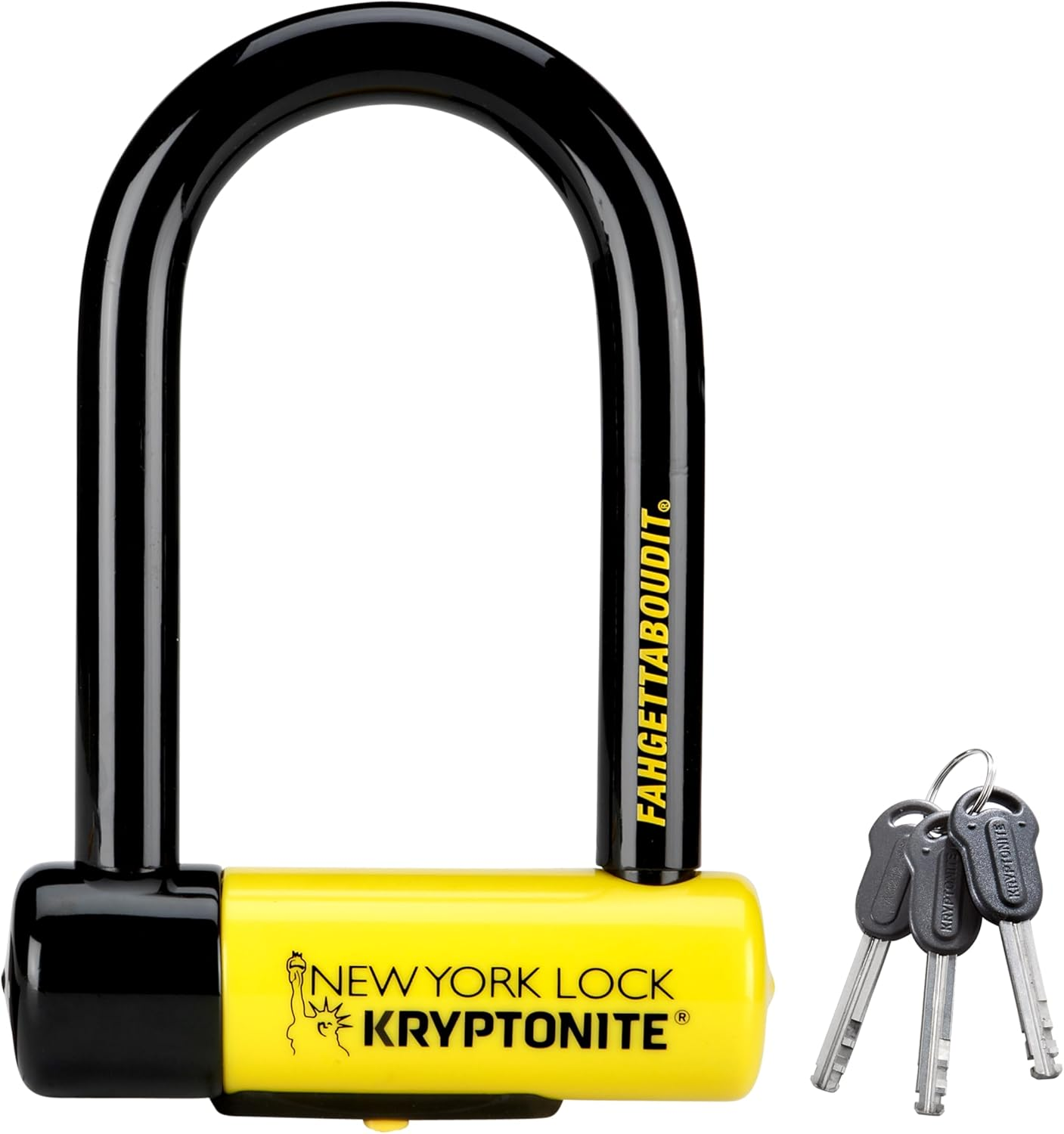
Kryptonite New York Fahgettaboudit Mini
18mm Max-Performance steel — the thickest portable U-lock shackle on the market. Sold Secure Gold, Kryptonite's own 10/10 rating, and a $5,000 anti-theft guarantee. The legend of bike security for two decades. Its only real weakness today is that it isn't angle-grinder-resistant, and at 4.55 lb, it's a workout to carry. Still iconic.
Check on Amazon →Angle-Grinder Resistant: The New Class
This is the most important development in bike security in twenty years. Until 2022, every portable bike lock fell to a battery angle grinder in under two minutes. Then Litelok and Hiplok independently shipped locks armored with ceramic composite materials — Barronium and Ferosafe — that physically destroy grinder discs as they cut. These aren't marketing terms. In testing, the Litelok X3 has resisted active grinding for over 17 minutes, eating through multiple discs and draining batteries. They aren't literally uncuttable, but they take so long that almost no thief will commit. For a high-value bike in a high-theft area, this is the only honest recommendation.
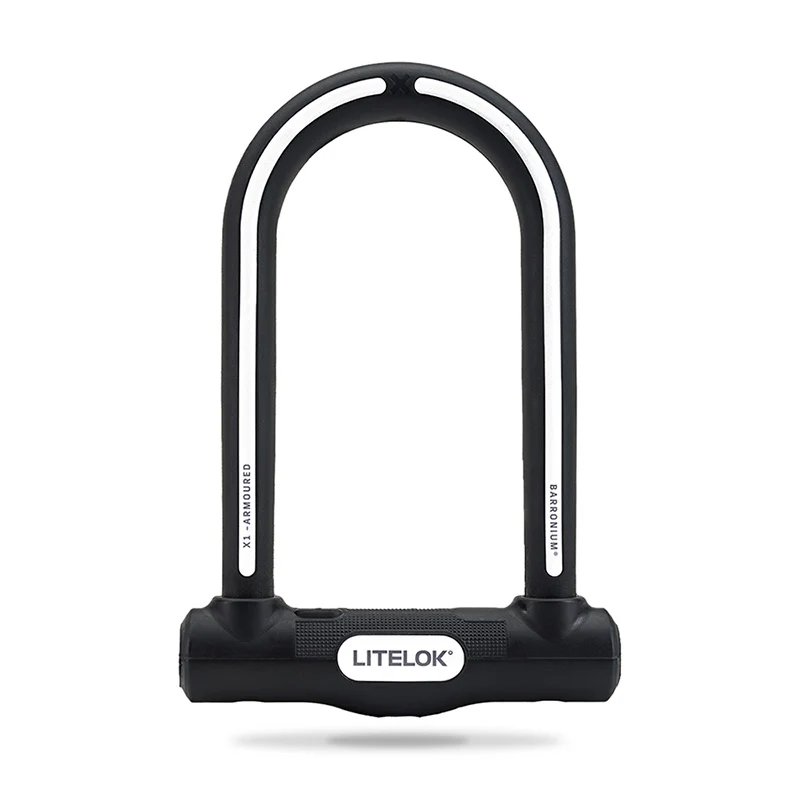
Litelok X1 BEST OVERALL
16mm hardened steel core fused with Barronium ceramic composite. Sold Secure Pedal Cycle & Powered Cycle Diamond. Roughly 3:44 to defeat with a diamond disc — about 3× longer than a Kryptonite Fahgettaboudit. Lighter than an Evolution Mini-7. The smartest bike lock purchase in 2026 if your bike is worth protecting and you don't want to spend $300.
Check on Amazon →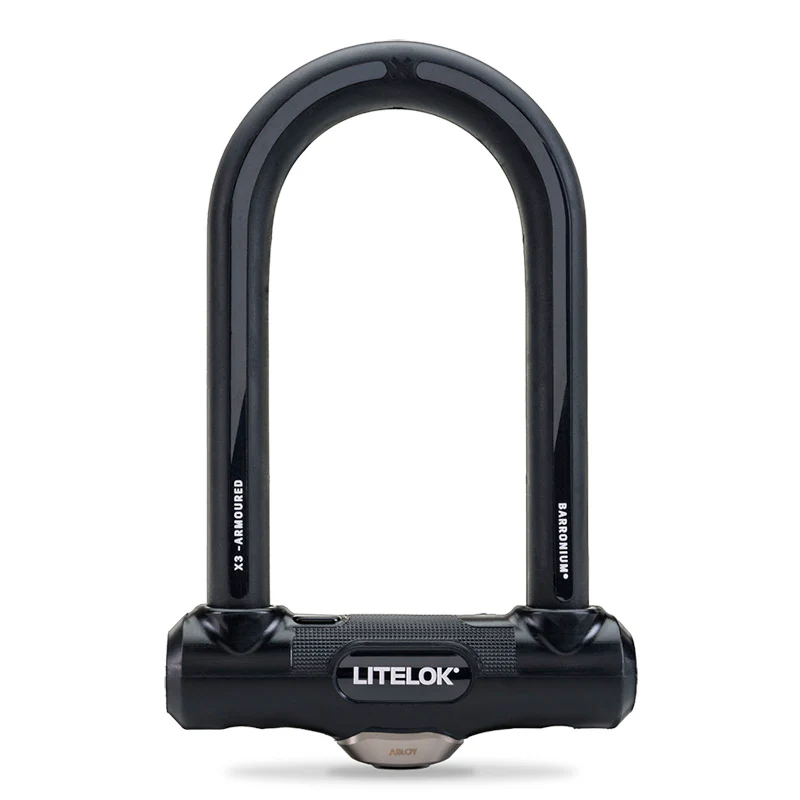
Litelok X3 TOUGHEST
Same Barronium principle, much more of it — 20× more grinder-resistant than the best-selling D-locks, by Litelok's own claim, and roughly 17 minutes of sustained grinding in independent testing. Currently the toughest portable bike lock on the market. Heavy and expensive, but if your bike costs over $5,000 or you live in a high-theft city, it's the answer.
Check on Amazon →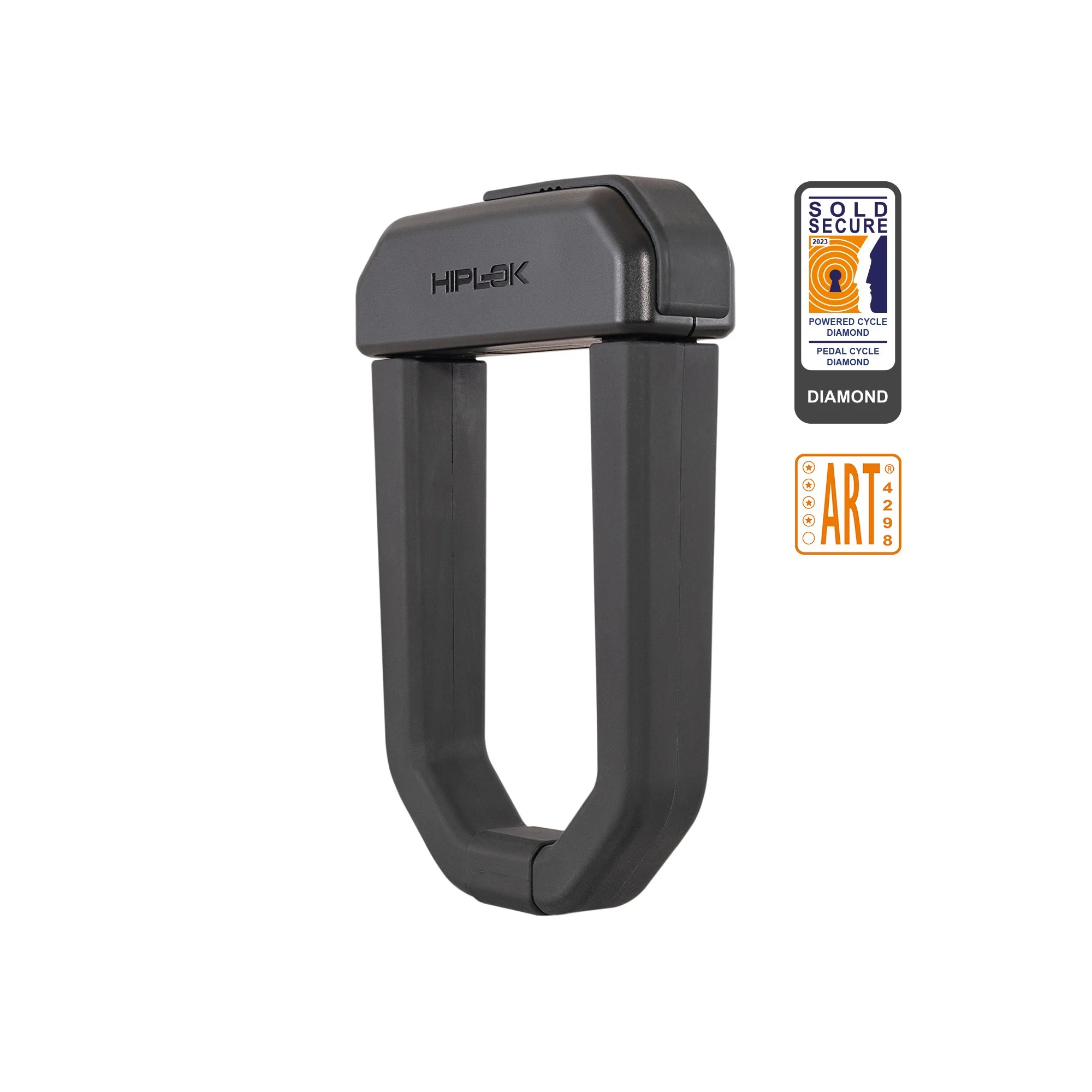
Hiplok D1000
Uses Ferosafe — a graphene composite from Tenmat — instead of Barronium. Sold Secure Powered Cycle Diamond, the highest motorcycle-grade certification. Performance is broadly comparable to the Litelok X3, slightly heavier. Worth considering if you can find it for less, or if you prefer Hiplok's mounting system.
Check on Amazon →Chains, Folding & Wearable
U-locks aren't the right answer for every situation. Heavy chains are still the gold standard for stationary security — locking your bike to a permanent rack at home or work. Folding locks trade some absolute security for huge gains in portability. Wearable chains let you skip the frame mount entirely. Here are the best of each.
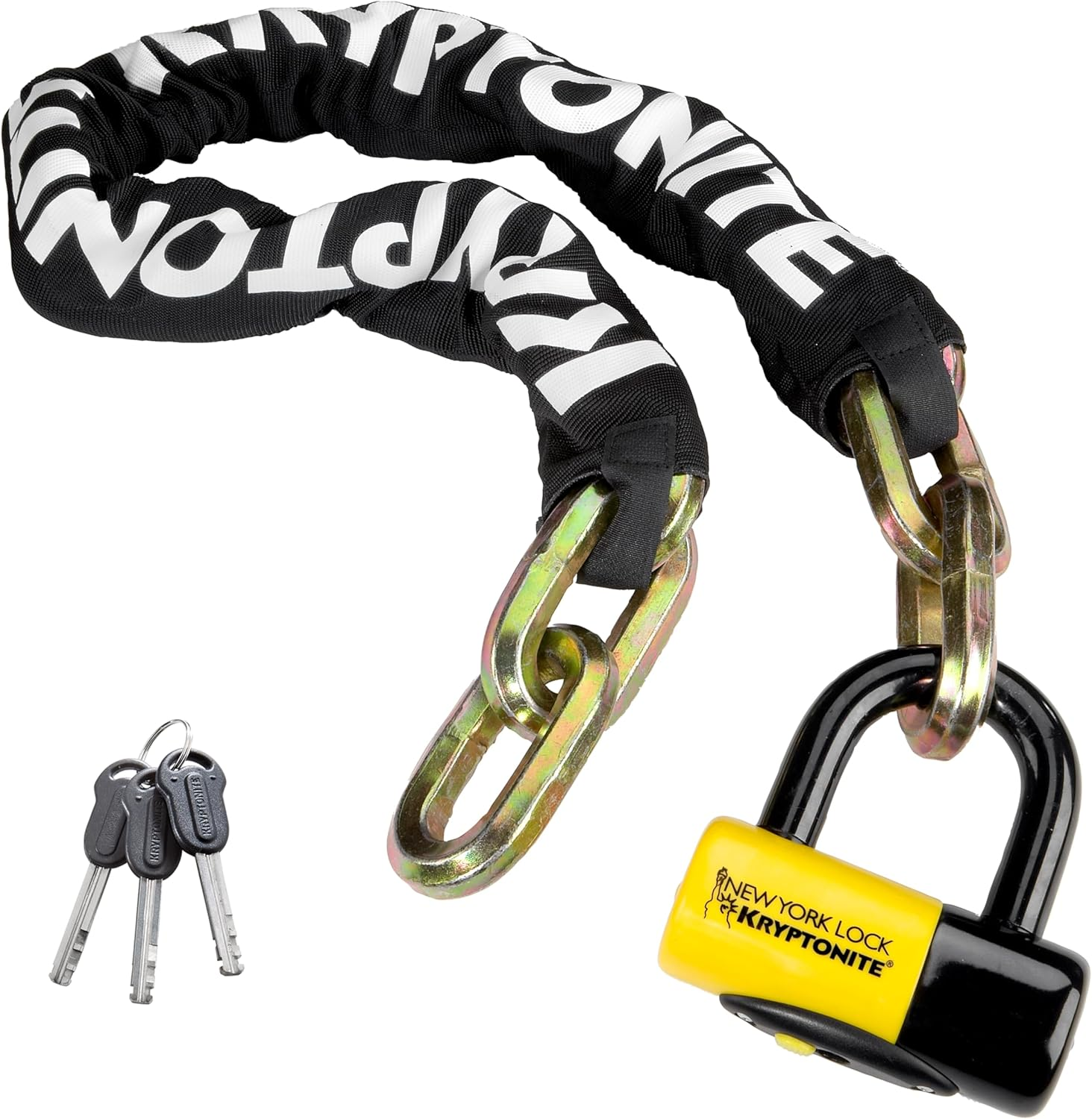
Kryptonite New York Fahgettaboudit Chain 1410 STATIONARY
3.25 feet of 14mm hardened manganese steel, paired with a 15mm New York Disc Lock. Weighs roughly 11 pounds — this is not a lock you commute with. It's a lock you leave clipped to the bike rack outside your apartment. For locking up at home or a fixed location, almost nothing beats it short of an angle-grinder-resistant model.
Check on Amazon →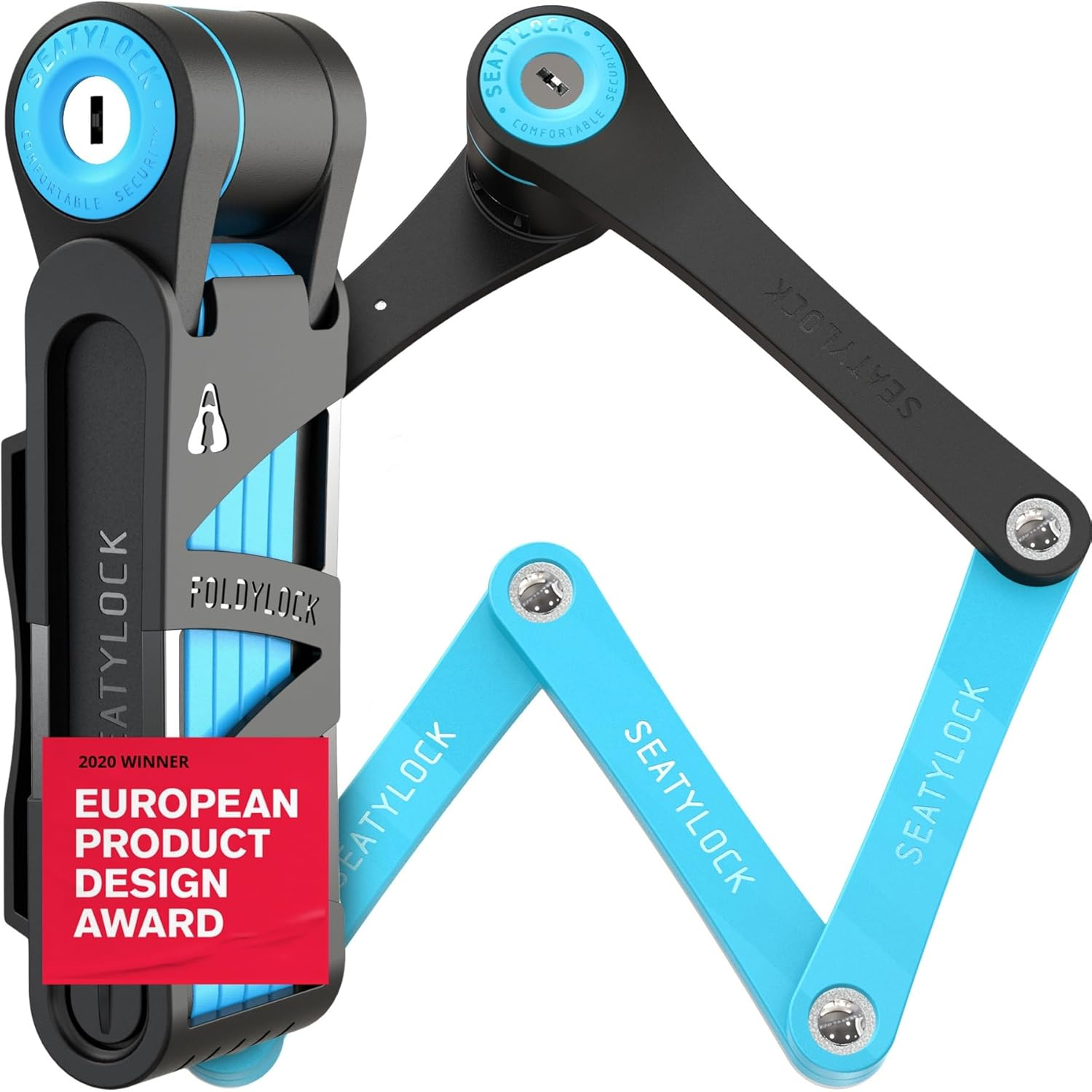
Foldylock Compact COMMUTER
Sold Secure Silver, just 2.2 lb, folds down to roughly the size of a phone. The mounting bracket is genuinely good (rare for non-U-lock mounts). Honest weakness: a single grinder cut through any plate releases the whole lock — about 8 seconds in testing. For coffee-shop stops and low-risk areas, the convenience wins. For overnight in a city, get a U-lock.
Check on Amazon →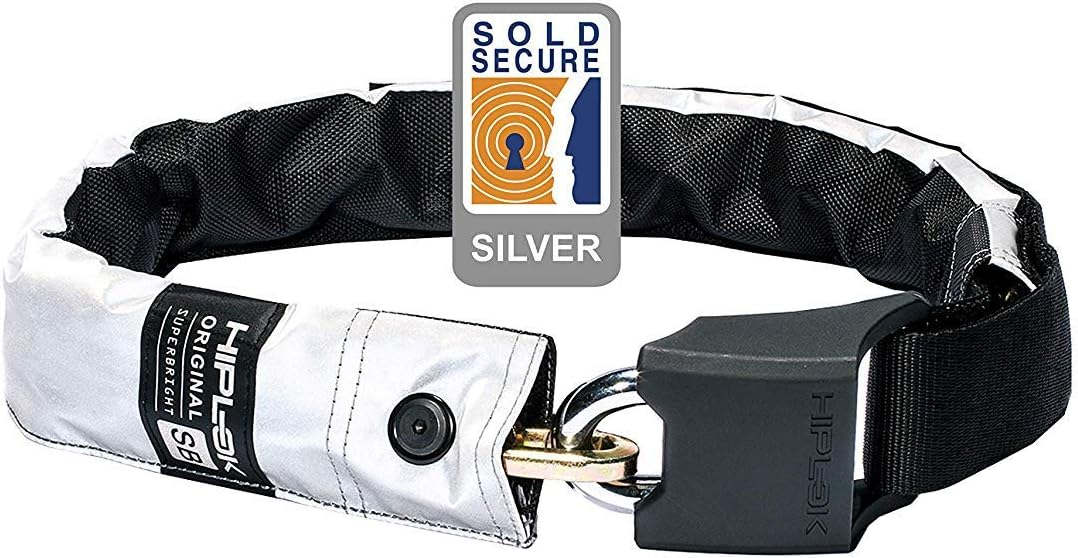
Hiplok Original Superbright
8mm hardened chain in a reflective nylon sleeve, with an integrated buckle that lets you wear it like a belt. Sold Secure Silver. The whole reason to buy this lock is that the 4.3 lb weight sits on your hips instead of in your bag — you'll actually carry it. Reasonable security for moderate-risk areas.
Check on Amazon →All 12 Locks, Side by Side
The full lineup, ranked by tier. Use this as a quick reference for shackle thickness, security rating, weight, and what tool actually defeats each lock.
| Lock | Shackle / Material | Sold Secure | Weight | Price | Defeated By |
|---|---|---|---|---|---|
| Tier 0 — Cable Locks (Avoid as primary) | |||||
| Master Lock 8114D Cable | Braided steel cable | None | ~1 lb | ~$13 | Wire cutters · 3s |
| Tier 1 — Budget U-Locks | |||||
| Kryptonite Kryptolok | 12.7mm hardened steel | Silver | 2.9 lb | ~$45 | Angle grinder · 30s |
| Tier 2 — Mid-Tier U-Locks (Sold Secure Gold) | |||||
| Kryptonite Evolution Mini-7 | 14mm Max-Performance steel | Gold | 3.0 lb | ~$80 | Angle grinder · ~60s |
| ABUS Granit X-Plus 540 | 13mm parabolic hardened steel | Gold | 3.5 lb | ~$120 | Angle grinder · ~60s |
| Tier 3 — High-Security U-Locks | |||||
| OnGuard Brute STD 8001 | 16.8mm hardened TriRadius steel | Diamond | 3.6 lb | ~$90 | Angle grinder · ~76s |
| Kryptonite Fahgettaboudit Mini | 18mm Max-Performance steel | Gold | 4.55 lb | ~$130 | Angle grinder · ~43s |
| Tier 4 — Angle-Grinder Resistant | |||||
| Litelok X1 | 16mm steel + Barronium composite | Diamond (Pedal & Powered) | 3.79 lb | ~$180 | Diamond disc · ~3:44 |
| Hiplok D1000 | Hardened steel + Ferosafe graphene | Diamond (Pedal & Powered) | ~5.3 lb | ~$300 | Multiple discs · ~6m |
| Litelok X3 | 16mm steel + heavy Barronium | Diamond (Pedal & Powered) | ~5.5 lb | ~$300 | Multiple discs & batteries · 17m+ |
| Chains, Folding & Wearable | |||||
| Kryptonite Fahgettaboudit Chain 1410 | 14mm hardened manganese chain | Gold | ~11 lb | ~$130 | Angle grinder · ~45s |
| Foldylock Compact | 5mm hardened steel plates | Silver | 2.2 lb | ~$100 | Angle grinder · ~8s |
| Hiplok Original Superbright | 8mm hardened steel chain | Silver | 4.3 lb | ~$120 | Bolt cutters · ~30s |
The 2004 Bic Pen Scandal
In September 2004, a cyclist posted a video to bikeforums.net showing how to open his Kryptonite U-lock in about 30 seconds. He didn't use picks. He didn't use a grinder. He used the hollow plastic barrel of a Bic ballpoint pen.
The vulnerability lived in Kryptonite's tubular cylinder mechanism — the same kind used in countless bike, motorcycle, and vending machine locks at the time. The hollow pen barrel, jammed into the keyway and twisted, could force the wafers and turn the lock. The technique had actually been published in a British bicycle magazine in 1992, twelve years earlier. Nobody noticed until the internet did.
The fallout was enormous. A $200 million class action. A voluntary recall. Over 380,000 locks exchanged. The Washington Post and NPR ran the story. Kryptonite became a permanent business school case study on how not to handle a viral product crisis. The tubular cylinder design was quietly retired across the industry.
Modern Kryptonite locks use the disc-detainer cylinder you see on the Kryptolok and Fahgettaboudit today — pick-resistant, drill-resistant, and immune to the pen attack. But the lesson held: any single bypass method, once published, scales instantly. It's why we'll always be honest about a lock's known vulnerabilities. For more on lock-bypass history, see our piece on how shimming defeats cheap padlocks.
How to Actually Lock Your Bike
Buying the right lock is half the job. The other half is using it properly. Most stolen bikes were locked — just locked badly. Here's the technique that actually works.
The Sheldon Brown Method
Sheldon Brown was a legendary bike mechanic whose website remains the most practical cycling resource on the internet. His locking technique is still the gold standard. Pass your U-lock through the rear wheel, inside the rear triangle of the frame, and around whatever you're locking to. This single move:
- Captures the rear wheel (the expensive one) inside the frame triangle, so it can't be removed without cutting the lock
- Captures the frame, so the bike can't be lifted away
- Eliminates dead space inside the U, blocking hydraulic jacks and leverage attacks
Front wheels with quick-release skewers can still be stolen this way, so add a cable or a second small U-lock through the front wheel to the frame.
The Two-Lock Rule
If your bike or its location is high-value, carry two locks of different types — for example, a U-lock plus a chain. This forces a thief to carry a grinder and bolt cutters, which most won't. The second lock doesn't need to be premium; even a Sold Secure Silver chain dramatically increases the time and noise required.
Smaller Is Safer
Counterintuitively, the smaller your U-lock, the more secure it is. A big U-lock leaves room inside the shackle to insert a hydraulic bottle jack, which can pop almost any lock open silently. A mini U-lock leaves no room for a jack and forces the thief to a grinder — which is loud, bright, and conspicuous. Buy the smallest U-lock that still fits the frame and rear wheel against your usual rack.
What You Lock To Matters
The lock is only as strong as the anchor. Test the bike rack — if it wobbles, find another. Avoid locking to small-diameter signposts, which can sometimes be unbolted or cut. Skinny chain-link fence posts can be cut with bolt cutters in under a minute. A solid steel rack bolted into concrete is the gold standard.
One more thing. Always lock with the keyway facing down or sideways, not up — it makes the cylinder harder to attack with picks or drills, and it sheds rain and grit that would otherwise sit in the keyway and corrode the mechanism. Tiny detail, real impact over years of use.
One Lock for Most People. Two Locks for the Rest.
If you have one lock to buy and your bike is worth more than $500, buy the Litelok X1. It's the cheapest entry into the angle-grinder-resistant tier, it's lighter than most premium U-locks, and it's the only sub-$200 lock that genuinely changes a thief's risk calculation. This is the lock we'd put on our own bike right now.
If you're on a budget or your bike is a $300 commuter, buy the Kryptonite Kryptolok Standard. It will defeat every hand tool a typical thief carries, it costs about $45, and it's the right amount of lock for the right price. Anyone trying to convince you to spend $180 on a Litelok for a $300 bike is selling, not advising.
If your bike costs over $5,000 or you live in a city where bikes get grinded off racks regularly, the answer is the Litelok X3 at the bike rack and the Kryptonite Fahgettaboudit Chain 1410 at home. Two locks, two attack methods to overcome, and the math of stealing your bike just stopped working.
Whichever you buy, remember: a great lock badly used is no security at all. Use the Sheldon Brown method, lock to a real anchor, and skip the cable. For a deeper look at how bike security fits into broader physical security, our Home Security Guide covers the same principles for the door you keep that bike behind.
Related Reading
For the broader physical security context behind the locks above, our padlock security deep dive covers how shackle thickness and steel hardening apply to padlocks too. If you're securing storage as well as a bike, see our best padlocks for storage units roundup. And for an unexpected look at how locks get defeated when picking and grinding fail, our bypass shimming guide explains the trick most cheap padlocks can't survive.
Bike Locks: FAQ
What's the best bike lock in 2026?
For most cyclists with a bike worth protecting, the Litelok X1 (around $180) is the best overall lock. Its Barronium ceramic composite shackle resists angle grinders for 3–7 minutes — long enough that almost any thief gives up. It's the cheapest entry point into the new class of angle-grinder-resistant locks. If you can't stretch that far, the OnGuard Brute STD 8001 is the best value high-security U-lock at around $90 with a Sold Secure Diamond rating, though it falls to a grinder in under a minute like all traditional steel U-locks.
Are cable bike locks safe?
No. Cable locks can be cut with hand-held wire cutters in literal seconds — there are videos of thieves snipping them with tiny pocket cutters. They are not security, they are theater. Some bike insurance policies will not even pay out if your bike was stolen while secured with a cable lock. Use a cable only as a secondary lock to secure your front wheel or accessories, never as your primary lock.
Can angle grinders cut any bike lock?
Until recently, yes — even an 18mm hardened steel shackle on the Kryptonite Fahgettaboudit falls to a battery angle grinder in 30 to 70 seconds. But a new generation of locks uses ceramic composite armor (Litelok's Barronium, Hiplok's Ferosafe) that physically destroys grinder discs as they cut. The Litelok X3 has resisted grinders for over 17 minutes in testing. They're not literally uncuttable, but they take so long that most thieves move on to easier targets.
What is the Sold Secure rating system?
Sold Secure is the independent UK testing body operated by the Master Locksmiths Association. They rate locks Bronze (basic tools, ~1 minute to defeat), Silver (wider toolkit, ~3 minutes), Gold (sophisticated tools, ~5 minutes), and Diamond (the highest, designed for high-value bikes and motorcycles). Many bike insurance providers require Gold or Diamond for coverage. It's the only third-party rating that matters — manufacturer security scores are marketing, not testing.
How much should I spend on a bike lock?
The common rule of thumb is roughly 10% of your bike's replacement value. A $300 commuter is fine with a $30–50 Sold Secure Silver U-lock like the Kryptolok. A $1,500 e-bike deserves a Sold Secure Diamond lock ($90–180). A $5,000+ road bike or e-bike in a city should get an angle-grinder-resistant lock like the Litelok X1 or X3 ($180–300). The cost of any of these is less than your insurance excess, let alone the cost of replacing your bike.
Are folding bike locks secure?
Folding locks like the Foldylock Compact and ABUS Bordo offer better security than cable locks and more flexibility than U-locks, but they sit one tier below high-security U-locks. The riveted joints between plates are an inherent weakness, and a single cut through any plate releases the lock. They're a good choice for low-to-medium-risk areas where you want portability — coffee shops, errands, short stops. For overnight parking or high-theft cities, choose a U-lock or chain instead.
What was the Kryptonite Bic Pen vulnerability?
In September 2004, a video circulated showing that Kryptonite's tubular cylinder U-locks could be opened in about 30 seconds using the hollow plastic barrel of a Bic ballpoint pen. The vulnerability had been published in a British bicycle magazine in 1992 but went largely unnoticed until the internet caught it. Kryptonite issued a voluntary recall and exchanged more than 380,000 locks. The incident became a landmark business school case study on PR in the internet age. Modern Kryptonite locks no longer use the vulnerable tubular cylinder design.