Indoor security cameras sit in your most private spaces — bedrooms, nurseries, living rooms. That makes privacy features just as important as image quality. We compared 10 of the best indoor security cameras available right now and ranked them based on video quality, privacy controls, subscription costs, and real-world reliability. Here are our picks.
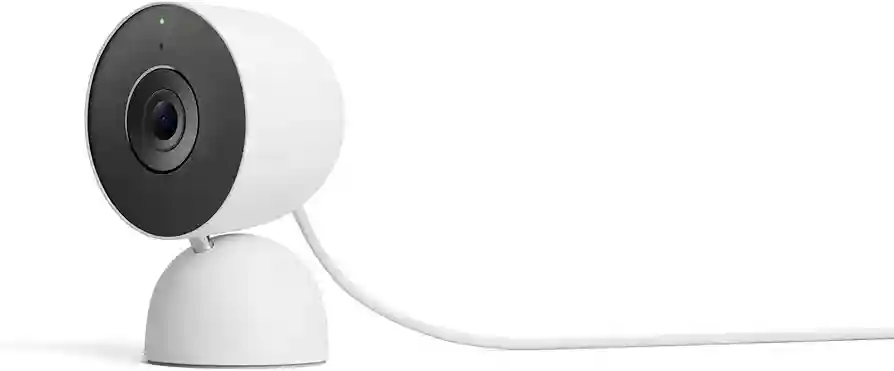
Ranked #1 for image quality by DXOMARK. 2K HDR with the widest FOV on this list (152°), Gemini AI daily summaries, 6 hours of free on-device storage, and natural language video search. The smartest indoor camera money can buy.
- #1 DXOMARK image quality for 2026
- 152° FOV covers entire room
- Gemini AI summaries are game-changing
- Free cloud event history — no local card slot
- 2K HDR major upgrade from prior gen
- Sleek minimal design
- Google ecosystem focus
- Sub needed beyond 6 hours
- No pan-tilt
- No physical privacy shutter
- Indoor only — not weatherproof
The third-gen Nest Cam Indoor is the smartest camera on this list. Gemini AI can answer natural language questions like "what time did the dog get on the couch?" by searching your recorded footage. The 152° field of view is the widest here — it captured our entire living room from a single corner mount without any pan-tilt needed. The 6 hours of free on-device storage means if your internet goes down, you still have footage. Google Home Premium unlocks the full AI suite including facial recognition and daily video summaries. The design is clean and minimal — it doesn't scream "security camera" which matters for living spaces.
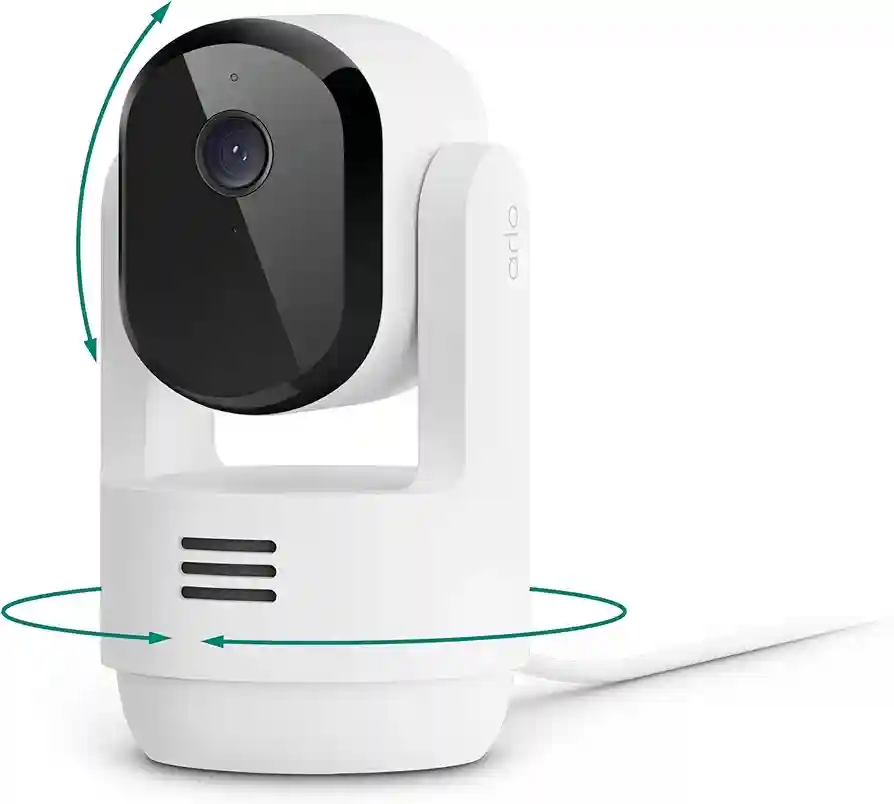
Mechanical pan-tilt covers an entire room in 2K. Works with every major smart home platform. Built-in siren. PCMag's current #1 indoor pick. The best option for large rooms where a fixed camera can't see everything.
- Mechanical pan-tilt — 360° room coverage
- 2K resolution
- Built-in siren for deterrence
- Works with all smart home platforms
- Smooth auto-tracking
- Affordable for Arlo
- Zero free storage — sub required to record
- Cloud-only — no local storage at all
- Micro-USB charging in 2026
- No physical privacy shutter
The pan-tilt mechanism is what sets this apart. One camera tracks motion across your entire living room — no blind spots, no second camera needed. The auto-tracking smoothly follows a person walking through the room. Arlo Secure is required to save any recordings, which is the biggest downside — without a subscription, you only get live viewing. At $3/month for one camera it's not expensive, but it's still a recurring cost. The built-in siren is a nice touch for an indoor camera — you can trigger it manually from the app if you see something on the live feed.
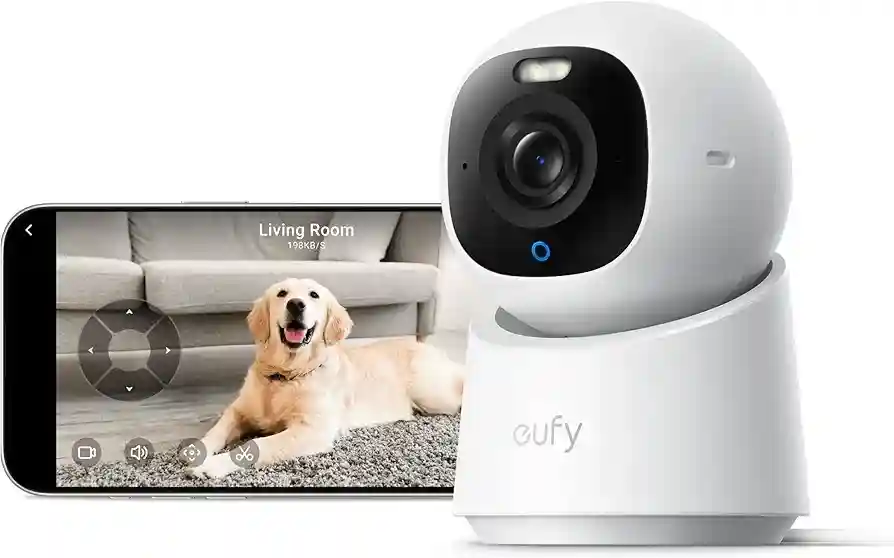
4K resolution with pan-tilt auto-tracking, color night vision, local microSD storage, and zero monthly fees — all for under $60. The best value indoor camera you can buy right now, period.
- 4K resolution at under $60
- Pan-tilt with auto-tracking
- Zero subscription fees
- Local microSD storage
- Color night vision with spotlight
- All smart platforms including HomeKit
- Eufy data privacy history
- 128GB fills up at 4K
- Spotlight may be disruptive at night
- No physical privacy shutter
The value proposition here is almost absurd. You're getting 4K resolution, mechanical pan-tilt, auto-tracking, AI person/pet detection, a siren, color night vision, and local storage — all features that cost $150+ from Arlo or Nest — for fifty dollars with no monthly fees. Consumer Reports rates it highly for video quality and smart features. The auto-tracking smoothly follows subjects around the room. The main caveat is Eufy's data privacy history — they've had publicized incidents of uploading data without user consent, which they've since addressed. For the privacy-conscious, the local-only storage option helps mitigate this.
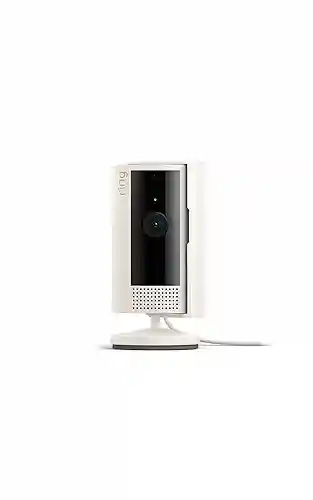
Physical manual privacy shutter that kills the camera AND microphone with one push. Compact, discreet, deep Alexa integration, Advanced Pre-Roll captures seconds before motion. The best indoor camera if privacy control matters to you.
- Physical privacy shutter — camera + mic off
- Compact and discreet design
- Deep Alexa/Ring ecosystem integration
- Advanced Pre-Roll captures before motion
- Affordable at ~$60
- Available in white or black
- Only 1080p in 2026
- Cloud-only — no local storage
- Ring Protect needed for recording
- Alexa only — no Google or HomeKit
- No pan-tilt
The physical privacy shutter is the headline feature for a security-focused audience. Push the button and the camera lens and microphone physically shut off — no trusting software toggles, no worrying about remote access. For bedrooms, nurseries, or any space where you want absolute certainty the camera is off, this is the only Ring camera that offers it. The Advanced Pre-Roll feature captures a few seconds of video before the motion event, giving you context that most cameras miss. The Alexa integration is the deepest on this list — voice commands, Echo Show live view, and automated routines tied to your Ring system.
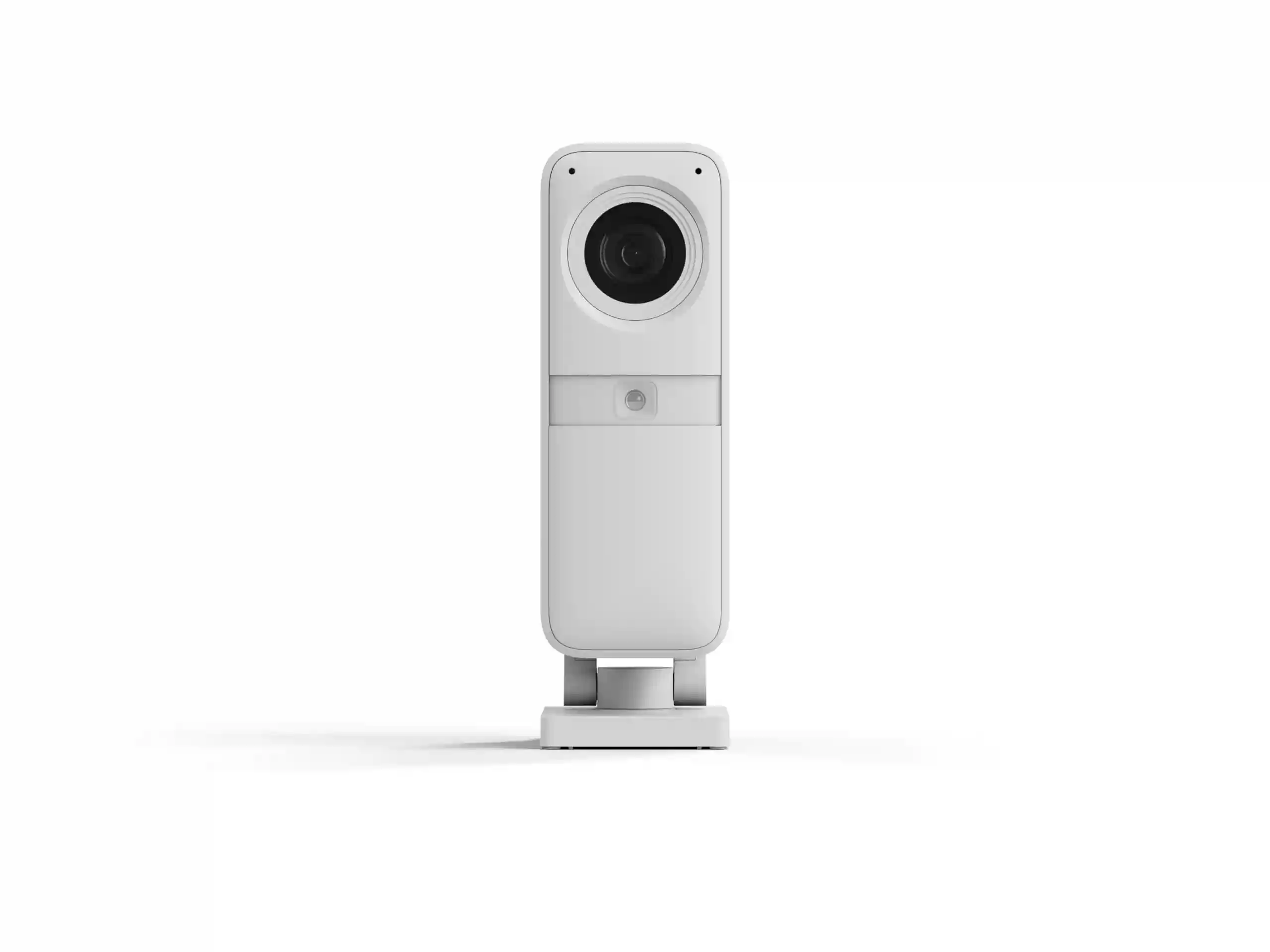
The only indoor camera where a trained monitoring agent can access your live feed during a break-in, speak through the speaker, and dispatch police. This is active response, not passive recording.
- Live agent intruder intervention — unique
- Part of full SimpliSafe security system
- App-controlled privacy shutter
- No long-term contracts
- 1536p slightly above standard 1080p
- Expensive at $150 for the specs
- Best features need $33–50/mo plan
- No pan-tilt
- No local storage
- Requires SimpliSafe system for full value
SimpliSafe's Intruder Intervention is the feature that puts this on the list despite mid-tier specs. When the AI detects a potential break-in, a SimpliSafe monitoring agent gets a live feed from your indoor camera. They can assess the situation, speak through the two-way audio to warn the intruder, and dispatch police with video evidence. No other indoor camera offers this. The camera itself is a $150 device with 1536p resolution — nothing spectacular — but the system-level value is what you're paying for. The app-controlled privacy shutter is nice but not as trustworthy as Ring's physical hardware shutter.
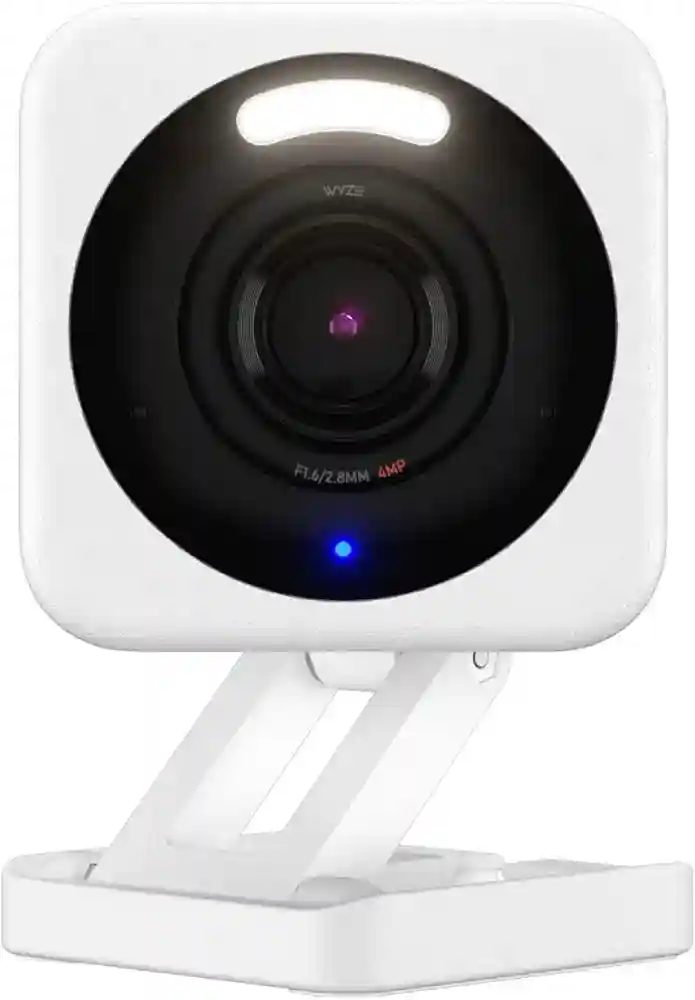
2K resolution, color night vision, spotlight, microSD for free continuous recording, Wi-Fi 6, and IP65 weatherproofing — for thirty dollars. Four of these costs less than one Nest Cam. The budget king.
- Unreal value at ~$30
- 2K resolution
- Free continuous recording via microSD
- Color night vision with spotlight
- Wi-Fi 6
- IP65 — works outdoors too
- Cheapest cloud sub in industry
- Wyze has had data security breaches
- Audio quality is mediocre
- 12-sec clip limit without Cam Plus
- App can be buggy
- No HomeKit
- No physical privacy shutter
The Wyze Cam v4 is the camera that makes you question why anyone spends $100+. At $30-36, you get 2K resolution, color night vision with a spotlight, Wi-Fi 6, a microSD slot for free 24/7 continuous recording, sound detection (baby cry, dog bark), and IP65 weatherproofing so it works indoors and out. The catch is Wyze's privacy history — they've had documented security breaches. If that's a dealbreaker, look at the Eufy C120 or Tapo C225 instead. If you can accept the risk, four Wyze Cam v4s covers your entire home for about $140 total with zero monthly fees.
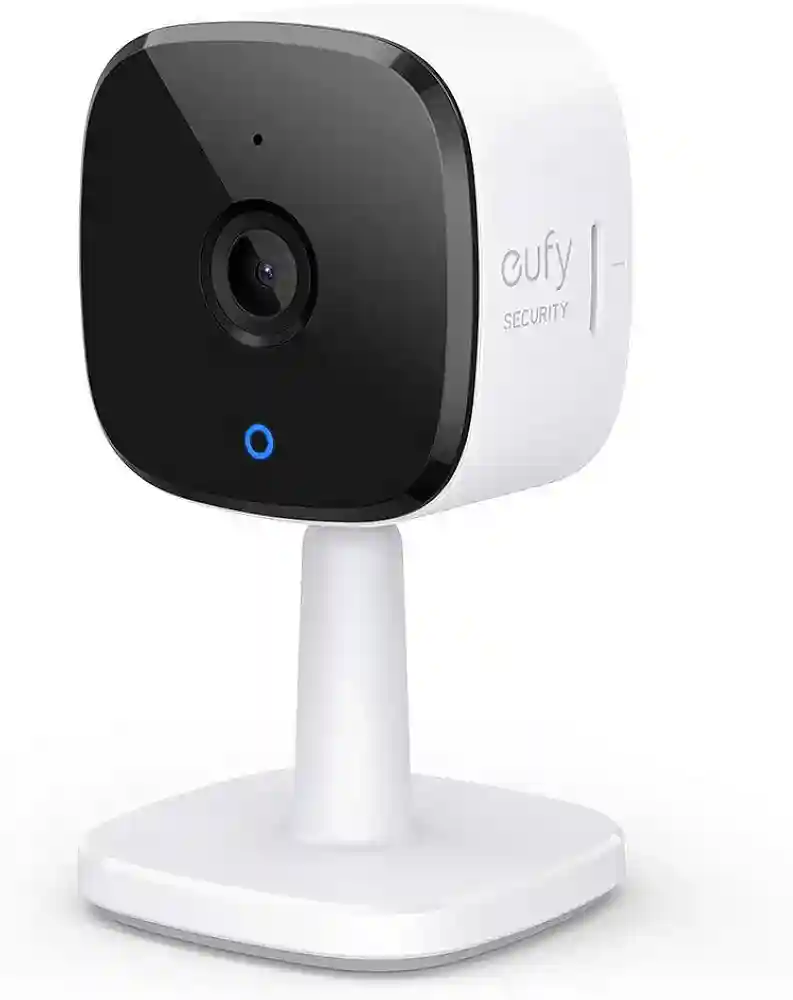
Apple HomeKit support at $43 is rare. 2K resolution, baby cry detection, local microSD storage, zero monthly fees, and strong data security scores from Consumer Reports. The Apple user's budget pick.
- Apple HomeKit at $43 is rare
- 2K resolution
- Baby cry / abnormal sound detection
- Local microSD storage — no sub
- Strong Consumer Reports data security
- Compact, discreet design
- No pan-tilt
- IR only — no color night vision
- Eufy privacy history
- 130° FOV is average
- No spotlight
The C120 hits a sweet spot for Apple users on a budget. HomeKit Secure Video works with your iCloud subscription, storing encrypted footage that even Eufy can't access. The baby cry detection is a standout feature — it distinguishes between a baby crying, a dog barking, and other abnormal sounds, sending specific alerts rather than generic motion notifications. Consumer Reports gives it high marks for data security. At $43 with no subscription, it's the cheapest HomeKit-compatible indoor camera by a wide margin — the next cheapest options from Arlo and Logitech start at $100+.
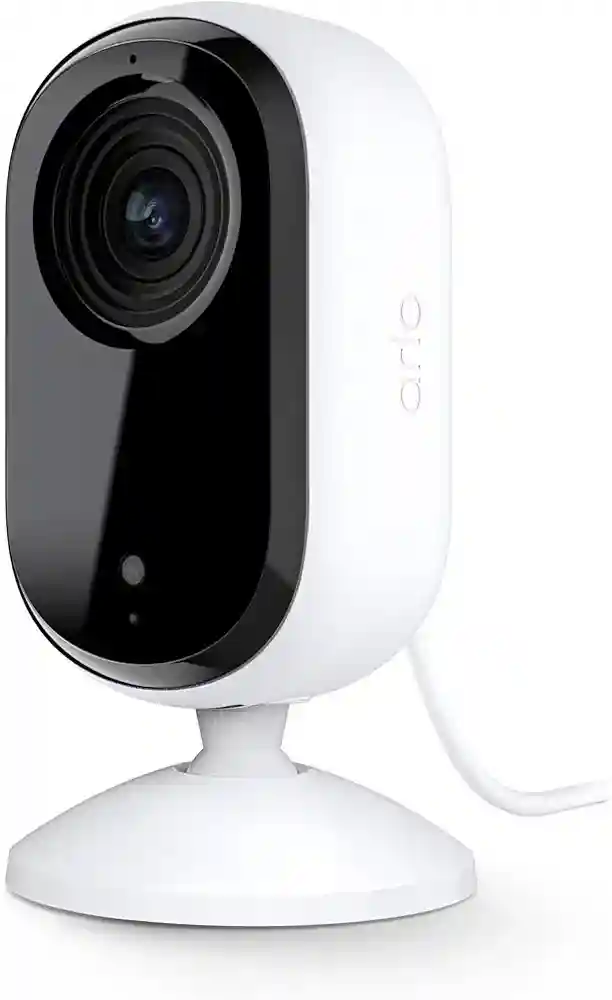
The privacy shield automatically closes when you're home and opens when you leave — based on your phone's location. No button press, no app toggle. The best automated privacy solution on any indoor camera.
- Automated privacy shield — best in class
- Built-in siren
- Works with all major platforms
- Very affordable at ~$30
- Compact and discreet
- Geofence-based auto on/off
- Only 1080p
- Cloud-only — no local storage
- Subscription needed for recording
- IR only night vision
- Micro-USB in 2026
The automated privacy shield is the killer feature. Using your phone's GPS, the camera detects when you're home and physically covers the lens — no action needed from you. When you leave, it uncovers and starts monitoring. This is the most seamless privacy solution on any indoor camera. The physical shield means even if the camera is hacked, the lens is physically blocked when you're home. At ~$30, it's the cheapest camera with hardware-level privacy automation. The tradeoff is 1080p resolution and cloud-only storage — you need Arlo Secure to record anything.
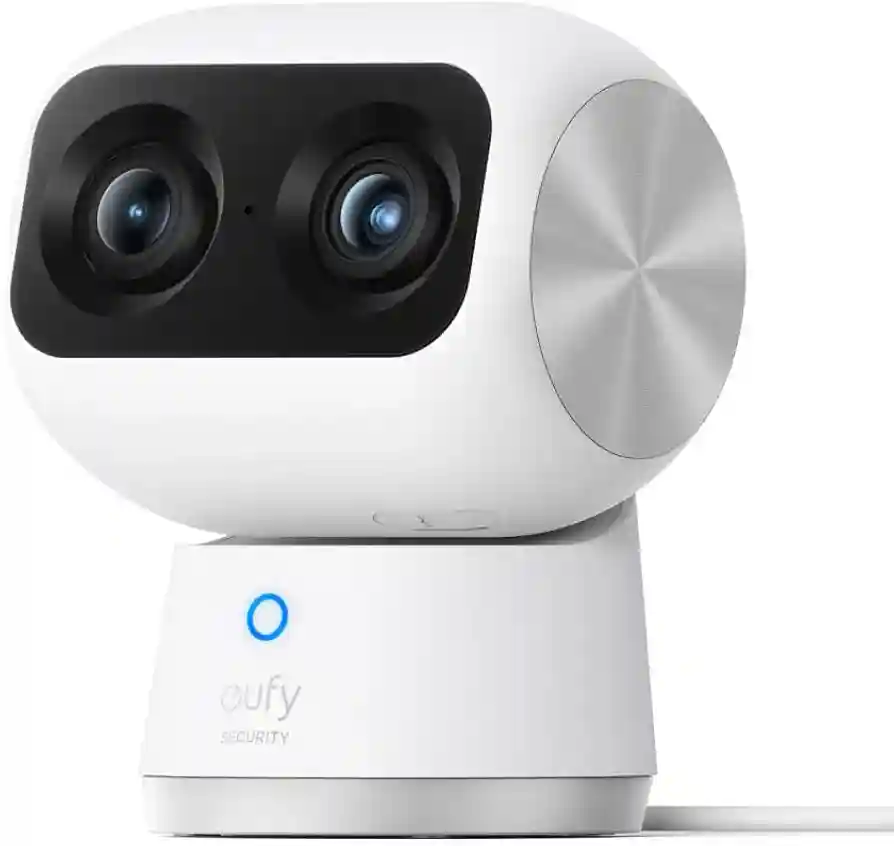
Dual-lens: 4K wide-angle plus 2K telephoto with 8x hybrid zoom. 360° pan-tilt, auto-tracking, local storage, and zero subscription fees. The premium indoor camera for people who want the absolute best image quality.
- 4K + 2K dual-lens
- 360° pan-tilt + auto-tracking
- 8x hybrid zoom reads text across room
- Local storage — no sub
- All smart platforms
- 32ft night vision range
- Expensive for indoor camera
- Bulkier than single-lens models
- IR only — no color night vision
- HomeBase recommended for best experience
- Eufy privacy history
The S350 is the indoor version of the SoloCam S340 we recommended in our outdoor article. Same concept — wide-angle lens for the full room, telephoto lens for zoomed detail. The 8x hybrid zoom can read text on a package across the room. The auto-tracking smoothly follows subjects as they move, keeping them centered. At $130-150 it's the most expensive camera on this list, but you get dual 4K+2K lenses, 360° coverage, and zero recurring fees. If you want one camera to cover a large open-plan living space with maximum detail, this is it.
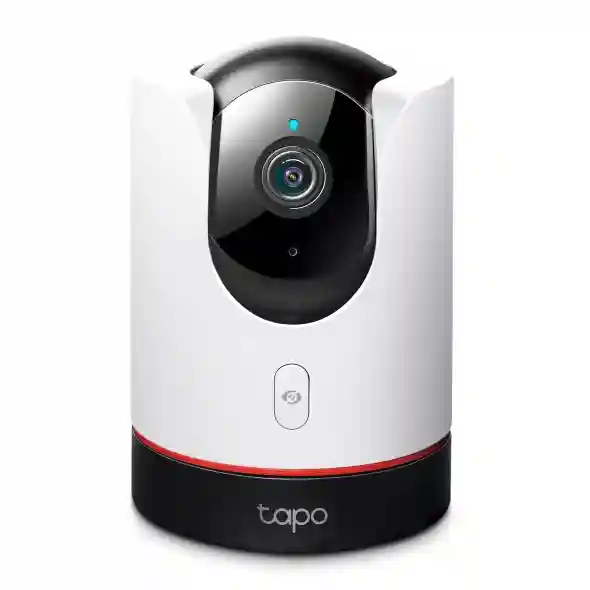
Physical privacy mode where the lens mechanically tilts face-down into the camera body. 360° pan-tilt, 2K, microSD up to 512GB, HomeKit via Matter, baby cry detection — all under $50 with zero fees.
- Physical privacy mode — lens hides in body
- 360° pan-tilt at under $50
- 2K resolution
- microSD up to 512GB — huge
- HomeKit via Matter support
- Baby cry / dog bark detection
- Zero subscription fees
- Data privacy policies rated poorly by CR
- No spotlight or color night vision
- No siren
- Plastic build feels budget
The Tapo C225 is the best value pan-tilt camera on this list. Under $50 gets you 360° coverage, 2K resolution, and a 512GB microSD slot — that's enough local storage for weeks of footage at no cost. The physical privacy mode is unique: the lens mechanically tilts face-down into the camera body, physically blocking the view. It's not a cover or shutter — the entire lens assembly rotates away. HomeKit support via Matter is a bonus at this price. The main knock from Consumer Reports is subpar data privacy policies from TP-Link, similar to the Eufy concern. But the hardware privacy mode helps mitigate that — when the lens is physically turned away, no software exploit can see through it.
The Google Nest Cam Indoor (Wired, 3rd Gen) takes our #1 spot — 2K HDR with the widest field of view on this list, Gemini AI that actually understands what's happening in your footage, and 6 hours of free storage without any subscription. For most people, it's the smartest indoor camera you can buy right now.
Do Indoor Security Cameras Actually Stop Break-Ins?
Indoor cameras serve a different purpose than outdoor cameras. Outdoor cameras are primarily about deterrence — making a burglar think twice before approaching. Indoor cameras are about evidence and response. If someone is already inside your home, the indoor camera's job is to capture clear footage for identification and, in the case of SimpliSafe's Intruder Intervention, to enable a live human response.
That framing is supported by the research, and it cuts against how these are usually sold. A 2019 systematic review of forty years of camera studies found that actively monitored systems were associated with a crime reduction of around 15%, while passive, record-only systems showed no statistically significant effect at all. Recording deters nobody on its own. What deters is the belief that something will happen.
An indoor camera is by definition passive unless it does something — which is why the two entries here that make noise or summon a person matter more than their specifications suggest. A siren gives an intruder a reason to leave immediately; SimpliSafe's live agent intervention gives them a voice telling them to. Everything else on this list is building a case for afterwards, which is genuinely valuable and is not the same thing.
That said, indoor cameras still contribute to deterrence once someone is inside. Many burglars will leave immediately if they spot an active camera — the risk of clear facial identification is a powerful motivator to abort, and the average break-in only lasts eight to ten minutes, so anything that costs time works in your favour. A camera with a visible siren (like the Arlo Essential or Eufy E30) adds an additional layer: the alarm itself can startle someone into leaving before they take anything.
For a deeper look at how burglars choose targets and what makes them abort mid-break-in, see our guide to how burglars actually choose targets.
Privacy Matters — Why Physical Shutters Are Important
Here's the uncomfortable truth about indoor cameras: any internet-connected camera in your home is theoretically accessible to someone who isn't you. Hacking incidents — while rare — have happened with Ring, Wyze, Eufy, and others. Software-based "privacy modes" can be bypassed by malware or exploits. A physical shutter cannot.
Three cameras on this list offer physical privacy solutions, and they work very differently:
Ring Indoor Cam — Manual push-button shutter. You physically slide a cover over the lens and microphone. Simple, reliable, requires you to remember to do it.
Arlo Essential Indoor — Automated geofence shield. The camera detects when your phone is home (via GPS) and automatically closes a physical shield over the lens. No action needed. Opens when you leave.
TP-Link Tapo C225 — Mechanical tilt-away. The entire lens assembly rotates face-down into the camera body. Triggered via app or schedule. The lens physically cannot see anything in this position.
All three are meaningfully more secure than a software toggle that says "camera off." If privacy in your home matters to you — and it should — prioritize one of these three.
A shutter protects you from the camera. It does nothing about the company behind it — and an indoor camera points at your living room, so that distinction matters more here than anywhere else on this site. Here is the documented record for the brands on this page.
Ring — $5.8 million, Federal Trade Commission, May 2023. Unrestricted employee and contractor access to customer video; two documented instances of staff viewing women's private recordings, one continuing for months; no multi-factor authentication until 2019; roughly 55,000 accounts compromised between January 2019 and March 2020. Ring denied violating the law and accepted a twenty-year compliance obligation.
eufy — 2022 to 2023. Devices marketed as "No Clouds or Costs" were found uploading facial thumbnails to Amazon Web Services with cloud storage switched off. The Verge streamed footage from a eufy camera across the country with no encryption. Anker conceded in stages, finally acknowledging in early 2023 that the cameras had never been end-to-end encrypted.
Wyze — 2019 to 2024. A March 2019 Bitdefender disclosure went unpatched until January 2022; the original Cam v1 could not be fixed and was retired. In February 2024 roughly 13,000 users were shown other people's camera feeds after a caching library mismapped device and user identifiers — five months after a similar incident.
TP-Link is rated poorly on data privacy by Consumer Reports. That is a rating rather than a documented incident, and we are not going to present it as equivalent to the three above.
Two things follow. First, none of those were cameras being hacked — every one was an account system, an access policy, a storage bucket or a caching layer. The lens was never the weak point, which means a physical shutter, useful as it is, addresses a different problem than the one that has actually harmed people. Second, the brands with nothing on that list are largely the ones that never held your footage: a camera recording to a card in your house cannot be exposed by someone else's caching bug. On an indoor camera, that is the specification worth weighting most heavily.
What to Look for in an Indoor Security Camera
Resolution
2K (2560×1440) is the sweet spot for indoor cameras in 2026. It provides enough detail to identify faces across a standard room and read text. 1080p still works for small rooms but struggles when you zoom in. 4K is available from Eufy (E30 and S350) but generates large files and is honestly overkill for most indoor spaces unless you have a very large open floor plan.
Pan-Tilt vs. Fixed
A fixed camera with a wide field of view (130°+) covers a single room well from a corner. A pan-tilt camera (Arlo Essential PT, Eufy E30, Eufy S350, Tapo C225) can mechanically rotate to cover 360° — meaning one camera can monitor an entire room, including areas behind the camera's initial position. Pan-tilt with auto-tracking follows moving subjects automatically. If you have large rooms or open floor plans, pan-tilt is worth the small price premium.
Privacy Features
For indoor cameras, this should be near the top of your priority list. Look for: physical privacy shutters (Ring, Arlo Essential, Tapo C225), local-only storage options (Eufy, Wyze, Tapo), and strong data security ratings from Consumer Reports or similar. Software-only privacy toggles are better than nothing, but hardware solutions are meaningfully more trustworthy.
Storage: Local vs. Cloud
Local storage (microSD) is free, private, and works offline. Cloud storage is accessible anywhere and survives if someone steals the camera. The best setup uses both. Cameras from Eufy, Wyze, and Tapo all support local microSD recording with optional cloud backup. Ring, Arlo, and SimpliSafe are cloud-only — you pay monthly or you don't record.
Smart Home Compatibility
Match your camera to your ecosystem. Google Home: Nest Cam is the obvious choice. Alexa: Ring Indoor Cam. Apple HomeKit: Eufy C120 or Tapo C225 (via Matter). All platforms: Arlo Essential PT. Mixing ecosystems is possible but creates fragmented control.
Subscription Costs Compared
Google Home Premium: $8–15/mo → $288–540 over 3 years.
Arlo Secure: $3–10/mo → $108–360 over 3 years.
Ring Protect: $4–10/mo → $144–360 over 3 years.
SimpliSafe: $10–50/mo → $360–1,800 over 3 years.
Wyze Cam Plus: $2.99/mo → $108 over 3 years.
Eufy / Tapo: $0. Forever.
If avoiding monthly fees is your priority: the Eufy E30, Eufy C120, Eufy S350, Tapo C225, and Wyze Cam v4 all work fully without paying a dime per month.
Indoor vs. Outdoor Cameras — What's the Difference?
Outdoor cameras are weatherproofed (IP65-67), designed for wide-area coverage of yards and driveways, and prioritize deterrence features like spotlights and sirens. Indoor cameras are designed for room-scale monitoring, prioritize privacy features (shutters, local storage), and often include pan-tilt for whole-room coverage. Many cameras (Wyze Cam v4, Nest Cam Battery, Arlo Pro 5S) work both indoors and outdoors, but purpose-built indoor cameras typically have better privacy features and smaller form factors.
For our full outdoor camera guide, see Best Outdoor Security Cameras (2026).
Frequently Asked Questions
No. Many indoor cameras offer free local storage via microSD card. Eufy, TP-Link Tapo, Wyze, and Reolink all work without subscriptions. Paid plans typically add cloud backup, extended video history, and advanced AI features like facial recognition.
No camera is 100% hack-proof, but you can reduce risk significantly by using strong unique passwords, enabling two-factor authentication, keeping firmware updated, and choosing cameras with strong data security ratings. Cameras with local-only storage and physical privacy shutters have the smallest attack surface.
The Arlo Essential Indoor Camera has an automated physical privacy shield that closes when you're home and opens when you leave. The Ring Indoor Cam has a manual privacy shutter. The TP-Link Tapo C225 has a physical privacy mode where the lens tilts face-down into the body. All three physically block the lens rather than relying on software.
For most homes, 2-3 indoor cameras cover the key areas: main entry hallway, living room or common area, and any room with valuables. Apartments typically need 1-2. Pan-tilt cameras can cover an entire room from one mounting point, reducing the total needed.
It depends on the camera and storage setup. Wired cameras with microSD cards like the Wyze Cam v4 and Eufy C120 can record continuously 24/7. Cloud-only cameras typically record only when motion is detected to save storage space.
2K (2560×1440) is the sweet spot for 2026. It provides enough detail to identify faces across a room. 1080p works for small rooms but shows its limits when zooming. 4K is available but generates large files and is overkill for most indoor spaces.
Testing status. Researched, not tested. Hardware prices are approximate; subscription pricing was checked in August 2026.
Subscriptions change fast in this category. Nest Aware was retired in October 2025 and replaced by Google Home Premium — Standard at $10/month or $100/year, Advanced at $20 or $200. No Nest camera has a memory card slot, so without a plan there is no archive at all. Ring Home became Ring Protect on 14 January 2026: Solo $4.99, Multi $9.99, Pro $19.99. Arlo Secure Plus is $7.99/month billed annually for a single camera or $17.99 for unlimited cameras — it is frequently quoted as a per-camera price, which it is not.
Deterrence evidence is from Piza and colleagues' 2019 systematic review of camera studies, which distinguishes actively monitored from passive record-only systems. Offender-behaviour figures come via our guide to how burglars choose targets, which discloses that the most-cited survey was funded by the alarm industry's own research foundation.
Privacy record from the Federal Trade Commission for Ring, Bitdefender for Wyze, The Verge and Anker's own statements for eufy, and Consumer Reports for TP-Link.
Privacy First, Then Everything Else
Indoor cameras live in your most personal spaces. The "best" camera isn't just the one with the sharpest image — it's the one you trust enough to put in your living room.
For most people: the Google Nest Cam Indoor (3rd Gen) at $99 delivers the smartest features with a generous free tier. For privacy-first buyers: the Arlo Essential Indoor at $30 with its automated privacy shield is the most trustworthy option. For maximum value: the Eufy Indoor Cam E30 gives you 4K, pan-tilt, and auto-tracking for $50 with zero fees.
Whatever you choose, use a strong unique password, enable two-factor authentication, and keep the firmware updated. The weakest link in any camera system is usually the password on the account, not the hardware itself.