Trigger locks occupy an awkward space in the firearms world. They satisfy a legal requirement, they make people feel safer, and they're cheap enough that police departments hand them out for free. They also use the cheapest commodity locking mechanisms ever manufactured — wafer locks and basic pin tumblers that have been picked, shimmed, and combed open by every locksport channel on YouTube. The free Project ChildSafe trigger lock that came in the mail with your firearm purchase isn't a security device. It's a checkbox.
That doesn't mean trigger locks are useless. A two-year-old can't defeat one. A grade-schooler can't defeat one. They prevent accidental discharges from curious hands during the brief window when a real safe isn't accessible. But the second you're protecting against anyone older than about ten with internet access, you need to stop thinking of a trigger lock as security and start thinking of it as the bare minimum legal compliance. The actually-useful gun locks — cable locks, chamber locks, magazine well locks — get less attention because they're less visible and slightly less convenient. They're also significantly more effective. Here's the deep dive.
⚡ Pick Your Approach
Five paths, ranked roughly from "checkbox compliance" to "actually secure." Tap any tile to jump to the relevant section.
The Truth About Trigger Locks
Almost every trigger lock on the consumer market — including the ones marketed as "pick-resistant" — uses one of two locking mechanisms: wafer locks or basic 4-pin tumblers. Both are the same mechanisms found in cheap padlocks, luggage locks, and the kind of bike locks we explicitly told you to skip in our bike locks guide. The locksport community has thoroughly documented their weaknesses for over two decades.
The honest issue isn't even picking — it's that trigger locks have several non-pick failure modes that are arguably worse:
- Shimming. Many trigger locks have housings that allow a thin metal shim to bypass the locking mechanism entirely.
- Comb attacks. The wafer locks used on most cheap trigger locks can be opened by sliding a comb-like tool into the keyway and lifting all wafers simultaneously.
- Levering off. Several gun community veterans note that "most trigger locks can be levered off the gun with a screwdriver if you don't care about the finish." The lock itself stays intact — it just stops being attached to the firearm.
- Loose-fit firing. The most genuinely dangerous failure mode: if the trigger lock isn't installed tightly, or if it's installed on a trigger guard shape that doesn't match the lock's design, the trigger may still have enough movement to fire a chambered round. This is the reason every trigger lock manufacturer warns against installing on a loaded firearm — the lock can become the cause of the negligent discharge it was supposed to prevent.
None of this matters if your threat model is "my four-year-old wandered into the bedroom." It matters a great deal if your threat model is "my curious teenager who knows how to use Google."
Hard rule, no exceptions: Never install a trigger lock on a loaded firearm. Always confirm the gun is unloaded — magazine out, slide locked back, chamber visually and physically inspected — before installing any locking device. Ammunition stored separately during installation. The reason this gets repeated everywhere is that it's the most common cause of trigger-lock-related injuries.
The Five Ways to Lock a Gun
"Gun lock" is a category, not a product. There are five legitimate approaches, and they sit on very different points of the security curve. Here's the ranked breakdown — bottom to top, from "compliance theater" to "actually works."
Trigger Lock
Clamps over the trigger guard to physically block the trigger. Easiest to install and remove, also the easiest to defeat. Doesn't prevent the gun from being loaded, doesn't prevent it from being stolen, and on some firearm/lock combinations doesn't even reliably prevent firing. Use only as a last resort or for legal compliance.
Magazine Well Lock
Inserts into the magazine well of a semi-automatic firearm (most often AR-15s) and physically blocks magazine insertion. Some models also block the upper/lower receiver from separating. Effective on AR-style platforms specifically. Doesn't work on most pistols, revolvers, or bolt-action rifles.
Cable Lock
Threads a steel cable through the action, chamber, or barrel of the firearm. The cable physically prevents the action from closing on a chambered round and, on most semi-automatic pistols, also prevents magazine insertion. Significantly better than a trigger lock because the gun cannot be loaded, period. Most "free with purchase" gun locks are cable locks for this reason.
Chamber Lock
Sits inside the firearm's chamber, physically occupying the space where a round would normally be loaded. Because the chamber is blocked, no ammunition can be chambered, and the firearm cannot be fired. The most effective single-device approach to disabling a firearm — analogous to putting a boot on a car wheel rather than just locking the doors.
Small Safe / Lockbox
The honest answer for almost every situation. A $60 SnapSafe Treklite XL or a $300 Fort Knox PB1 provides better security than any trigger, cable, or chamber lock — and it also prevents the firearm from being stolen, which no on-gun lock can do. Cross-references our best gun safes guide.
The honest takeaway: for almost every household, a small lockbox is the right answer. Locks that attach to the gun itself are useful as supplemental layers — and they're sometimes legally required, especially for transport — but they shouldn't be your only line of defense.
The Lock That Police Hand Out to "Protect Your Kids"
Project ChildSafe is a national firearm safety program founded in 1999 and primarily funded by the firearms industry trade association. Through partnerships with local police departments, the program has distributed an estimated 40 million free trigger and cable gun locks across all 50 US states. The program's stated mission is to prevent unintentional firearm injuries and access by children. The locks themselves are usually basic Master Lock or generic-brand cable locks.
Here's the uncomfortable part. The locks Project ChildSafe distributes use the same wafer or basic pin tumbler mechanisms that the locksport community has been demonstrating bypasses on for two decades. YouTube's LockPickingLawyer channel has destroyed dozens of trigger and cable locks across his ten years of content — many in under thirty seconds, several with nothing more than a paperclip, a comb tooth, or a strip of metal. The videos collectively have hundreds of millions of views. Anyone with internet access and curiosity has access to this information.
The criticism isn't that Project ChildSafe is malicious. It's that the program creates exactly the false sense of security its name implies — and the false security is its own harm. A parent who installs a free trigger lock and tells themselves "my gun is now child-safe" is statistically less likely to also buy a real lockbox or safe. Meanwhile, the lock that police handed them stops a four-year-old. It does not stop a curious eleven-year-old who watched a YouTube video. The kids the program is supposed to protect at the upper age range are precisely the ones who can defeat the lock.
Take the free Project ChildSafe lock when offered — having a backup is fine. Just don't treat it as the actual safety measure. Buy a small lockbox or get a real safe. The $60 SnapSafe Treklite XL is more security than every Project ChildSafe lock combined.
Trigger Locks (Compliance Tier)
If you're going to use a trigger lock, here are the two most popular options — both manufactured by Master Lock, both widely sold, and both honestly evaluated below. Master Lock dominates this category because they're cheap, available everywhere, and most people don't research gun locks the way they research the actual gun. Treat this tier as a checkbox, not a security upgrade.
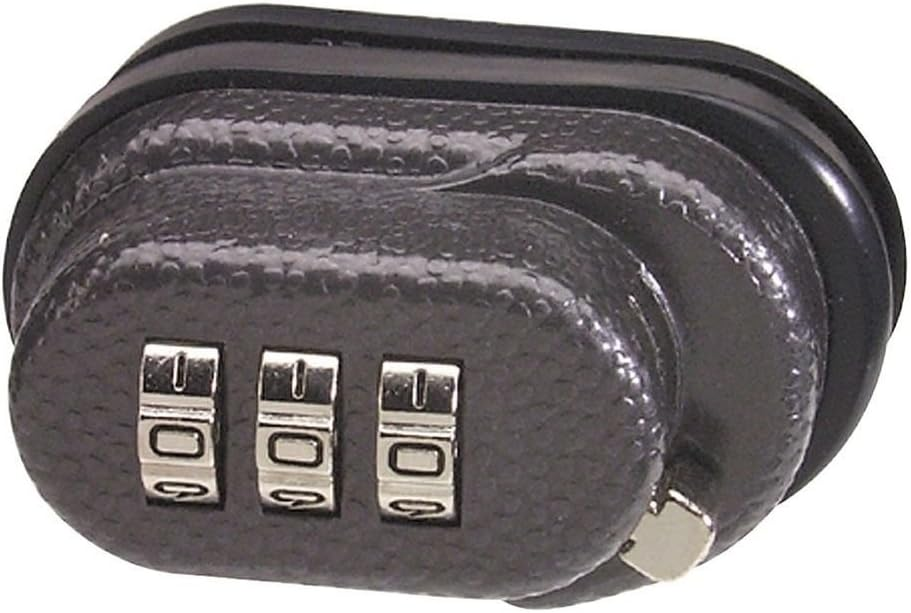
Master Lock 94DSPT Combination Trigger Lock
The most widely-sold trigger lock in North America. Steel and zinc body, three-digit set-your-own combination, rubber cushion pads to protect the firearm finish. Fits "many but not all" handguns, rifles, and shotguns — compatibility varies by trigger guard shape. The combination mechanism is convenient (no key to lose), but the dial spindle is the cheapest part of the lock and bends easily with hand pressure. Honest read: this is a checkbox, not a security device. It will keep a small child from pulling the trigger. It will not stop anyone older.
Check on Amazon →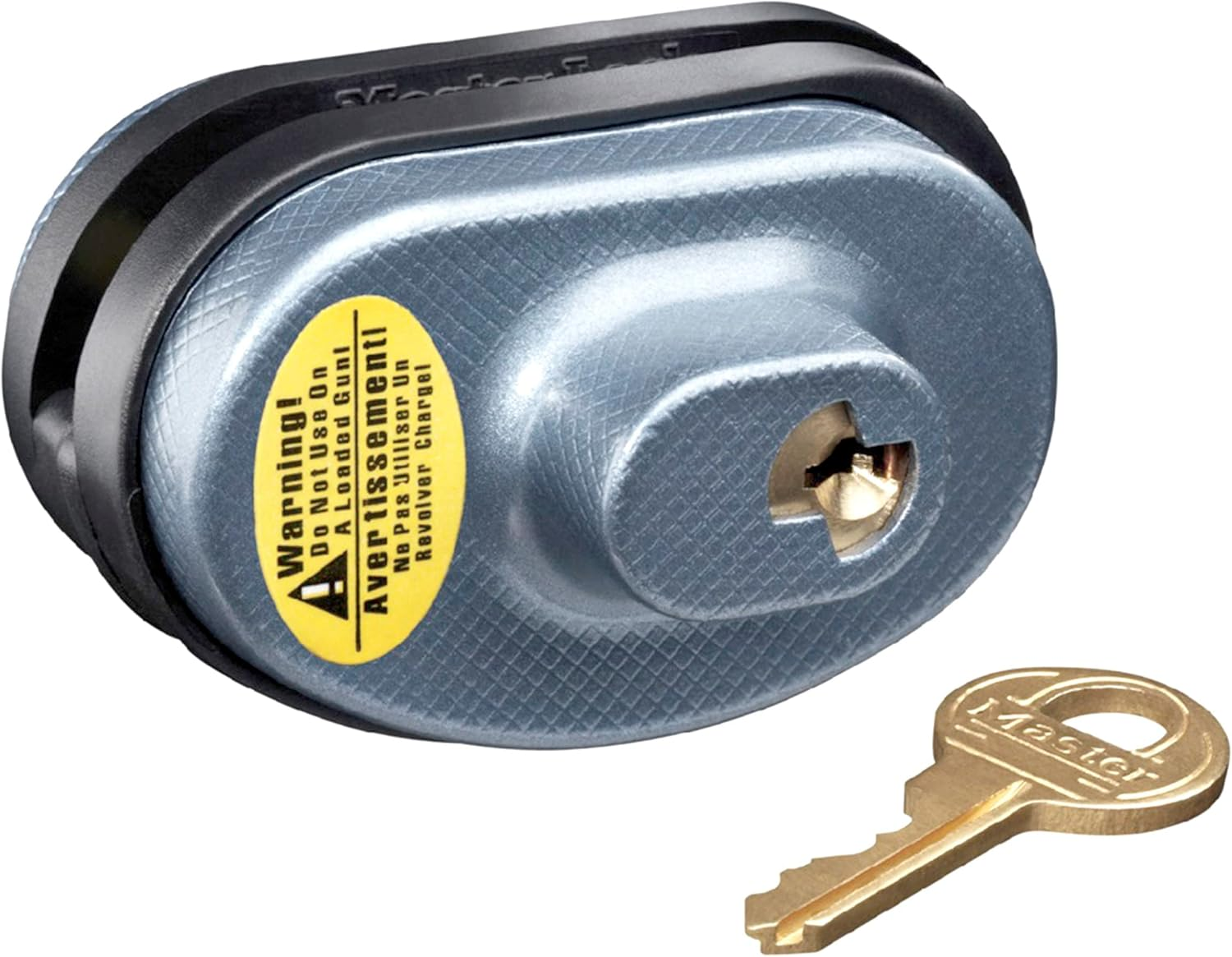
Master Lock 90TRISPT Keyed Trigger Lock
Same physical body as the 94DSPT but with a 4-pin tumbler keyed lock instead of a combination dial. Sold in keyed-alike sets of two or three, which is convenient if you have multiple firearms. Master Lock advertises the 4-pin tumbler as "pick-resistant" — that claim is generous to the point of being misleading. Four-pin tumblers are the absolute floor of pickable cylinders and are routinely defeated in seconds in locksport demonstrations. The lifetime warranty is real, though. Same compliance-only verdict as the 94DSPT.
Check on Amazon →Better Trigger Lock (If You Insist)
If you've decided to use a trigger lock and want something better than the Master Lock baseline, ABUS is the jump. ABUS makes the same products at a meaningfully higher build quality — real pin tumbler mechanisms, harder steel, tighter manufacturing tolerances. We've covered ABUS extensively in our padlock reviews for the same reasons.
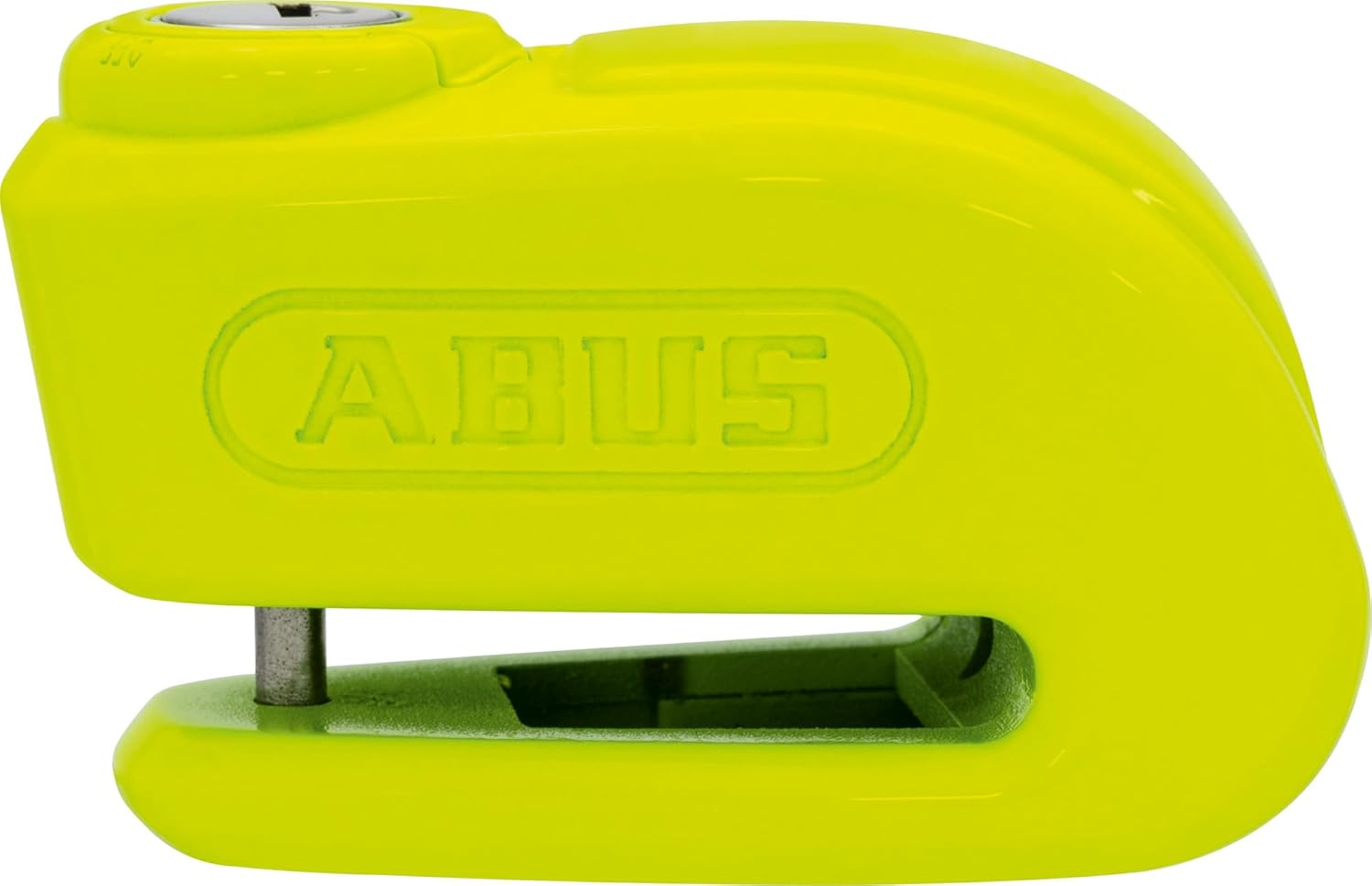
ABUS Gun Lock UPGRADE PICK
German-engineered with a real 5-pin tumbler — meaningfully harder to pick than the Master Lock 4-pin baseline. Hardened steel body, heavier construction, tighter tolerances on the trigger guard fit (which reduces the loose-fit firing risk). Still not vault security — no trigger lock is — but if you're committed to the trigger lock approach, this is where the meaningful build-quality jump exists. ABUS's reputation in lock manufacturing is genuinely earned.
Check on Amazon →Cable Locks (The Better Default)
Cable locks are the gun lock category that should be the default for most owners. They thread through the action of the firearm, preventing it from closing on a chambered round, and on most semi-automatic pistols they also block magazine insertion. Critically, they do not have the loose-fit firing failure mode that trigger locks do — if the cable is locked through the action, the gun physically cannot fire. The downsides: they're slightly slower to install and remove than trigger locks, and the cable itself can be cut with bolt cutters in seconds. But for a non-violent threat (a curious child, a casual snoop), the cable is plenty.
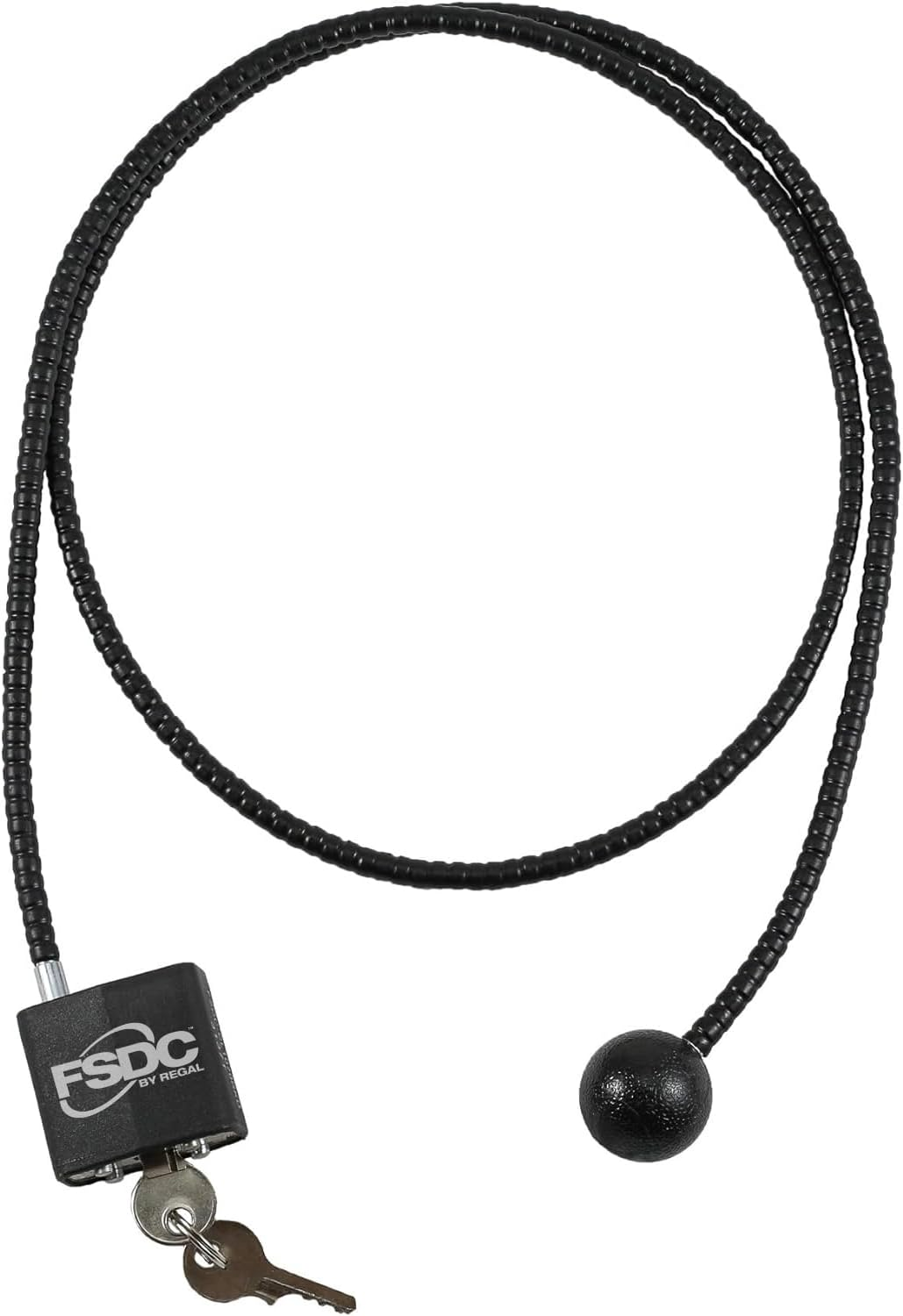
FSDC Cable Lock EDITOR'S PICK
The cable lock that comes free with new firearm purchases at most retailers — and one of the few free locks that's actually decent. California and Massachusetts approved as a firearm safety device, which means it's been independently tested to meet specific standards (rare in this category). 15-inch coated steel cable, basic key lock. Threads through the action of essentially any firearm. The default cable lock recommendation if you don't already have one — and if you do, you probably already have this one without knowing it.
Check on Amazon →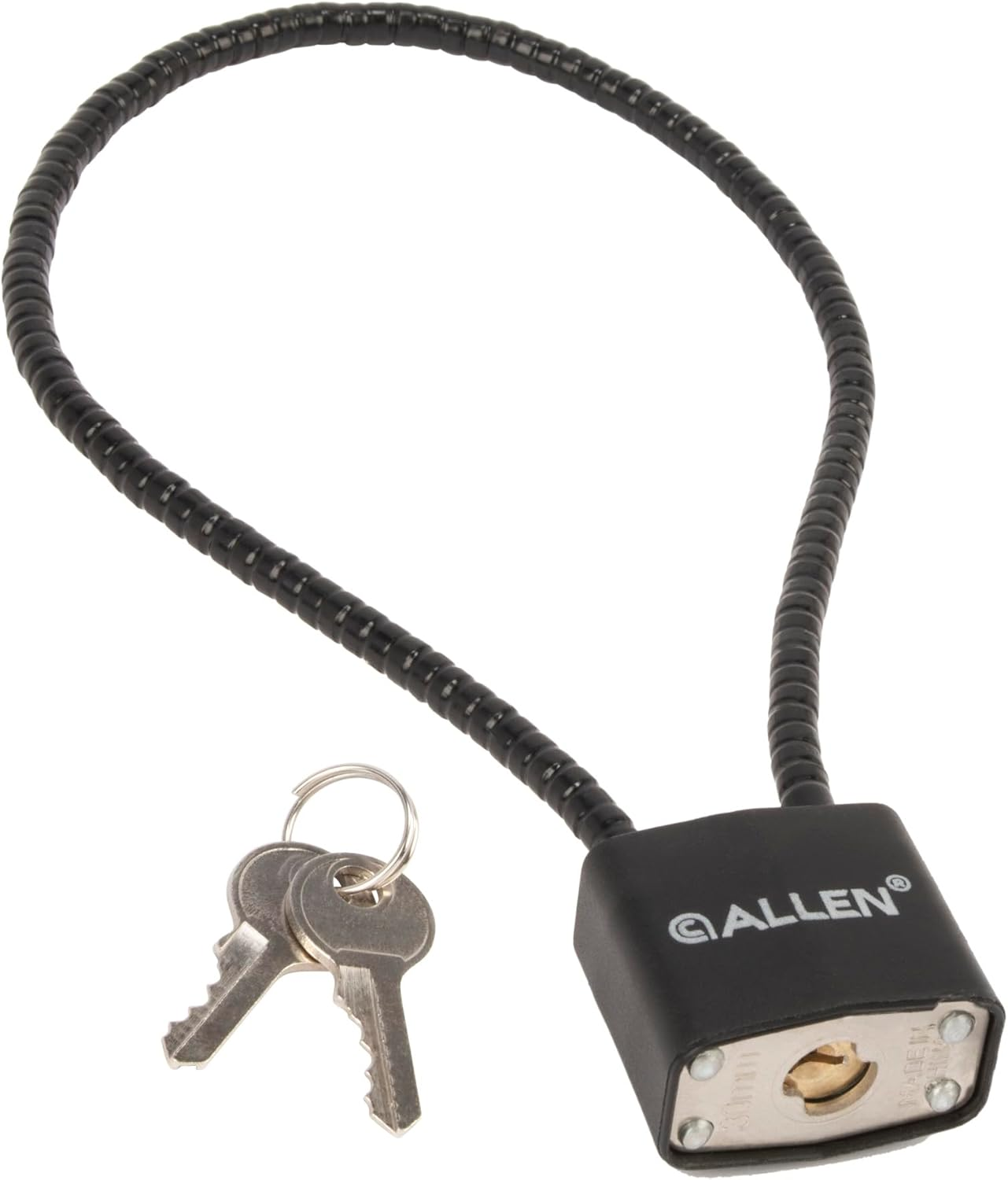
Allen Combination Cable Lock
15-inch coated steel cable with a 3-digit resettable combination dial — useful if you don't want to manage keys. 4-pin tumbler-equivalent resistance (similar caveats to the Master Lock 90TRISPT — combination dials of this price point are not high-security). The convenience win is real for households with multiple firearms or multiple authorized users. Set the same combination on all your cable locks and you have a single number to remember.
Check on Amazon →Chamber Locks (The Actually-Good Lock-Type)
Chamber locks are the one category of on-gun lock that actually delivers what trigger locks pretend to. The device sits inside the firearm's chamber, physically blocking the space where ammunition would be loaded. Because there's no chamber available for a round, the firearm simply cannot fire — there's no "loose fit" workaround, no shim attack, no comb attack. The locking mechanism is doing exactly the job it claims. The trade-off: chamber locks are firearm-specific (you need to match the lock to your caliber and chamber type) and they're slower to install than a trigger lock.
StopBox Chamber Lock Pro BEST LOCK-TYPE
The category-defining product that's actually still made and sold. Inserts into the firearm's chamber and locks in place with a combination dial — no round can chamber, no firing possible. Available in caliber-specific versions for the most common pistol and rifle chambers (9mm, .40, .45, 5.56/.223, .308). Tethers to a fixed object via included steel cable, so the firearm itself is also anchored — a feature most chamber locks skip. Made by the same company behind the StopBox Pro retention safe, which has a solid reputation in the firearms community. The honest catch: it's a small product category, so availability of specific calibers can vary — check stock before assuming it'll be there.
View at StopBox USA →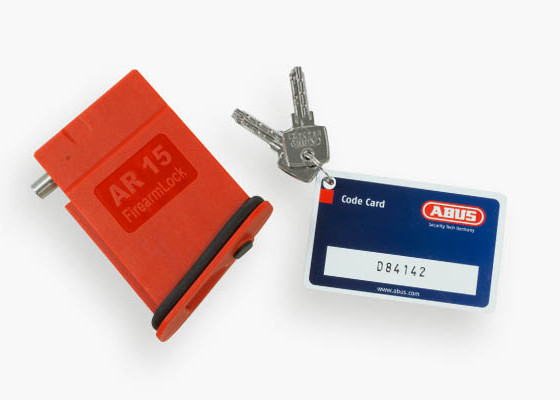
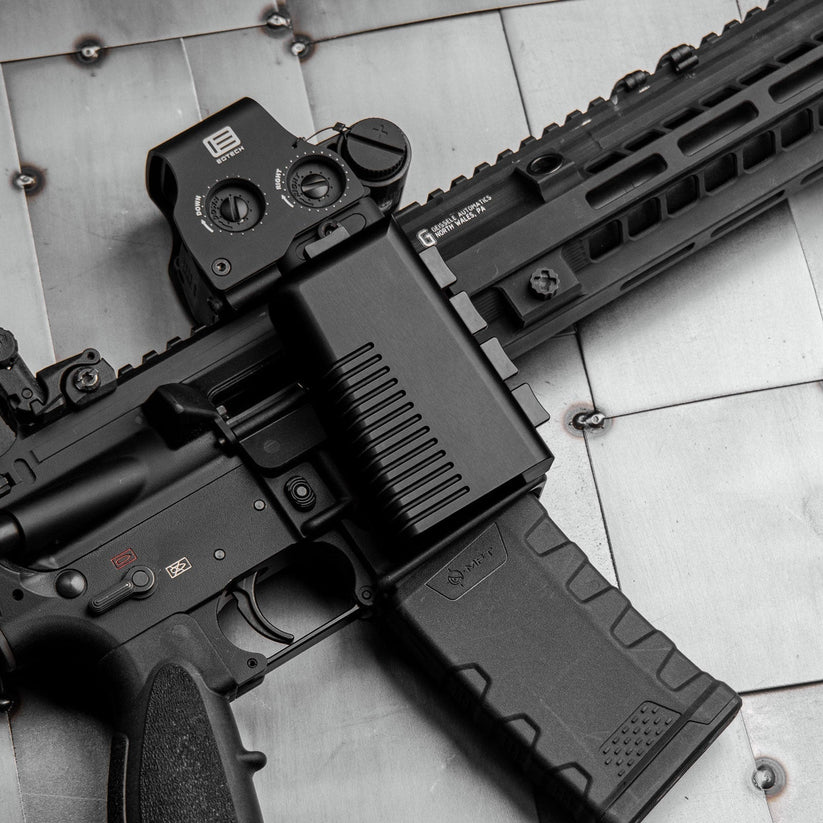
Franzen AR-15 Magazine Lock
Inserts into the AR-15 magazine well and locks the lower receiver, preventing magazine insertion and the upper/lower receivers from being separated. The right tool specifically for AR-platform owners — particularly relevant in jurisdictions with mandatory locking device laws for semi-automatic rifles. Universal-fit for mil-spec lower receivers. Note that this product category isn't well-served by Amazon (most listings are off-brand garbage), so we'd point you to DSTactical, who carries the legit Franzen version.
View at DSTactical →Skip the Locks. Get a Small Safe.
This is the honest answer for almost everyone reading this article. A small lockbox provides better security than every category of on-gun lock combined, prevents theft of the firearm itself (which no on-gun lock does), and meets legal storage requirements in essentially every jurisdiction. The price floor is $60.
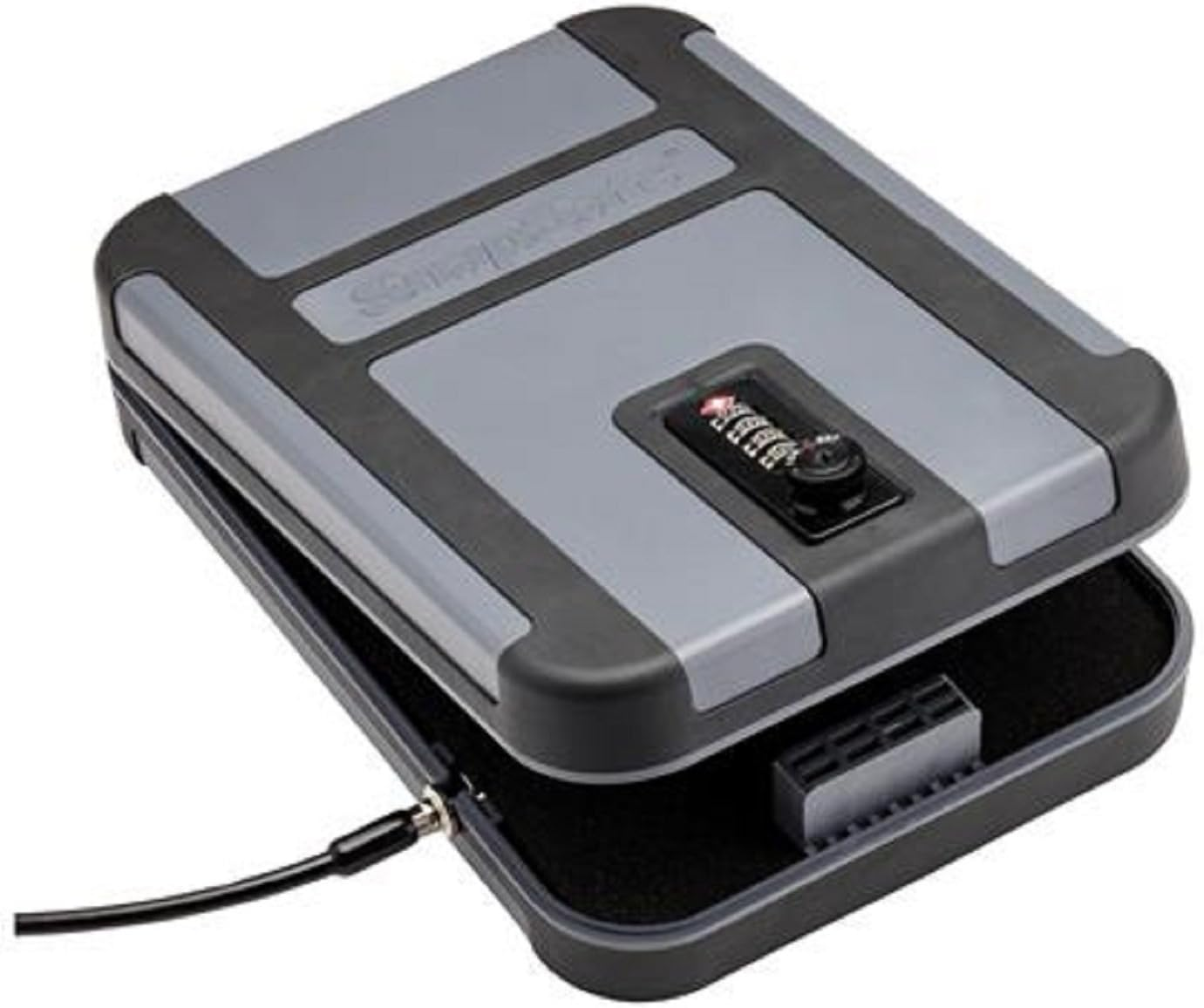
SnapSafe Treklite XL BEST ANSWER FOR MOST
TSA-approved travel and quick-access lockbox holding a single full-size handgun. Lightweight aluminum body, key lock, included security cable for tethering to a fixed object (a bed frame, a closet rod, a vehicle seat bracket). Works as a bedside lockbox, a vehicle storage option (where legal), and as a TSA-compliant travel case for flights. For $60 — the cost of three Master Lock trigger locks — you get a meaningfully better security tier in every dimension.
Check on Amazon →For a full breakdown of pistol safes, long-gun safes, and the related buying considerations, see our Best Gun Safes 2026 roundup. The Fort Knox PB1 (~$300) with its mechanical Simplex lock is our pick for serious bedside pistol storage; the Liberty Centurion 24 (~$999) is the right answer for most rifle owners.
🇨🇦 Quick note for Canadian buyers: Canadian non-restricted firearm storage law explicitly requires a trigger or cable lock attached AND the firearm stored in a locked container — OR storage inside a locked safe with no separate trigger lock required. So Canadian readers actually need the trigger or cable lock if they're not using a real safe. The pragmatic answer: get the cheap FSDC cable lock for legal compliance and a real lockbox for actual security. Both, not either-or. For full Canadian storage requirements (non-restricted, restricted, prohibited), see the dedicated section in our gun safes guide.
If You Take One Thing From This Article
Trigger locks are the most-purchased category of gun lock and the least-effective category of gun lock. That's not a controversial claim — it's the position of essentially every locksmith, locksport channel, and serious firearms instructor who's looked at the data. The reason trigger locks dominate the market is that they're cheap, visible, easy to install, and meet the legal compliance checkbox. None of those characteristics are the same as "secure."
If you need to use a trigger lock — for legal compliance, for transport, for layered storage — the ABUS Gun Lock is the meaningfully better pick over Master Lock at roughly twice the price. If you're shopping for the right gun lock category in the first place, cable locks beat trigger locks for almost every firearm and use case (the FSDC Cable Lock is the standard pick at ~$10). If you want the most effective on-gun lock category, chamber locks (StopBox Chamber Lock Pro) are genuinely the answer.
And if you want to stop optimizing the wrong variable: buy a $60 SnapSafe Treklite XL. It's more security than every gun lock in this article combined, it prevents theft, and it meets legal storage requirements virtually everywhere. The trigger lock category exists because most people don't realize how cheap real storage has gotten. For broader context, our gun safes guide covers the next steps from there.
Related Reading
For full firearm storage beyond on-gun locks, start with our Best Gun Safes 2026 roundup — the Fort Knox PB1 and Liberty Centurion 24 are the two picks that handle the storage problem properly. For broader physical security context, our Home Security Guide and how burglars actually choose targets cover the bigger picture. If the locksport angle of this article was interesting, we have a deeper dive on how lock picking actually works and why most consumer padlocks fail — same engineering principles, different products.
Trigger Locks: FAQ
Are trigger locks actually safe?
Trigger locks prevent an unloaded firearm from being fired by blocking the trigger. They will stop a small child from accidentally pulling the trigger. They will not stop a determined teenager — most use cheap wafer locks that can be picked or shimmed in under a minute. They also do not prevent a firearm from being stolen, do not prevent it from being loaded (cable locks do), and in some cases can still allow the firearm to fire if installed too loose or on the wrong trigger guard shape. Trigger locks should never be installed on a loaded firearm.
What's the difference between a trigger lock, a cable lock, and a chamber lock?
A trigger lock clamps over the trigger guard to block the trigger. A cable lock threads a steel cable through the action or chamber, preventing the firearm from being loaded or closed. A chamber lock is a device that sits inside the chamber itself, physically blocking ammunition from being loaded. In order of effectiveness: chamber lock > cable lock > trigger lock. Cable locks are generally considered the better default for most firearms because they prevent loading entirely.
Can a gun be fired with a trigger lock on?
Sometimes, yes. If the trigger lock is installed loosely, on the wrong trigger guard shape, or on certain firearm designs, the trigger may still have enough movement to fire a chambered round. This is the primary reason a trigger lock should never be installed on a loaded firearm — the lock can become the cause of the negligent discharge it was supposed to prevent. Cable locks and chamber locks do not have this problem because they prevent the firearm from chambering a round in the first place.
Why are the free Project ChildSafe locks considered weak?
The free cable and trigger locks distributed by Project ChildSafe and similar police giveaway programs use the cheapest commodity locking mechanisms — typically wafer locks or basic 4-pin tumblers. These are the same mechanisms found in cheap padlocks and luggage locks that have been documented to fail to picking, shimming, and combing attacks across the locksport community. The locks succeed at their stated purpose (preventing accidental discharge by small children) but fail at deterring any older child or adult with internet access.
Are gun locks legally required?
It depends on your jurisdiction. In Canada, non-restricted firearms must be stored unloaded with either a trigger or cable lock attached AND inside a locked container, OR inside a locked safe. In the US, several states (including California and Massachusetts) require firearms to be sold with an approved locking device. Some states have child access prevention laws that hold firearm owners criminally liable if a minor accesses an unsecured firearm. Always verify the specific requirements for your state, province, or country.
What's the best alternative to a trigger lock?
A small lockbox or quick-access pistol safe. The SnapSafe Treklite XL (~$60) and the Fort Knox PB1 (~$300) both provide significantly better security than any trigger or cable lock and meet legal storage requirements in essentially every jurisdiction. The trigger lock category exists because it's cheap and meets a legal checkbox — for actual security, a small physical container is meaningfully better.