Review
Padlocks
Budget
Master Lock 140D: America's Most Picked Padlock
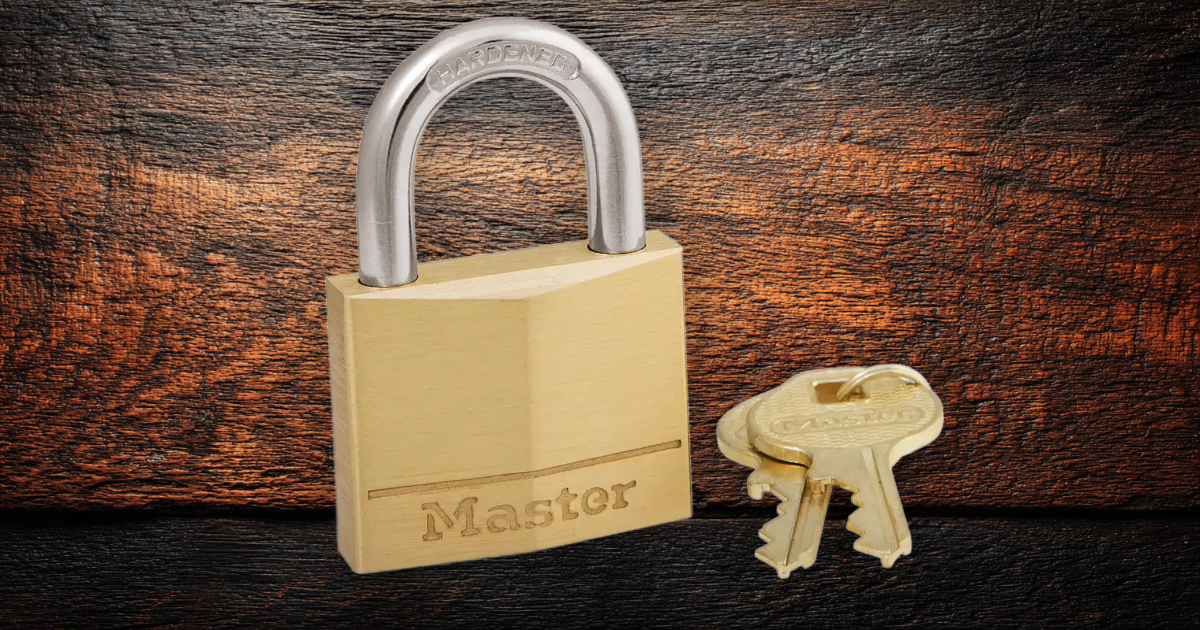
Solid brass body, hardened shackle, and a four-pin cylinder that Master Lock's own listing says "prevents picking." It is the same size as the ABUS 55/40, takes the same shackle, costs three dollars less, and the entire difference between them is inside the cylinder. That difference is the whole review.
By Johnny T.
·
March 2026
·
9 min read
Some links on this page are affiliate links — we may earn a commission.
Better than nothing, and worse than the lock next to it. The body is genuinely fine — solid brass, hardened steel shackle, dual locking levers, lifetime warranty. Master Lock builds a decent piece of hardware and then puts a four-pin cylinder in it.
The problem isn't that it's cheap. It's that the ABUS 55/40 is the same size, takes the same shackle diameter, and costs about three dollars more for five pins and spool security pins. There is no scenario where those three dollars are better spent elsewhere.
Body & shackle quality9
Cylinder2
Bypass resistance1
Value against the alternative3
Honesty of the marketing2
How to read this review
One unit, in hand. Where a claim comes from somewhere else, it says so.
TestedMy own 140D, picked by hand. One unit.
DocumentedPublished specification or primary source. Linked at the bottom.
ManufacturerMaster Lock's own claim. A claim, not a fact.
CommunityLocksmith and locksport consensus. Informed opinion.
The short version
Master Lock built a reasonable padlock and then economised on the only part that matters. Three dollars fixes it, and the fix is a different brand.
Master Lock is the most recognised padlock brand in North America and the 140D is one of their most popular models. It is available at every hardware store, big-box retailer and gas station in the country — twelve dollars at Walmart — which is most of why it sells.
It deserves credit for what it actually is: Documented
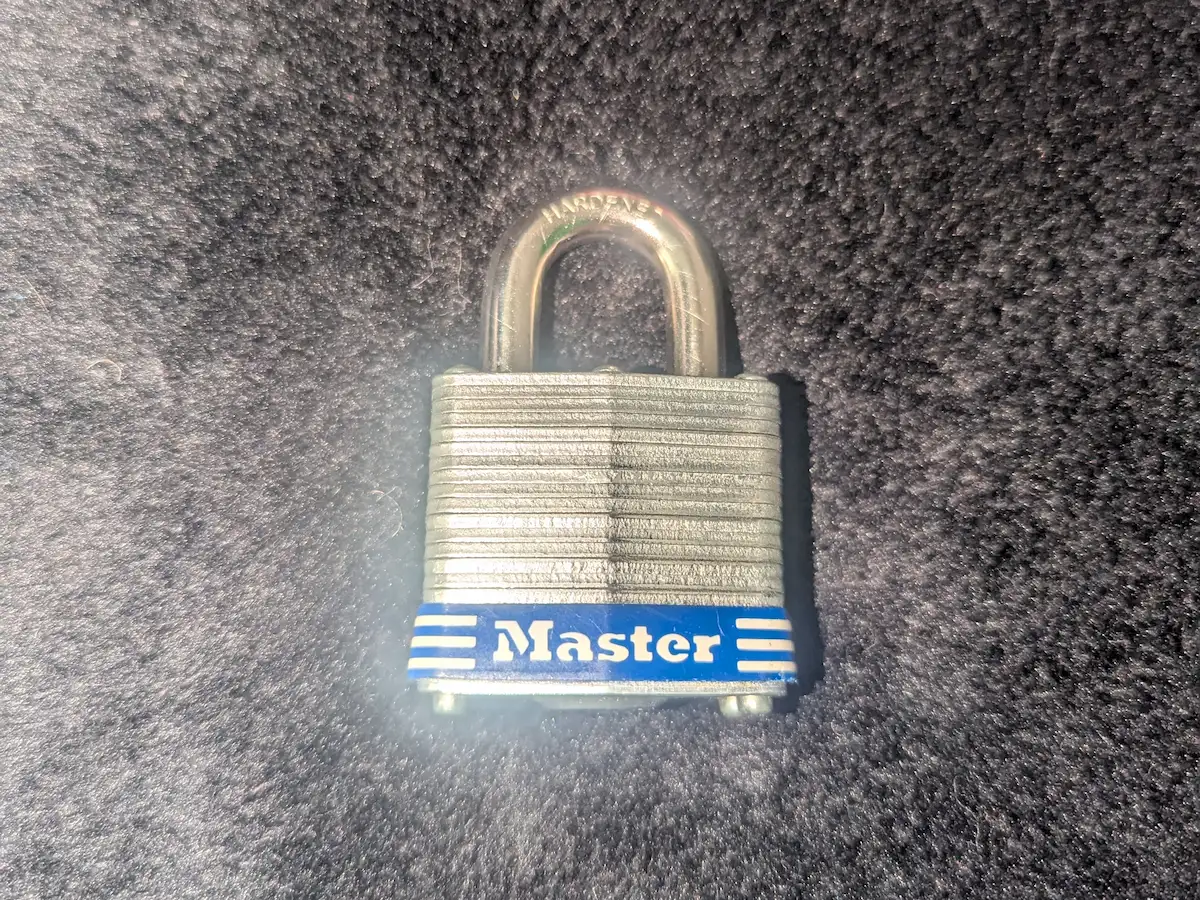
- A 1-9/16 inch (40 mm) solid brass body. Not plated zinc. Brass resists corrosion properly and survives outdoor exposure far better than the laminated and plated locks at the same price — including Master Lock's own No. 3.
- A genuine hardened steel shackle, 1/4 inch diameter. Real cut and saw resistance for the tier.
- Dual locking levers — it latches on both sides of the shackle, giving basic pry and hammer resistance. Manufacturer
- A Limited Lifetime Warranty. Master Lock honours it, and that has genuine value on a lock left outdoors for a decade.
- Self-locking, two keys supplied, available keyed alike as the 140KA if you want a batch on one key.
One thing worth knowing before you buy: it is not rekeyable. Documented If you lose the keys, you replace the lock.
None of the above is where this review turns negative. The metal is fine. It's the cylinder inside it.
This is the comparison that makes the rest of the page unavoidable. Both locks, measured: Documented
Read down that table and the conclusion writes itself. Dimensionally these are the same lock. Same material, same shackle diameter, clearances within a sixty-fourth of an inch of each other. Anywhere one fits, the other fits.
Every difference between them lives in the cylinder — and costs three dollars.
A correction to our own page
An earlier version of this review listed a "thin 6 mm shackle" among the 140D's failings. Checking the numbers properly, that criticism doesn't stand: the ABUS 55/40 we recommend instead has an identical 1/4 inch shackle. The shackle was never the differentiator here, and saying otherwise made the lock look bad for the wrong reason.
The real criticism is narrower and harder to argue with — it's four pins where the competition fits five, and it's the comb attack.
The 140D uses a four-pin tumbler cylinder. Documented Four pins. The ABUS 55/40, at roughly the same money, uses five. The American Lock 1100 — about ten dollars more — uses five or six with multiple security pins.
Every pin you remove makes a lock disproportionately easier to open, because picking difficulty scales with the number of chambers you have to hold set simultaneously while hunting the next one. Four pins is the minimum any serious manufacturer puts in a padlock, and even by that low bar the execution here is mediocre: tolerances are loose enough that a lot of upward pressure produces a set, and security pin inclusion is inconsistent — some units carry a single spool, many carry none. Community
Master Lock's own product copy states that the four-pin cylinder "prevents picking." Manufacturer It appears on their site and on every retail listing. The locksport community has been publishing video of this lock being opened for years.
From the bench
For calibration, because it's the only useful thing I can add here. It took me four to five weeks of daily attempts to open an ABUS 55/40 for the first time. Tested
My 140D opens by single pin picking, easily, and it always has. Tested Same picker, same skill level, three dollars apart. That gap is the review.
I can't tell you whether mine has a security pin in it — I don't get a clear false set, but I haven't pulled the plug to check, and given that inclusion is reportedly inconsistent, one unit tells you nothing about yours.
Picking at least requires practice and some understanding of how a lock works. The comb attack requires neither.
A comb pick is a thin piece of metal with teeth that slides into the keyway and lifts every pin stack at once — pushing the key pins and the driver pins entirely up into the shell, above the shear line. With nothing crossing the shear line, the plug turns. Community
It works on locks whose pin chambers have enough clearance above the shear line to swallow the whole stack. Some padlock designs prevent it with tighter chamber tolerances or longer driver pins that can't clear. The 140D does neither. Community
"The four-pin cylinder prevents picking."
This is on Master Lock's own listing. Manufacturer Four pins is the low end of the market, the tolerances don't compensate for it, and the comb attack bypasses the pin stacks altogether rather than picking them — so the claim is not merely optimistic, it's answering a question nobody asked. Nothing about a four-pin cylinder prevents picking; more pins and security pins make it harder, and this lock has the fewest of the former and inconsistent amounts of the latter.
VerdictFalse. It is the single most-picked padlock in the hobby.
To be straight about our own evidence: we have not run the comb attack on our 140D specifically. The vulnerability is well established in the locksport community and widely demonstrated, but it carries a Community tag here rather than Tested, and the "about three seconds" figure repeated across the internet is not one we have measured.
The 140D is not the worst padlock you can buy, and we're not going to pretend otherwise. It is better than the Master Lock No. 3, better than any combination padlock at this price, and better than the unbranded stuff in dollar-store bins.
- Corrosion resistance is genuinely good. The solid brass body will outlast a laminated lock outdoors by years.
- The shackle is real hardened steel, not case-hardened mystery metal.
- The warranty is real and Master Lock honours it.
- It's a decent first practice lock. Cheap, everywhere, and forgiving. Units carrying the occasional spool in position 3 give beginners their first encounter with a false set, which is a genuinely valuable learning moment.
If you want something to practise on in front of the television, the 140D earns its keep. If you want it to protect something, that's a different question and the answer is in the next chapter.
Where it belongs
A gate you want closed rather than secured. A toolbox in a locked garage. A locker where the threat is a curious colleague. Anywhere the lock is a signal rather than a barrier, this is fine and the brass body means it will still be working in ten years.
Not on a shed with anything valuable in it, and not on a storage unit — for those, the closed-shackle options are the honest answer.
Here's what kills us about the 140D: the ABUS 55/40 exists, it costs roughly three dollars more, it is the same size, and it fits anywhere this fits.
For that three dollars you get a fifth pin, spool security pins that produce a real false set, and tolerances tight enough that sloppy tension doesn't get rewarded. It is, per dollar, the most impactful security upgrade available anywhere in the padlock aisle.
We're not going to reprint the whole comparison — the head-to-head is here. But if you're standing in a hardware store holding a 140D, put it down and walk four feet to the ABUS section.
Buy the 140D anyway if
- You want a cheap, forgiving lock to learn to pick on. It's a reasonable first target and it costs nothing.
- You need a keyed-alike batch of low-stakes locks and the 140KA is what's stocked.
- The threat is weather and casual hands, not a person who wants in.
Buy something else if
- Anything behind the lock has value. Three dollars. Please.
- You want rekeying. The 140D can't be rekeyed at all.
- Bolt croppers are in the picture. A quarter-inch exposed shackle isn't the defence — geometry is. Look at a Diskus or a closed-shackle body.
And to be fair to Master Lock, they make genuinely good products. The American Lock 1100 series is solid, the Magnum line has its place, and their commercial offerings are respectable. The 140D specifically is a lock leaning on brand recognition rather than engineering.
Is the Master Lock 140D any good?
The body is good — solid brass, hardened steel shackle, dual locking levers, lifetime warranty. The cylinder is the weak part: four pins, loose tolerances, and inconsistent security pinning. For three dollars more the ABUS 55/40 fixes exactly that and fits in the same place.
Will the 140D fit my hasp?
Vertical clearance is 7/8″ with a 1/4″ shackle — fine for a standard hasp, locker, toolbox or cabinet, not enough for a thick gate staple or a doubled chain. It is within a sixty-fourth of an inch of the ABUS 55/40, so if one fits, so does the other.
Can the Master Lock 140D be rekeyed?
No. It's a non-rekeyable cylinder. Lose the keys and you replace the lock. The 140KA version is available keyed alike if you need several on one key, but you have to buy them that way.
How easy is the 140D to pick?
Easy. It opens for us by single pin picking and always has — and that's from a yellow-belt picker who needed four to five weeks to open an ABUS 55/40 for the first time. It's also the standard example of a lock vulnerable to a comb attack, which bypasses the pins entirely and needs no skill; we haven't performed that ourselves.
Does the 140D have security pins?
Inconsistently. Some units carry a single spool, often in position 3; many carry none at all. We can't get a clear false set from ours, but we haven't disassembled it, and one unit says nothing about the one you'd buy.
Is it worth it as a practice lock?
Yes, genuinely. It's cheap, stocked everywhere, and forgiving enough to be openable early on, which matters more than people admit when you're starting. If you get a unit with a spool in it, you'll meet your first false set cheaply.
Specification
Model
Master Lock 140D (No. 140 series). 140KA keyed alike
Body
Solid brass, 1-9/16″ (40 mm) wide
Shackle
Hardened steel, 1/4″ (6 mm) diameter; 7/8″ vertical clearance, 13/16″ horizontal
Cylinder
Four-pin tumbler. Security pin inclusion inconsistent — some units one spool, many none Community
Locking
Dual locking levers, self-locking. Two keys supplied
Opened by us
Single pin picking, reliably Tested
Buy it as a practice lock, or where the job is genuinely low-stakes and you want brass that survives the weather.
If it's guarding anything you'd be annoyed to lose, spend the extra three dollars on the ABUS 55/40 instead. It fits in the same place.
Amazon US
Stocked by every hardware retailer in North America
The 140D taught more people how to pick locks than any instructional video ever made. That is not a compliment, and it isn't really Master Lock's fault either — the lock is everywhere, it's cheap, and it opens, which is exactly what a beginner needs.
What's harder to forgive is the four-pin cylinder in a body that deserved better, and a product listing claiming it prevents picking. Master Lock had a brass body, a hardened shackle and dual locking levers, and stopped three dollars short of a lock worth recommending.
Verdict — 3.5 / 10
Better than nothing. Worse than the lock three feet away on the same shelf.
Sources & Method
- Dimensions, materials, pin count, warranty, non-rekeyable — Documented
Master Lock published product specification for the 140D / No. 140 series, and distributor listings.
Master Lock 140D
- "The 4-pin cylinder prevents picking" — Manufacturer
Master Lock's own product copy, reproduced across retail listings. Quoted here as a claim, and disputed in Chapter 4.
- Opened by single pin picking — Tested
One unit, owned by the author, opened repeatedly by hand. Limitations: sample of one; no timing was recorded; the plug has not been pulled, so the security pinning in our specific unit is unconfirmed.
- Comb attack vulnerability — Community
Long-established in locksport and widely demonstrated. We own comb picks and have used them on other locks, but have not run the attack on this model; this section gets rewritten when we do. The frequently repeated "about three seconds" figure is not something we have measured, and we would like a properly timed source for it.
- Security pin inconsistency, and the spool in position 3 — Community
Reported across locksport discussion of this model. Consistent with our unit giving no clear false set, but a sample of one confirms nothing.
- Comparison figures for the ABUS 55/40 — Documented
ABUS published data for the 55 brass series. Full detail in our review of that lock.
- Correction — "thin 6 mm shackle" — Corrected
An earlier version of this page listed the shackle diameter as a failing. The ABUS 55/40 we recommend instead uses the same 1/4 inch shackle, so the criticism was unfounded and has been removed. The pin count and comb vulnerability stand.
One unit, in hand, and we've marked exactly which claims come from it. If you have a 140D with a spool in it, or timed comb data, send it over and you'll be credited.