Review
Deadbolts
High Security
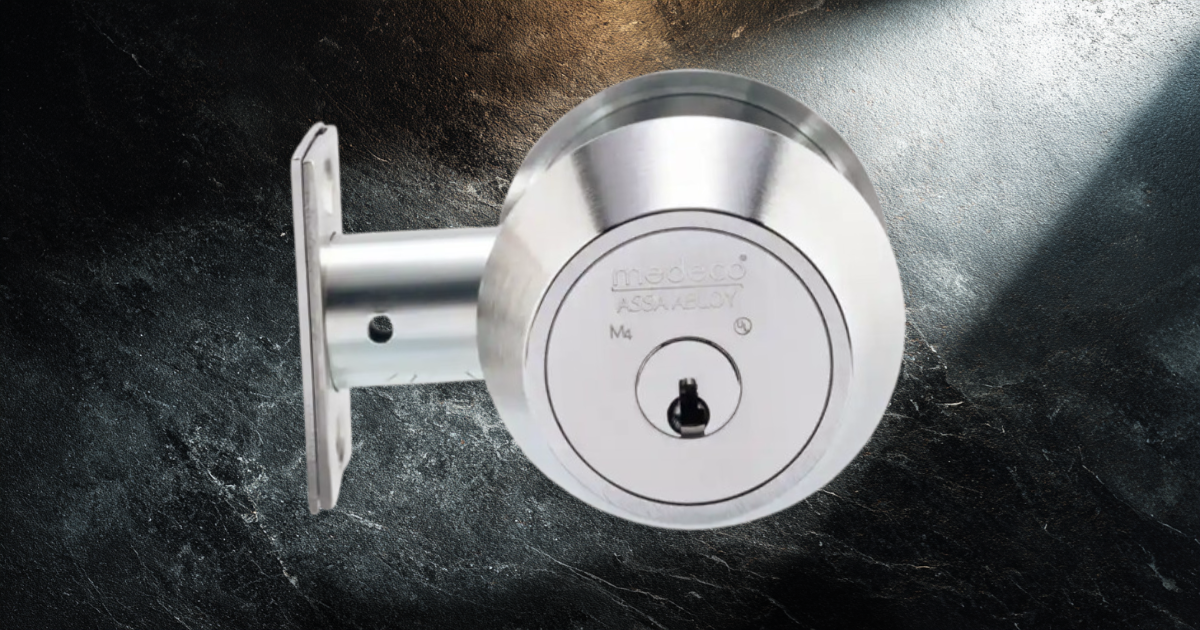
Medeco Maxum: The Deadbolt That Laughs at Kick-Ins.
The best residential deadbolt body you can buy, attached to the most thoroughly attacked high-security cylinder in America. Both halves of that sentence are true, and almost every review of this lock only tells you the first one.
By Johnny T.
·
March 2026
·
12 min read
Some links on this page are affiliate links — we may earn a commission.
Researched — not tested
We have never had a Maxum in our hands. Everything below comes from published specification, the certification record, and the security research literature — tagged so you can see which is which.
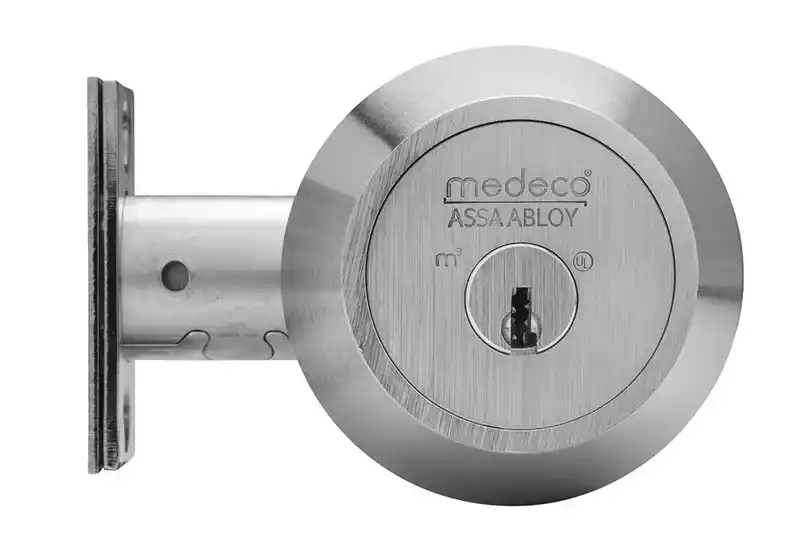
Buy it for the body. Understand what you're getting in the cylinder. Solid brass, anti-drill inserts, anti-pry construction, ANSI Grade 1, UL 437 listed cylinder. As a physical object resisting attack on the lock itself, very little in residential hardware beats it.
The cylinder is a different conversation. Medeco's axial-rotation design is genuinely clever, and it has also been the target of the most comprehensive published attack research any American high-security lock has faced — including a demonstration that working keys could be cut from a photograph. That's covered properly in Chapter 4, because you're paying for key control and you should know its history.
Physical attack resistance10
Build quality10
Cylinder design8
Key control6
Value for money8
How to read this review
Nothing here is hands-on. The valuable part of this page is the published research record, which doesn't require owning one.
TestedPhysically in hand. Nothing on this page carries this tag.
DocumentedPublished specification, standard, or peer-reviewed security research.
ManufacturerMedeco's own claim. A claim, not a fact.
CommunityLocksmith and locksport consensus. Informed opinion.
The short version
Outstanding hardware, a cylinder with a documented history, and a headline promise that no deadbolt on earth can actually keep.
Start with what makes the Maxum special as an object. Documented
- Solid brass construction throughout, not zinc with a brass finish.
- ANSI/BHMA Grade 1 — the top residential grade, and the same designation carried by the Schlage B60N at a sixth of the price, which tells you something about what a grade does and doesn't capture.
- UL 437 listed cylinder and ANSI/BHMA A156.30 — high-security cylinder certifications, covered in Chapter 3.
- Hardened anti-drill inserts and anti-pry construction designed specifically against attacks on the lock body. Manufacturer
- Fits doors 1-3/8″ to 2-1/2″, 2-1/8″ crossbore, 1″ edge bore, backsets 2-3/8″ or 2-3/4″.
This is genuinely excellent hardware. Against someone attacking the lock — drilling the cylinder, wrenching the housing, prying at the bolt — the Maxum is about as good as residential hardware gets.
About that headline
This page has been called "the deadbolt that laughs at kick-ins" since we published it, and it's worth being straight about what that can and can't mean, because our own frame guide spends five thousand words proving that no deadbolt stops a kick.
Both things are true, and the distinction matters more than almost anything else on this page:
What a kick actually breaks
ASTM F476, the standard that measures door assemblies, defines a jamb failure as the strike screws pulling out or the jamb splitting at the strike. Documented The bolt is almost never the component that fails. It goes through the frame still locked, taking a splinter of pine with it.
So the Maxum laughs at attacks on the lock — and it does, convincingly. It cannot laugh at a kick, because a kick doesn't attack the lock. Fitting a $250 deadbolt to a jamb held by two 3/4-inch screws is the single most expensive way to make no difference at all. The four-dollar box of 3-inch screws is not optional here; it's the thing that makes the purchase mean anything.
If you take one action from this review, it's that one. Everything else is refinement.
Every ordinary lock asks one question of each pin: is it at the right height? Medeco's design asks two. Documented
- Elevation, as usual. Each pin must be lifted to the shear line, exactly as in a standard pin tumbler.
- Plus rotation. Medeco pins have angled tips and chisel points. The key's angled cuts twist each pin to a specific angle as well as lifting it — axial rotation, which is Medeco's core patent going back generations.
- A sidebar checks the second answer. Sitting at three o'clock in the plug, it can only retract when a gate on every rotated pin lines up with it. Height alone gets you nothing.
Later generations add more. The M3 introduced a spring-biased slider beneath the sidebar: in its default state the slider arms physically block the sidebar from retracting, and a protrusion on the side of the key must push it clear. Documented That's a third condition on top of elevation and rotation.
The engineering is real. A picker has to hold every pin at the correct height and the correct angle simultaneously, with a sidebar that gives far less feedback than a shear line does. It is a fundamentally harder problem than a four-pin Master Lock, and it isn't close.
Worth knowing when you shop: the Maxum is a deadbolt line, and it ships with different Medeco cylinder generations depending on the SKU — Original, Biaxial, M3 and later. The generation matters, for reasons that become clear in Chapter 4. Check what you're actually buying.
UL 437 is the American standard for high-security key locks, and unlike ANSI/BHMA grading it is explicitly an attack standard rather than a durability one. Certification requires the cylinder to resist picking, drilling and forcing for specified durations under laboratory attack by testers who are trying to open it. Documented
That's a meaningfully different claim from Grade 1. As we've written before, ANSI/BHMA grading measures cycles and impact on the lock; it does not certify that skilled people failed to open it. UL 437 does. Very few residential locks carry it, and it is the single best shorthand on a spec sheet for "this cylinder is in a different class."
"UL 437 means it can't be picked."
It means a cylinder resisted specified attacks for specified times, in a lab, at the time it was certified. It is a threshold, not an absolute, and it says nothing about attacks invented afterwards — which is precisely what happened to Medeco. A certification is a snapshot of a moving target, and the useful question is always "certified when, and what came after?"
VerdictGenuinely valuable, frequently over-read.
And UL 437 covers the cylinder. It does not cover your door, your jamb, or the screws holding the strike — the same gap that runs through the whole frame argument.
Here is the part that separates this review from every other write-up of this lock, and it's not something we discovered — it's been public since 2008 and simply doesn't get mentioned when people recommend Medeco.
In 2008, security researchers Marc Weber Tobias and Tobias Bluzmanis published Open in Thirty Seconds: Cracking One of the Most Secure Locks in America. Documented It was the output of an eighteen-month research project, it resulted in multiple patent filings, and it documented methods to pick, bump and mechanically bypass Medeco Biaxial and M3 cylinders — in some cases very quickly.
Then it was independently tested. In 2009, Wired bought six new Medeco cylinders and had the researchers attempt them under observation. Every one was opened in under nine minutes. Documented Video was published.
The key control problem is the worse half
Picking is the headline, but the more serious finding was about keys — because key control is the main reason anyone pays Medeco prices.
The researchers demonstrated producing working keys out of plastic, cut from a photograph of a key. Documented A journalist bought a Medeco mortise cylinder in California, scanned its key, emailed the image, and the researchers made plastic copies. The lock opened in around six seconds. Tobias called it "key-mail."
A restricted keyway is supposed to mean that possessing a key photograph gets you nothing. That demonstration attacked the premise directly, and it's why key control scores a 6 on this page rather than a 9.
Being fair to Medeco
Several things need saying, because a 2008 finding used to condemn a 2026 product would be its own kind of dishonesty.
That research targeted Biaxial and M3 specifically, and Lockwiki notes that a set of the M3 bypasses depended on keyway geometry in locks produced before 2008. Documented Medeco introduced a redesigned pin — branded ARX — specifically to defeat the decoding tool that had been built for the older ones. Current-production cylinders are not the ones that were attacked, and we have not found an equivalent published takedown of the current generation.
Medeco has publicly disputed the findings. Documented We're not in a position to adjudicate that and we're not going to pretend to be.
What we won't do is leave it out. A page recommending a $250 lock for its key control, which doesn't mention the most famous published attack on that exact key control, isn't a review — it's a listing.
The honest summary: Medeco cylinders are far harder to attack than anything at hardware-store level, and they have also been studied harder than any other American lock, by people who found things. Both are true, and a buyer should know both.
Read the last two rows together and you have the honest answer to "is it worth six times the price."
What the Maxum buys you is resistance to attacks on the lock and control over who has a key. Both are real and the B60N has neither — a stock Schlage C cylinder can be copied by anyone at any hardware store, which is the actual way most locks get "defeated."
What it doesn't buy you is a door that survives a boot, and that is the attack that overwhelmingly happens. The B60N ships a strike reinforcer with 3-inch screws in the box; the Maxum's answer to kick-ins depends entirely on what you fit it into.
So: if your threat is a key that shouldn't exist — a former tenant, a contractor, a shared building — the Maxum solves a problem the Schlage cannot, at any price. If your threat is someone kicking the door at 2am, spend $40 on the lock and the rest on the frame, and you will end up with a more secure house.
Is the Medeco Maxum worth the money?
If you need key control or genuine resistance to attacks on the lock itself, yes — nothing at hardware-store prices comes close. If your worry is a kicked door, no. Buy a good $40 deadbolt and spend the difference on the frame, because the jamb fails before any bolt does.
Has the Medeco cylinder ever been picked?
Yes, and it's extensively documented. Marc Weber Tobias and Tobias Bluzmanis published an eighteen-month research project in 2008 demonstrating picking, bumping and bypass of Biaxial and M3 cylinders, and Wired subsequently had six new cylinders opened in under nine minutes each. Medeco disputes the findings. Some of the specific bypasses applied to pre-2008 production.
What does UL 437 actually certify?
That a cylinder resisted specified picking, drilling and forcing attacks for specified durations in a laboratory. Unlike ANSI/BHMA grading, which measures durability and impact, it is an attack standard. It's a genuine mark of quality and it is a snapshot at a point in time, not a permanent guarantee against later techniques.
Will a Medeco Maxum stop my door being kicked in?
No, and no deadbolt will. In a kick, the strike screws pull out or the jamb splits — the bolt usually goes through the frame still locked. Three-inch screws into the stud cost about four dollars and matter far more than the lock. The full explanation is in our door frame guide.
Can Medeco keys be copied?
Not through ordinary channels — the keyway is restricted and cutting is controlled. That is the main thing you are buying. Note that researchers have demonstrated producing working keys from photographs using plastic, which is why we score key control lower than the marketing would suggest.
Which Medeco cylinder generation should I buy?
Ask the seller which generation the SKU ships with, because the Maxum line spans several. It matters: published bypass work targeted Biaxial and M3, and some of it applied specifically to pre-2008 production. Current-generation cylinders with ARX pins are a different proposition from the ones that were attacked.
Specification
Model
Medeco Maxum tubular deadbolt, single or double cylinder
Body
Solid brass, anti-drill inserts, anti-pry construction Manufacturer
Cylinder certification
UL 437 listed; ANSI/BHMA A156.30 high security
Cylinder mechanism
Five or six pin tumblers with axial rotation, sidebar at three o'clock; M3 adds a spring-biased slider
Door thickness
1-3/8″ to 2-1/2″
Bore
Crossbore 2-1/8″, edge bore 1″
Key control
Restricted, patented keyway. Generations: Original, Biaxial, M3 and later
Street price
Roughly $220–$350 depending on configuration
Buy through an authorised Medeco dealer rather than a marketplace — restricted key control only works if your keys are registered properly, and ask which cylinder generation the SKU ships with.
Whatever you spend here, budget four more dollars for 3-inch screws in the strike and top hinge. Without them this is an expensive lock on a jamb that fails first.
Amazon US
Authorised locksmith dealers are the better route for key registration
The Maxum is an outstanding piece of hardware and a genuinely sophisticated cylinder, and it is also the lock with the most thoroughly documented attack history in America. Those facts sit together comfortably, because the same qualities that made Medeco worth attacking — ubiquity in high-value installations, a reputation as the standard — are what drew eighteen months of research at it in the first place. Nobody writes a book about a Master Lock.
What it buys you is control: over who holds a key, and over what happens when someone attacks the lock directly. What it cannot buy you is a frame that survives a boot, and if you fit one without doing the four-dollar job first, you have bought a very good lock for a door that doesn't deserve it.
Verdict — 8.5 / 10
Superb body, sophisticated cylinder, honest history — and still only as strong as the jamb you screw it into.
Sources & Method
- Correction — hands-on framing and score — Corrected
An earlier version stated that we had spent time with this lock. We have not, and the page now carries a Researched — not tested badge. The score has moved from 9.3 to 8.5 to reflect the published cylinder research below, which the previous version did not mention.
- Published attack research — Documented
Marc Weber Tobias & Tobias Bluzmanis, Open in Thirty Seconds: Cracking One of the Most Secure Locks in America (2008). An eighteen-month project documenting picking, bumping and mechanical bypass of Medeco Biaxial and M3 cylinders, which resulted in multiple patent filings.
Book record
- Independent verification — Documented
Wired purchased six new Medeco cylinders and had the researchers attempt them; each was opened in under nine minutes, with video published. Medeco has publicly disputed that the attacks are possible.
Contemporary coverage
- Key control — keys from photographs — Documented
Demonstration of working plastic keys produced from a scanned and emailed image of a Medeco key, opening a purchased mortise cylinder in seconds.
Reported here
- Mechanism, generations, and the pre-2008 distinction — Documented
Lockwiki on the Medeco M3: UL 437 rated, axial-rotation pin tumblers interfacing with a sidebar at three o'clock, spring-biased slider, five or six pins with standard, mushroom and barrel drivers. Notes that keyway widening to accommodate the slider enabled bypasses on M3 locks produced before 2008, and that the M3 improved master keying rather than raising security substantially over Biaxial. The Medecoder decodes sidebar bitting on non-ARX pins.
Lockwiki
- Maxum specification — Documented
Distributor listings: solid brass, ANSI Grade 1, UL 437 and A156.30 cylinder, five-pin, 2-3/8″ or 2-3/4″ backset, 1-3/8″ to 2-1/2″ door thickness, 2-1/8″ crossbore, 1″ edge bore.
- Kick resistance and jamb failure — Documented
ASTM F476 defines jamb/strike failure as pull-out or fracture of the strike attachment screws, or splitting of the jamb at the strike. Full treatment in our frame guide.
We have never handled a Maxum and the badge at the top says so. The cylinder research cited here is public, well known in the security community, and almost universally omitted from consumer reviews of this lock — including our own previous version. If you have current-generation data, or a Medeco response we should link, send it over.