Review
Safes
Fire Safe
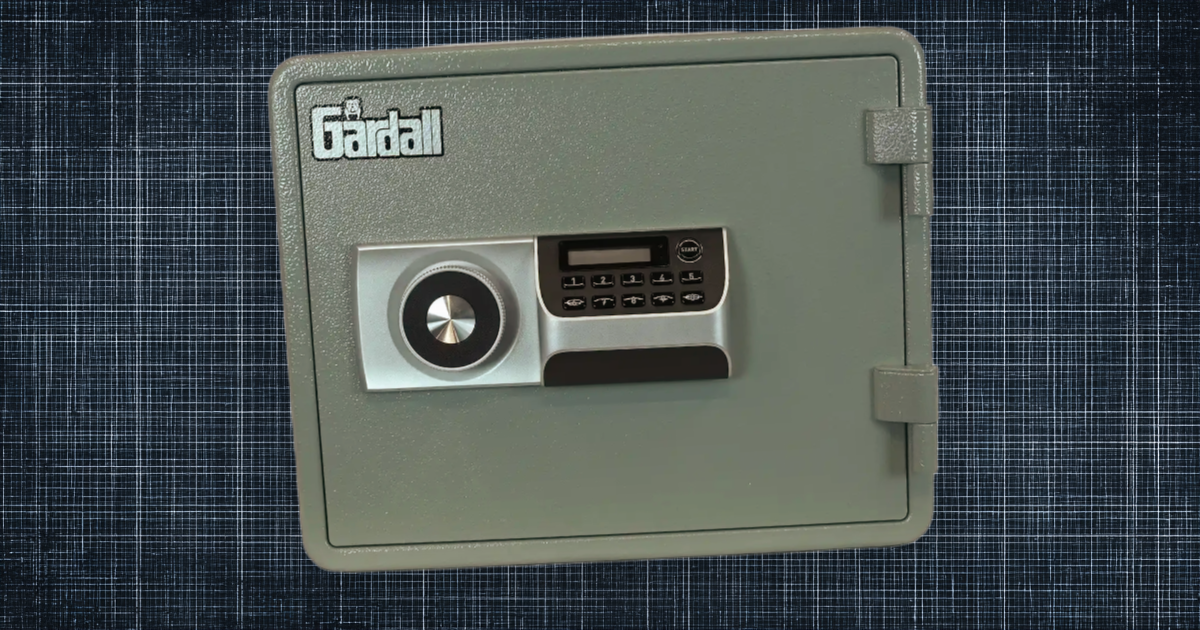
Gardall MS912: The Safe Maker's Safe
Gardall is one of the last independent American safe companies — family-owned since 1950, still hand-building in Syracuse. The MS912 is the safe most locksmiths will sell you. It is also, on the evidence, not one of the safes Gardall builds. That turns out to matter less than you'd think, and for a reason worth understanding.
By Johnny T.
·
March 2026
·
13 min read
Some links on this page are affiliate links — we may earn a commission.
Researched — not tested
We do not own this safe. Everything below is published specification, certification standard, dealer record and company statement — tagged so you can see which is which. Where our own earlier version of this page got something wrong, we've said so and left the correction visible.
A genuinely good small fire safe with a provenance story that isn't what the marketing implies. The Underwriters Laboratories one-hour, 350°F label is real and rare at this size, the door engineering is a class above anything on a big-box shelf, and Gardall — an independent family firm still operating out of Syracuse, New York — puts its name and its warranty behind it.
But it holds 0.72 cubic feet, has no water rating at all, carries no burglary rating, and the evidence says the microwave-safe line is imported rather than built in that Syracuse plant. Priced against what else a few hundred dollars buys, it is very good at one narrow job and quiet about the rest.
Fire protection8
Build & door engineering8
Capacity & usability5
Theft resistance4
Value for money6
How to read this review
Nothing here is hands-on. Scores are relative to the whole safe category — from a $30 document chest to a tool-resistant commercial box — not to whether this safe achieves its own stated aim. A one-hour fire label is strong for the size and unremarkable against a standard that runs to four hours.
TestedPhysically in hand. Nothing on this page carries this tag.
DocumentedPublished standard, specification, dealer record or company statement.
ManufacturerThe maker's own claim. A claim, not a fact.
CommunityLocksmith and safe-trade consensus. Informed opinion.
CorrectedSomething we or the industry previously stated that the evidence doesn't support.
The short version
The fire label is real, the door is properly engineered, and the company behind it still answers its own phone. Just don't buy it believing it was hand-built in Syracuse, and don't buy it to stop a thief.
Start here, because it reframes the rest and because we got it wrong the first time.
Gardall Safe Corporation is the real thing. Founded in 1950, family owned and operated since inception, still at 219 Lamson Street in Syracuse, New York. Documented For its first fifteen years it was a regional northeast safe manufacturer; through the 1970s and 80s it developed products that passed Underwriters Laboratories testing for fire and impact. Manufacturer It has been named a premium selection by Consumers Digest three separate times and turned up on Discovery Channel's It Takes A Thief. In a category where most familiar names are now trademarks owned by holding companies, that history is genuinely unusual.
Which is exactly why the next sentence matters. On its homepage, Gardall writes that Gardall Classic Safes are hand-crafted at our plant in Syracuse. Documented Note the qualifier. Not "Gardall safes." Classic safes — the burglary-rated money chests, the depositories, the tool-resistant commercial boxes.
Now read what Gardall says about the microwave line the MS912 belongs to: these safes are made to Gardall's exact specifications and brought to you with the same care and quality you've come to expect. Documented That is not a manufacturing claim. That is sourcing language, and in this trade it is used deliberately.
The line that settles it
A long-standing Gardall dealer, listing the ES1612 from the same microwave-safe series, states it plainly in its own product copy: these safes are not made in the USA — they are imported from Korea. Documented Other dealers' product data lists sibling Gardall fire safes with an "Imported" origin attribute. Gardall's own company history describes the business transforming, from 1986 onward, into a distribution model built on distributor warehouses and thousands of retail dealers. Documented
There is a second, quieter confirmation sitting in the spec sheet, and almost nobody reading a safe listing knows to look for it. Every safe in this line carries a one-hour Korea Industrial Standards label — abbreviated K.I.S. on the specification, which is why it slides past unread. It is the Korean national fire-testing regime. Documented Safes built in Korea routinely carry it; safes built in Syracuse do not. The label is on the box because of where the box was made.
"Gardall builds bank vaults, so the MS912 has vault DNA."
We said a version of this ourselves, and it doesn't hold. Gardall's published product line is safes and lock-boxes: fire safes, gun safes, depository and drop safes, hidden wall and floor safes, jewellery safes, hotel room safes, and high-security fire-and-burglary models. No vault doors, no modular vaults. "Builder of bank vaults" was an inflation of "maker of commercial safes and depositories," which is impressive enough without the embroidery. And whatever is built in Syracuse, the evidence says this particular safe wasn't.
VerdictReal company, real commercial range, wrong product, wrong word.
Why it still counts for something
Here's the part that stops this being a gotcha. Imported does not mean anonymous. Three companies whose safes you'll compare on the same shelf sit at three very different distances from the thing in the box:
All three facts are documented. Documented Read the right-hand column twice, because that is the column you actually buy. The steel may come from anywhere; what differs is who is standing behind it when something goes wrong in ten years.
Gardall doesn't sell to consumers at all. Its own frequently-asked-questions page states that safes are sold through a locksmith distributor and dealer network, and that it does not sell direct. Documented It publishes dialling instructions per lock type and asks for a serial number before it will tell you how to change your combination. Replacement parts are available. That is a company that expects to still be servicing this safe in 2040 — a very different posture from a returns desk.
So the honest framing is not "fake American safe." It's this: you are buying Korean-built hardware with American accountability attached. That is worth something real. It is not worth what "hand-crafted in Syracuse" is worth, and the marketing is arranged so that you might not notice the difference.
The MS912's real distinction is a label, and it is not the one on the front of the box.
Every safe in Gardall's microwave series carries the Korea Industrial Standards one-hour fire label. Only some of them additionally carry an Underwriters Laboratories one-hour, 350°F label — by Gardall's own listing, the MS912, the MS129 and the SS/ES1612 models. Documented The cheaper MS911, sitting right beside it in the same catalogue at 0.5 cubic feet, carries the Korean label alone.
That is the single most useful sentence on this page. Two safes, same series, same finish, same shelf, and one has independent American certification the other doesn't. The model number is the difference. If someone offers you "a Gardall microwave safe" at a good price, ask which one.
What the Underwriters Laboratories label actually certifies
Class 350 means the interior stayed below 350°F, the point at which paper begins to scorch. One hour means the safe held that for the full sixty minutes of a standard time-temperature curve — which is why you see "1700°F" quoted, because that is roughly where the curve sits at the sixty-minute mark. It is not a separate heat-resistance claim. Testing also includes an explosion-hazard evaluation: a cold safe is dropped into a furnace already at around 2,000°F, to prove trapped moisture in the insulation won't flash to steam and burst it. Documented
The impact test, and why it suits a safe this size
Underwriters Laboratories offers an optional fire-and-impact test on top of the endurance run. In its own description: after the fire endurance test the safe is removed from the furnace, hoisted thirty feet above the ground and dropped, simulating a fall from three storeys onto rubble. It is then examined for damage and returned to the furnace for up to another hour of fire exposure. Documented
That test is not decoration for a small safe. An 85-pound box lives on a closet floor or a shelf, frequently upstairs. In a serious house fire the floor under it is one of the things most likely to fail. A container that survives the drop and keeps sealing afterwards is doing precisely the job you bought it for.
Whether the MS912 carries the impact label is where sources stop agreeing. Sources disagree Several established dealers list the safe with a Underwriters Laboratories fire and impact label, and a dealer listing for the sibling ES1612 spells out "350 degree one-hour fire & impact." Gardall's own microwave-safe specification page lists the Underwriters Laboratories one-hour, 350°F label and does not mention impact. We can't resolve it from published sources. If impact resistance is the reason you're buying, ask the dealer to read you the physical label before you pay.
The door
The engineering claims here are Gardall's, and they are consistent across every dealer listing we checked. The door is precision-built of extra-heavy steel, swings a full 180 degrees on heavy-duty hinges, and closes with interlocking tongue-and-groove closure on all sides of the door frame. Plated interlocking bolts extend into the safe walls. Manufacturer
Tongue-and-groove on all four sides is the detail that separates this from a stamped consumer box. It means the door doesn't simply sit against a flat rebate; it seats into a stepped profile, so a pry bar in the seam is loading steel against steel instead of levering a flat edge open. It also matters in fire: a stepped closure is a longer, more tortuous path for hot gas to find its way in than a straight butt joint. That is very likely why the safe passes a sixty-minute test at this weight.
The interlocking bolts do a specific and narrower job than the marketing implies — they resist tampering and removal of the door, which is a real attack on cheap safes where the hinge side is the weak point. They are not a burglary rating.
"It's steel all the way through — there's no composite to peel away."
This was ours, and it's wrong. It cannot be true of any Underwriters Laboratories Class 350 fire safe. Fire resistance in this category comes from an insulating layer — typically a gypsum-based composite — sandwiched between steel skins, and the insulation is where most of the eighty-five pounds lives. A solid-steel box with no insulation would fail a one-hour fire test comprehensively. The MS912's advantage over a cheaper safe is a better door, a better closure and better bolt engagement. It is not an absence of composite. We've also cut the "two locking bolts" figure that appeared here previously: Gardall publishes no bolt count for this model and we should not have invented one. Corrected
VerdictGood engineering oversold. The real advantage is the closure, not the metallurgy.
Our earlier version said the MS912 came in two configurations. It comes in at least three, and the suffix on the model number tells you which. Corrected
- MS912-G-K — single key lock. Nothing to fail, nothing to power, and the cheapest way into the line. The trade-off is that you now own a key that must live somewhere, and a key that lives on top of the safe is not a lock.
- MS912-G-E — programmable electronic lock with an override. Battery-powered, set your own code. The default choice for most households and the one most dealers stock.
- MS912-G-CK — mechanical combination plus key. This is the one worth knowing about: it supports dual control, meaning you can leave the combination dialled open and govern the door with the key alone for a working shift, then re-secure the combination at close. Manufacturer That is a small-business feature — a till drop, a dispensary, a clinic — and it is unusual at this price.
None of these are high-security locks in the commercial sense. A programmable electronic safe lock at this price point is a consumer-grade unit, and the honest framing is that it controls access, not attack. The failure mode people actually meet isn't a bypass — it's a dead battery, a forgotten code, and a manufacturer that requires a serial number and a locksmith to help. Gardall does publish dialling and lock-change instructions and will identify your lock from the serial number, which is more support than most brands in this bracket offer. Documented
One practical note the box won't tell you: buy the electronic model and put a diary reminder to change the batteries annually. The most common way people lose access to a small safe is not a burglar.
A note on picking
There is very little locksport interest here and it would be dishonest to manufacture some. The key model uses an ordinary cam-style safe lock; the electronic model is a keypad with a mechanical override. Neither is a target for the sport-picking community in the way a Protec2 or a Medeco is, and neither is the weak point of this safe. On a container like this the interesting attack is always the container, never the lock — which is the subject of the next two chapters.
The MS912 holds 0.72 cubic feet. Interior 9½" high × 12¾" wide × 10¼" deep; exterior 13½" × 16¾" × 15¼"; 85 pounds. Documented Letter-size paper lies flat, and there's a pull-out shelf.
Two measurement traps, both of which will ruin an install day:
Add an inch and a half to the depth. Gardall footnotes this on its own specification sheet — the published outside depth excludes the handle and dial projection. Documented So the real footprint is closer to 16¾" deep, and if you have measured a closet shelf to the quarter-inch you have just lost the fit. Then add the door swing: it opens a full 180 degrees, which is a feature until it's a wall.
Check the orientation before you order. The MS129 is the same safe stood on end: identical 0.72 cubic feet, identical 85 pounds, identical labels, the dimensions simply rotated to 16¾" high × 13½" wide. Documented Horizontal suits a closet floor or a shelf under a hanging rail; vertical suits a cupboard base or a wardrobe corner. Same money, same protection, and most listings don't put them side by side.
What actually fits
Zero point seven two cubic feet sounds abstract, so: passports, birth and marriage certificates, the deed, wills and titles, insurance policies, a few years of tax paperwork, a modest jewellery box, an emergency cash float, spare keys, a written inventory of the house for a claim. That is a full safe.
What doesn't fit is everything else. Photo albums won't. A long gun obviously won't, and even a boxed handgun plus ammunition eats the shelf. Compared with the SentrySafe SFW205GQC at 2.05 cubic feet, this is roughly a third of the room for more money — a comparison the MS912 loses on paper and wins only if you weight certification and closure quality over volume.
The digital-media trap
Class 350 is a paper rating. It certifies the interior stays under 350°F, and hard drives, solid-state media and photographic film fail well below that. Digital media needs Class 125 and photographs Class 150 — different products, different price. Documented Do not put your only backup drive in here and consider it protected. An off-site or cloud copy is cheaper and better.
There is no water rating. None. Not reduced, not partial — absent. This is the MS912's largest single weakness and it is invisible in most listings because absence doesn't advertise.
It matters more than it sounds, because the fire standard itself has nothing to say about water. Class 350 certifies temperature and nothing else. Documented Fires are extinguished with water. A safe can pass its fire test perfectly and hand you back a sealed box of pulp, and that's before you count the far more common events: a burst pipe, a failed washing machine, a roof leak, a flooded basement. The Honeywell 1114G is verified to 100 hours submerged at a metre and costs a fraction of this. The SFW205GQC is rated 24 hours. On the likeliest household disaster of all, the most expensive safe here is the one with no answer.
There is no burglary rating either, and there wouldn't be — fire and burglary are certified under entirely separate standards. Documented A baseline Residential Security Container rating means the container resisted a five-minute attack by one person with common hand tools. The MS912 has never been submitted for that, so nobody can tell you how long it holds.
What it does have is 85 pounds, a centre bolt-down hole with hardware supplied, and door bolts that make removing the door harder than removing the safe. Bolted to a concrete floor or through a joist, that is meaningfully better than a 40-pound chest with a carry handle — a thief's realistic move against a small safe is to take the whole thing and open it somewhere quiet, and an anchored 85 pounds defeats a casual version of that. Unbolted, on a closet floor, it is a two-person carry and nothing more. Bolting it down is not optional; it is most of what you're paying for.
If you want the insurance discount, you want a different Gardall
Here's a genuinely useful thing the category almost never explains. Gardall states that its "B"-rated burglary safes qualify for full insurance coverage under the Broad Form and Mercantile Safe insurance classifications. Manufacturer A "B" rate describes a money chest's steel thicknesses rather than a timed attack test, and insurers use those classifications when deciding how much cash or stock they'll cover in a container.
The MS912 is not one of those. It is a fire safe. If your reason for buying is that your insurer asked what your valuables are kept in, you want Gardall's Classic burglary line — which is also, neatly, the line actually hand-built in Syracuse. Ask a dealer for a "B" rate or better, and expect to pay considerably more for considerably less interior space.
The price is a moving target
Published prices for this safe are all over the map. We found the series advertised from around $255 at the low end, an electronic model at $449 at a specialist safe retailer, and list prices of $741 and $929 for the combination and electronic models at a hardware distributor. Documented Our previous figure of "$255–$465" was too narrow. Corrected
The spread is a symptom of the dealer-only channel: no direct sales, minimum-advertised-price policies at some retailers, and freight that varies enormously by address. Get two quotes, delivered, before you commit — the same safe at two dealers can differ by more than the price of a competitor.
The warranty is better than it looks, and narrower than it sounds
Gardall advertises a lifetime fire warranty and a lifetime replacement warranty on this line. Manufacturer A dealer's published terms describe a separate one-year limited warranty against defects in materials or workmanship, with the buyer paying transport, and returns requiring factory authorisation. Documented Both can be true: the lifetime cover is fire-exposure replacement — if it burns, they replace it — and the one-year cover is manufacturing defects. That's a good deal on the thing you bought it for, and a normal deal on everything else. Gardall also offers a paid extension: return the registration card with $50 within ten days of purchase for two full years of coverage. Documented Send the card either way; warranty service starts with a serial number on file.
Is the Gardall MS912 made in the USA?
Almost certainly not. Gardall is an independent American company in Syracuse, New York, but its website attributes hand-building in that plant specifically to its "Classic" line, and describes the microwave fire safes as made to its specifications and brought to you. A long-standing dealer states outright that this series is imported from Korea, and every model in it carries a Korea Industrial Standards fire label. Gardall's name, warranty and service are American; the box is not.
What's the difference between the MS912 and the cheaper MS911?
Certification and size. The MS911 holds 0.5 cubic feet and carries only the one-hour Korea Industrial Standards label. The MS912 holds 0.72 cubic feet and carries that label plus an Underwriters Laboratories one-hour, 350°F label. If independent American certification is why you're buying a fire safe, the MS911 doesn't have it and the price gap is the reason.
Is a Korea Industrial Standards label as good as an Underwriters Laboratories one?
It's a real independent standard with a demanding protocol, including explosion and drop testing, and a safe carrying it is not untested. But Underwriters Laboratories testing is the more widely recognised benchmark in North America and the one insurers and specifiers reference. On the MS912 the question is academic, since it carries both.
Will the MS912 stop a burglar?
It has no burglary rating, so nobody can tell you how long it holds. What helps is 85 pounds, a centre bolt-down hole with hardware included, and interlocking bolts that make pulling the door off harder than it is on a cheap safe. Bolt it to concrete or through a joist and it defeats the casual grab-and-go. Leave it loose in a closet and it's luggage.
Should I get the horizontal MS912 or the vertical MS129?
Whichever fits the space. They're the same safe in two orientations — same 0.72 cubic feet, same 85 pounds, same labels, dimensions rotated. Measure first, and add an inch and a half to the published depth for the handle and dial, plus room for a door that swings a full 180 degrees.
Is it worth roughly twice the price of a bigger SentrySafe?
Only for a specific buyer. You get better door engineering, an Underwriters Laboratories label and a company that services what it sells — and you give up around two-thirds of the interior volume and any water protection at all. If you're storing a small number of irreplaceable documents and want the strongest closure in the size, yes. If you're storing volume, or you live anywhere that floods, no.
The Spec Sheet
Model
Gardall MS912-G, horizontal one-hour microwave-style fire safe
Vertical twin
MS129-G — identical capacity, weight and labels, rotated
Brand owner
Gardall Safe Corporation, Syracuse, New York — independent, family owned since 1950 Documented
Where built
Evidence indicates imported, not Syracuse-built; dealer records state Korean manufacture for this series Documented
Fire label
Underwriters Laboratories one-hour, Class 350 — interior held below 350°F for sixty minutes Documented
Second fire label
Korea Industrial Standards, one hour Documented
Impact label
Claimed by several dealers, absent from Gardall's own specification page Sources disagree
Fire class
Paper. Will not protect drives, memory cards or photographic film
Burglary rating
None — never submitted for a Residential Security Container test
Capacity
0.72 cubic feet; letter-size documents lie flat
Interior
9½" high × 12¾" wide × 10¼" deep
Exterior
13½" high × 16¾" wide × 15¼" deep — add 1½" to depth for handle and dial Documented
Weight
85 lb, most of it fire insulation rather than steel
Lock options
K single key · E programmable electronic with override · CK combination plus key with dual control
Door
Extra-heavy steel, 180-degree swing, interlocking tongue-and-groove closure on all sides of the frame Manufacturer
Bolts
Plated interlocking bolts extending into the safe walls; count not published Unsourced
Interior fittings
Pull-out shelf; combination model listed with an adjustable, removable shelf
Anchoring
Centre bolt-down hole, hardware included
Warranty
Lifetime fire and replacement warranty from Gardall; separate one-year limited defects warranty per dealer terms; $50 registration extension to two years
Where sold
Locksmith distributor and dealer network. Gardall does not sell direct to consumers Documented
Price seen
$255 to $929 depending on lock, dealer and freight Documented
The MS912 is a good safe sold with a slightly better story than it deserves, by a company that deserves a better story than most of its competitors.
Strip the marketing out and what's left is genuinely worth having: an Underwriters Laboratories one-hour, 350°F label that its own cheaper sibling doesn't carry, a tongue-and-groove closure on all four sides that no big-box safe at this size offers, a bolt-down provision that's included rather than sold separately, and an independent family firm that publishes lock instructions, stocks replacement parts and expects to service this box for decades. In a category where the two most recognised names are a brand owned by a conglomerate that shut the founding plant, and a badge whose owner disclaims all warranties, that is not nothing.
What it isn't: American-made, waterproof, burglary-rated, or big. If any of those four is your actual requirement, this is the wrong purchase and the money is better spent elsewhere — a document chest for flood risk, a bolted-down burglary-rated box for valuables, a larger fire safe under $300 for volume.
Buy the MS912 if you have a small number of irreplaceable papers, you want the strongest closure and the best certification available in a container the size of a microwave, and you'd rather deal with a company than a returns portal. Then bolt it to the floor, put the batteries in your calendar, and keep the backup drive somewhere else entirely.
Verdict — 6.5 / 10
Excellent fire certification and door engineering in a very small box, from a real American safe company that didn't build this particular safe. No water rating, no burglary rating, and a price that depends on who you ask.
Sources & Method
- Gardall company history, ownership and location — Documented
Founded 1950, family owned and operated since inception, based at 219 Lamson Street, Syracuse, New York. Described as a regional northeast safe manufacturer for its first fifteen years, with product development through 1970–1985 producing models that passed Underwriters Laboratories fire and impact testing. Named a premium selection by Consumers Digest three times and featured on Discovery Channel's It Takes A Thief. Gardall's homepage attributes hand-crafting at the Syracuse plant specifically to its "Classic" safes, and states that its "B"-rated burglary safes qualify for coverage under Broad Form and Mercantile Safe insurance classifications.
Gardall — History
- Microwave-safe series specification, labels and warranty — Documented Manufacturer
Gardall's own product page: safes "made to Gardall's exact specifications and brought to you"; plated interlocking bolts extending into the safe walls; extra-heavy steel doors with interlocking tongue-and-groove closure on all sides of the door frame; centre bolt-down hole with hardware; pull-out shelf; powder-coated finish. All models carry a one-hour K.I.S. label, with the MS912, MS129 and SS/ES1612 additionally carrying an Underwriters Laboratories one-hour, 350°F label. Lifetime fire warranty and lifetime replacement warranty. Footnote: add 1½" to outside depth for dial and handle. Registration form offers two years' coverage for a $50 payment within ten days of purchase.
Gardall — Microwave Safes
- Dimensions, weight and model variants — Documented
Gardall's published catalogue sheet lists MS912-G-K and MS912-G-E at 13½" × 16¾" × 15¼" exterior, 9½" × 12¾" × 10¼" interior, 85 lb; MS129-G at the same capacity and weight in vertical orientation; MS911-G at 0.5 cubic feet with a Korea Industrial Standards label only. Dealer listings confirm 0.72 cubic feet and document the MS912-G-CK combination model with dual-control operation and an adjustable, removable shelf.
Gardall microwave-safe catalogue sheet
- Country of origin — corrects our earlier "Made in the USA" claim — Documented Corrected
A Gardall dealer listing the ES1612 from the same series states that these safes are not made in the USA and are imported from Korea, and lists a one-year limited warranty against defects with the buyer paying transport. Another distributor's product data lists Gardall SS-series fire safes with an "Imported" origin attribute. Gardall's own history text describes the company transforming into a distribution model from 1986 onward. K.I.S. is the Korea Industrial Standards fire regime, and industry references note that safes built in Korea routinely carry it. Our previous version of this page stated the safe was made in the USA by Gardall. That claim was unsupported and has been removed.
Dealer listing — origin stated
- Underwriters Laboratories 72 test protocol, including the impact test — Documented
Underwriters Laboratories' own description: fire endurance testing monitors internal temperature and humidity against a controlled time-temperature curve; the optional impact test removes the safe from the furnace immediately after the endurance run, hoists it thirty feet and drops it to simulate a fall from three storeys, then returns it to the furnace for up to another hour. The separate explosion-hazard test places a cold safe into a furnace preheated to around 2,000°F. Class 350 covers paper; Class 150 covers film; Class 125 covers digital media.
UL Solutions — fire testing of safes
- Impact label on this specific model — Sources disagree
Multiple dealers list the MS912 with an Underwriters Laboratories fire and impact rating; Gardall's own microwave-safe page lists the one-hour 350°F label without mentioning impact. Unresolved from published sources. Verify against the physical label before purchase.
- SentrySafe ownership and manufacturing history — Documented
Founded in Rochester, New York in 1930 by John D. Brush Sr. and Willard Punnett; acquired by The Master Lock Company, an operating unit of Fortune Brands Home & Security, in July 2014 for $117.5 million. Master Lock announced closure of the Rochester and Cannelton, Indiana facilities, relocating functions to Oak Creek, Wisconsin and Nogales, Mexico, with roughly 350 jobs affected and operations ceasing by June 2016.
Closure and relocation reported
- Honeywell licensing arrangement — Documented
Honeywell-branded safes are manufactured and distributed by LH Licensed Products, Inc. of Carson, California under trademark licence, and the Honeywell Safes website states that Honeywell International makes no representations or warranties with respect to these products. Covered in full in our Honeywell 1114G review.
- Sales channel and service — Documented
Gardall states that its safes are sold through a locksmith distributor and dealer network and that it does not sell directly to consumers; replacement parts are available, and lock-change instructions are issued against a serial number.
Gardall — Frequently asked questions
- Claims removed from the previous version of this page — Corrected
"Made in the USA by Gardall" — contradicted by dealer records, removed. "Builds bank vaults" / "70+ years of vault-building experience" — Gardall's published range is safes, depositories and lock-boxes, not vaults; reworded. "It's steel all the way, there's no composite to peel" — impossible for a Class 350 fire safe, removed. "2 live-locking interlocking door bolts" and "only 2 locking bolts vs. 6 on the SentrySafe" — no bolt count is published for this model; removed as unsourced. "The smallest safe in their lineup" — the MS911 is smaller; corrected. "Comes in two configurations" — there are at least three; corrected. "$255 to $465" — the observed range is wider; corrected. "Electronic lock includes a lockout after multiple failed attempts" — not stated in any source we could find; removed.
We do not own this safe and nothing here is hands-on. If you own an MS912 — particularly if you've had one bolted down, serviced, or through an actual fire — that outcome is worth more than every specification above. Tell us what happened and you'll be credited.