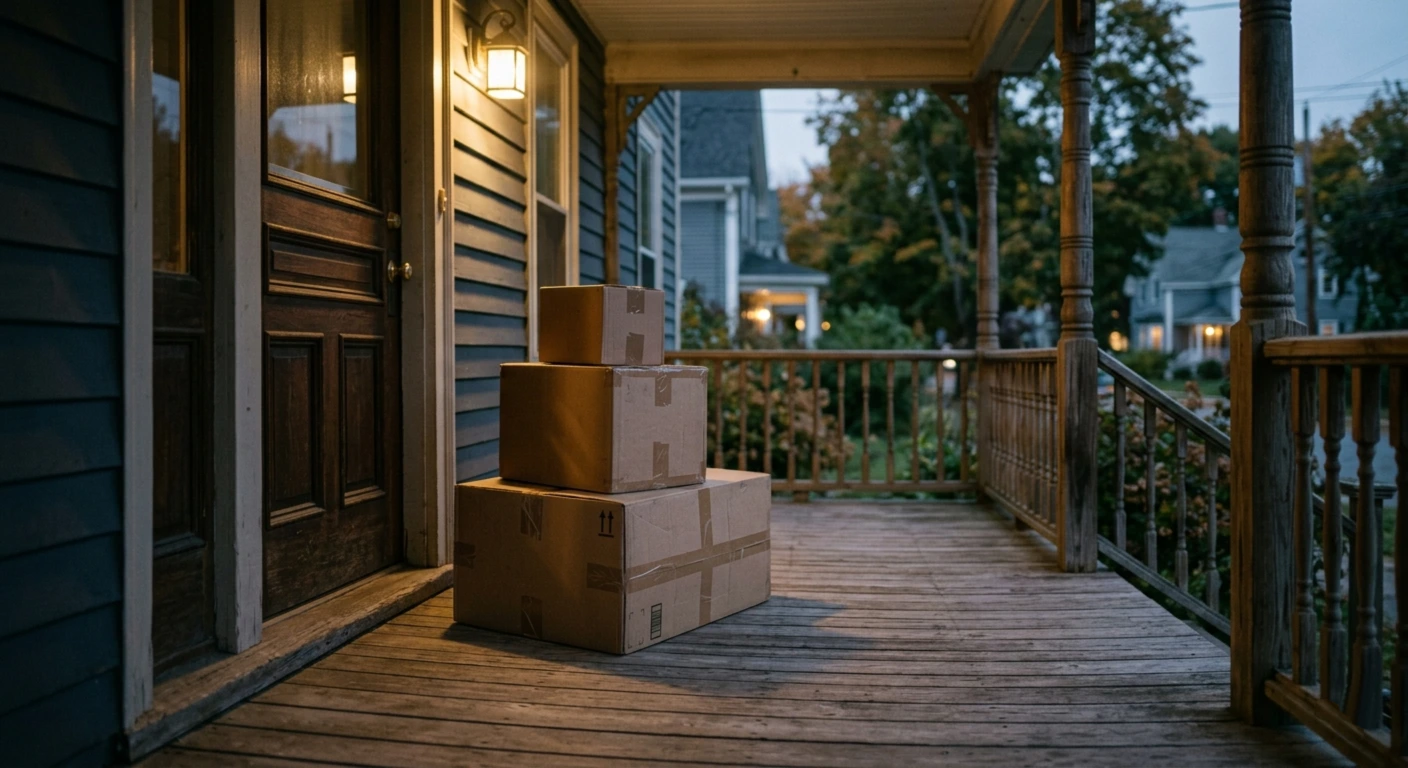
If you've shopped online in the last year, there's roughly a one-in-three chance someone has stolen a package from you. Last year alone, 104 million packages walked off American porches. December is peak season — Los Angeles saw a 48% jump above the monthly average last December, and the first ten days of the month are statistically the worst window of the year for porch piracy. The total estimated cost: $37 billion.
The frustrating part isn't the scale. It's that 30% of those theft victims had a doorbell camera at the time of the theft. Cameras don't deter — they document. The actual answer to porch piracy is layered defense: a stack of small, cheap, mostly-free habits that turn your porch from a soft target into a hard one. That's what this playbook is. Free fixes first, products second, and the recovery process at the bottom in case it already happened.
⚡ The Layered Defense — Pick Your Starting Point
Each tile jumps to a strategy tier. Most readers will do Tier 1 plus one of Tiers 2-4 — that's the full layered defense for under $100, often free.
You Can't Glitter-Bomb Them All
In 2018, ex-NASA engineer Mark Rober uploaded a video showing what happened when porch pirates stole a fake Apple HomePod box from his porch. The box contained a custom rig: an internal sprayer that dumped a pound of fine glitter, an aerosol can of fart spray, four hidden phones recording the thief's reaction in 360 degrees, and a GPS tracker. The video has over 100 million views. He's been making a new one every year since.
It's deeply satisfying. It's also not a realistic plan. Building one of those rigs takes thousands of dollars in custom electronics, a machine shop, an engineering degree, and a YouTube budget. For the rest of us, the calculation is simpler — and the legal side is harsher than most people realize.
In almost every US state, castle doctrine generally protects defensive force inside the home, not on the porch or lawn, and using lethal force to protect property (rather than your person) is unlawful nearly everywhere. Canada, the UK, and Australia are even more restrictive: force has to be proportionate to a threat against you personally, and prosecutors have gone after homeowners who got that calculation wrong. The bottom line: even if you could legally do something physical about a porch pirate, you almost certainly shouldn't. Escalating violence over a $50 Amazon package is a terrible trade in any country.
The good news: the realistic options are extremely effective and most of them are free. Here's the playbook.
Why Doorbell Cameras Alone Don't Work
Before we get to what does work, we need to address what doesn't. The single most common piece of advice for stopping porch pirates is "get a Ring." It's also the most overrated.
About 30% of package theft victims had a doorbell camera at the time of the theft. 38% of consumers no longer believe cameras are an effective deterrent. The reason is straightforward: porch pirates are usually masked, hooded, and gone in under 30 seconds. They know they're on camera. They don't care, because the chance of being identified, found, and prosecuted is statistically near zero — only 3.2% of reported package thefts result in an arrest.
Cameras are still useful — but as evidence, not deterrence. They help with insurance claims, A-to-z Guarantee disputes, and patterns when a serial thief hits the neighborhood. They will not, by themselves, stop the next package from disappearing. That's why they belong in Tier 2 of this playbook, not Tier 1.
The honest framing: A doorbell camera is a great upgrade. It is not a porch pirate solution. The locked box, the Amazon Hub Locker pickup, the signature-required setting — those are the actual deterrents. The camera is the receipt.
Free Fixes (Do These First)
If you only do one section of this article, do this one. Every strategy below is free, takes minutes to set up, and dramatically reduces the window during which your package sits unattended on a porch. Most porch piracy is opportunistic — the thieves cruise neighborhoods looking for unattended boxes. Eliminate the unattended box and you've eliminated 90% of the risk.
Use Amazon Hub Lockers Amazon
The single most effective free option. There are over 2,800 Amazon Hub Locker locations in the US — typically inside Whole Foods, Rite Aid, 7-Eleven, and apartment lobbies. Select one as your delivery address at checkout, get a six-digit code when it arrives, walk in, and pick it up. Your package is never on a porch. Find one near you at amazon.com/hub/locker. The catch: 3-day pickup window, $5,000 max value, 19″×12″×14″ size limit, and Amazon-shipped orders only.
UPS Access Point & FedEx Hold at Location Free
For everything that isn't Amazon. UPS Access Point lets you reroute deliveries to a CVS, Michaels, or Advance Auto Parts. FedEx offers Hold at Location through their app — the package waits at a FedEx Office or Walgreens until you pick it up. Both are free, both bypass the porch entirely.
Require a Signature on Delivery Free
Most major retailers offer "signature required" at checkout, often free for orders over a certain dollar value. If no one's home, the carrier reattempts or holds the package — it's never left unattended. Note that USPS Signature Confirmation costs about $4 extra; UPS and FedEx signature options are sometimes free, sometimes nominal. For anything over $200, it's worth the cost.
Ship to Your Workplace Free
If your office accepts packages and you're not working remotely, this is bulletproof. Use your work address as the shipping address. The package goes to a manned reception desk during business hours and you take it home that night. Particularly good for high-value items.
Use Amazon Day Delivery Amazon
A Prime feature that bundles all your eligible deliveries onto one day per week. Pick a day you know you'll be home (Saturday for most people). Need something faster? Pick standard shipping at checkout. The benefit: instead of wondering when packages will arrive throughout the week, they all show up at once and you're there to grab them.
Custom Delivery Instructions Free
Both Amazon and most carriers let you save permanent delivery instructions. The classics: "Leave behind planter," "Side gate, place by hose reel," "Back porch, not front." Anything that gets the package out of street view buys you time. Pair with a clear note in the instructions field — drivers are stressed and they read short, specific notes faster than long ones.
Real-Time Tracking & Alerts Free
Set push notifications for every delivery. The Amazon app, the Shop app (free, multi-carrier), and USPS Informed Delivery (free, scans your mail and packages for the day) all give you real-time updates. The goal isn't to watch deliveries — it's to be inside grabbing the box within five minutes of arrival, especially during high-risk windows like late afternoon weekdays.
The Trusted Neighbor Free
Old-school but extremely effective. If you have a retired neighbor who's home all day, ask if you can have packages held by them. Offer to do the same when they travel. This is the original porch piracy defense and it still works better than most $300 lockboxes.
Vacation Hold When You're Away Free
USPS, UPS, and FedEx all offer free package holds at their local depots while you travel. Set them up before you leave. Otherwise you're advertising "no one home for a week" to anyone who notices the boxes piling up — which is also a burglary signal, not just a porch piracy one. (See our home security guide for more on what burglars actually look for when scoping a house.)
Visibility — Cameras, Doorbells & Lights
We just spent a section telling you cameras don't stop porch pirates by themselves. They are still worth installing — they're just worth installing for the right reasons. A camera setup catches identifications, supports refund claims, captures the pattern when a serial thief hits the block, and works as part of a layered defense alongside lights and signage.
For full reviews and our top picks, we have dedicated guides:
- Best Video Doorbells of 2026 — full roundup of Ring, Nest, Wyze, Eufy, and the rest
- Ring vs Google Nest Doorbell — head-to-head on the two market leaders
- Ring vs Wyze Doorbell — premium vs budget
- Best Outdoor Security Cameras — wider-coverage cameras for the driveway and side yard
- Best Motion Sensor Lights — light is one of the cheapest and most effective deterrents
The setup that actually deters — not just records — combines three things: a doorbell camera with two-way audio (so you can address the thief in real time from your phone, which is the part that actually causes them to leave), a motion-activated floodlight over the porch (sudden bright light is genuinely startling at night), and visible signage noting cameras are recording. Any one of these alone is weak. All three together is strong.
Lockboxes — The Real Physical Deterrent
A lockbox bolted or anchored to your porch is the closest thing to a guaranteed solution short of being home yourself. Driver opens the lid, drops the package in, lid latches or locks. Pirates can't grab what they can't reach. The honest catch: delivery drivers don't always use the box. A 2022 Consumer Reports test found that even with clear instructions, drivers frequently set packages next to the box rather than inside it — they're stressed, they're behind schedule, and they don't always read the note.
To make a lockbox actually work, three rules: pick one with an obvious open lid (not a hidden retrieval door), bolt or weight it down so it can't be carried away, and put a clear sign on it that says "PUT PACKAGES INSIDE — THANK YOU." Even a printed-and-laminated note dramatically increases driver compliance.

Step2 Express Package Delivery Box BEST BUDGET
All-weather resin, holds multiple medium-sized boxes, looks clean on any porch. No built-in lock — most owners add a small padlock or smart latch. The most popular budget pick by a mile, and honestly the right answer for most readers. Simple, durable, doesn't need batteries or wifi.
Check on Amazon →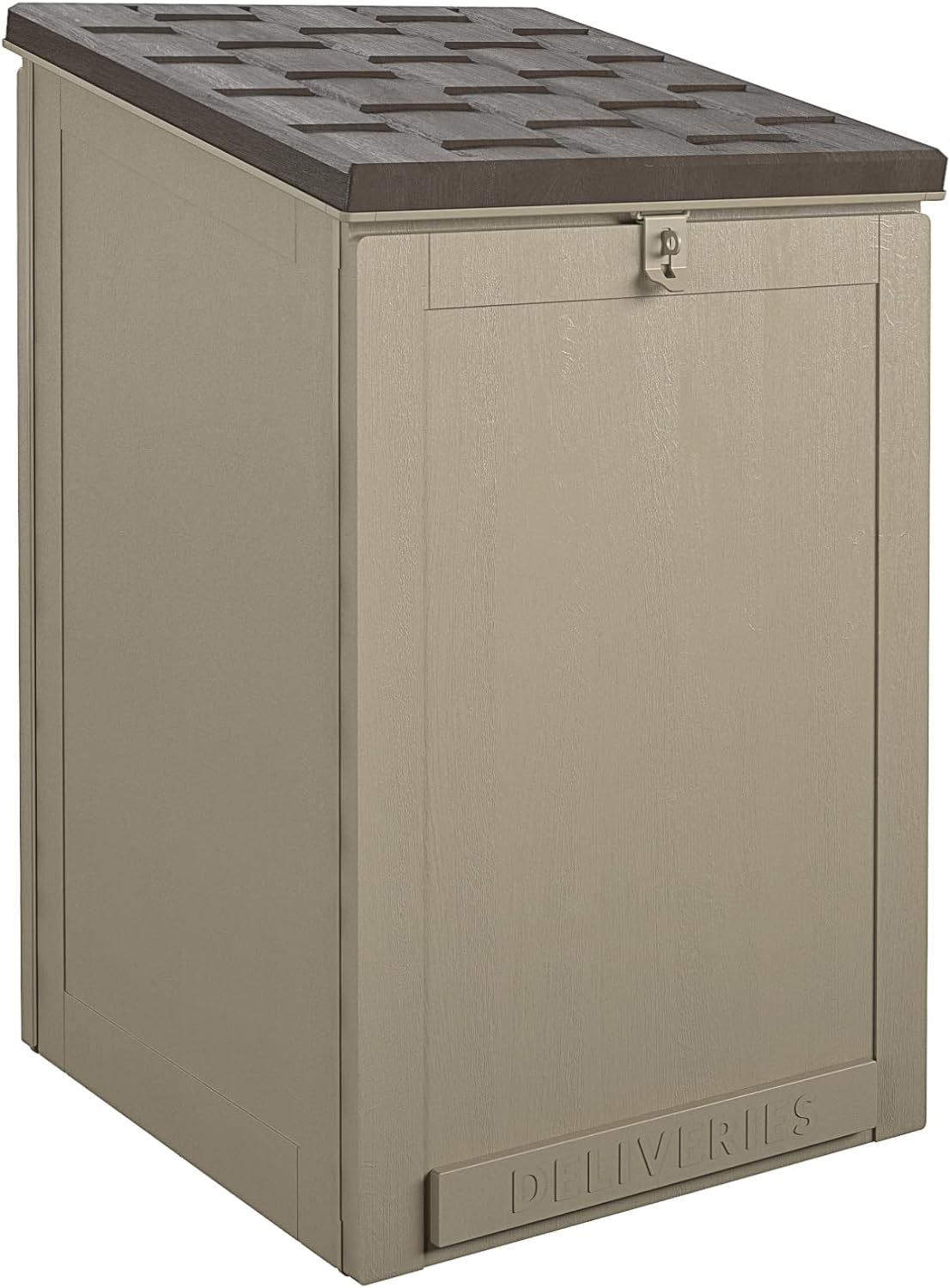
Cosco OutdoorLiving BoxGuard
Slight step up from the Step2 with an integrated locking latch — you can attach a combination padlock and share the code in your delivery instructions. Same all-weather construction. The trade-off: drivers ignoring lockable boxes is a real thing, so the lock is more useful for keeping the package secure after drop-off than ensuring it gets dropped off properly.
Check on Amazon →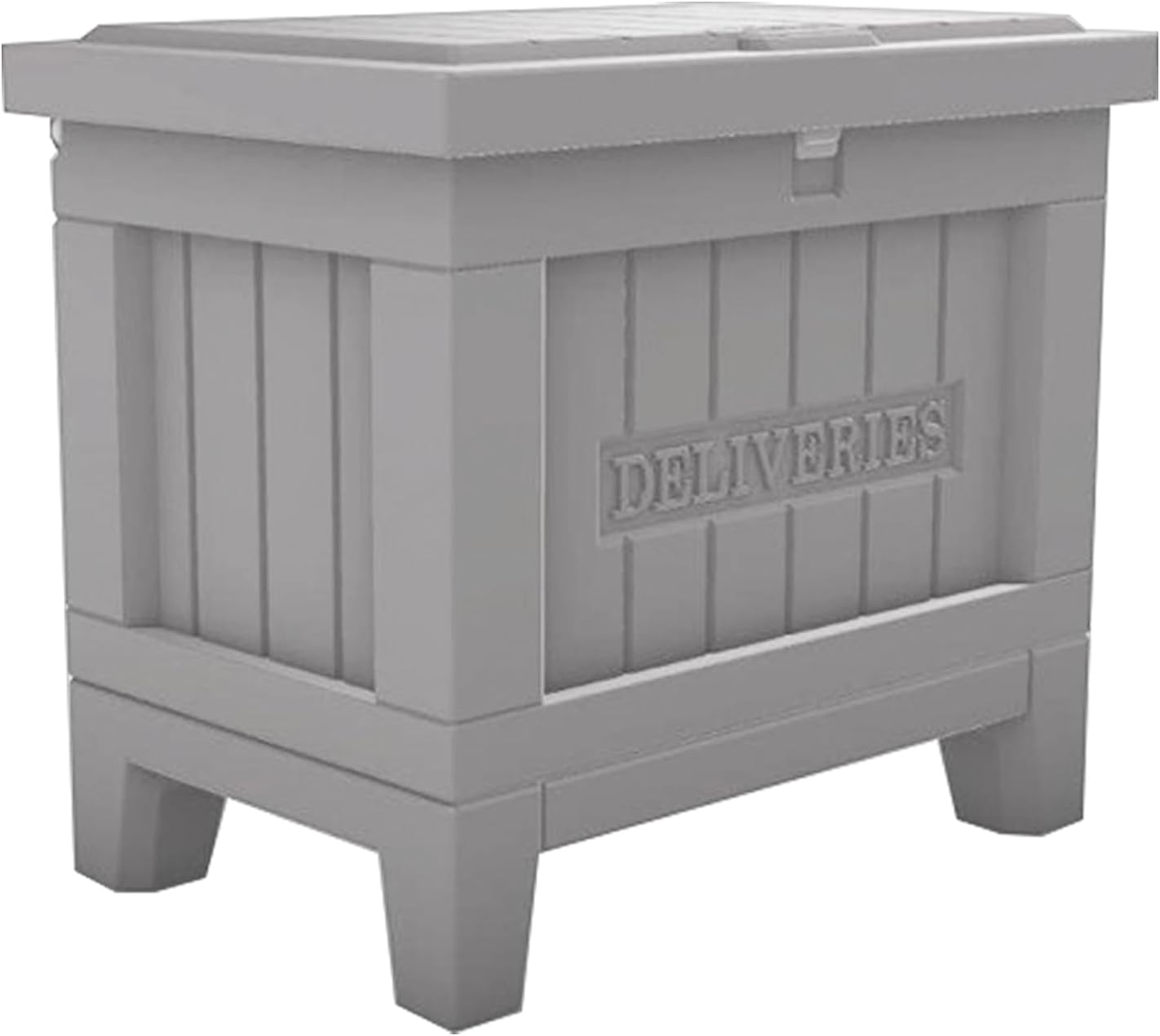
Yale Smart Delivery Box SMART HOME
Steel construction with built-in smart lock. "Delivery Mode" leaves the box unlocked each morning until the first delivery, then auto-locks. Get a phone notification, unlock from anywhere. App can grant temporary codes to family or specific drivers. The honest downside: setup is genuinely fiddly per Consumer Reports' testing, and the WiFi bridge can drop. If you're already in the smart home ecosystem, it fits well; if not, the Step2 is an easier life.
Check on Amazon →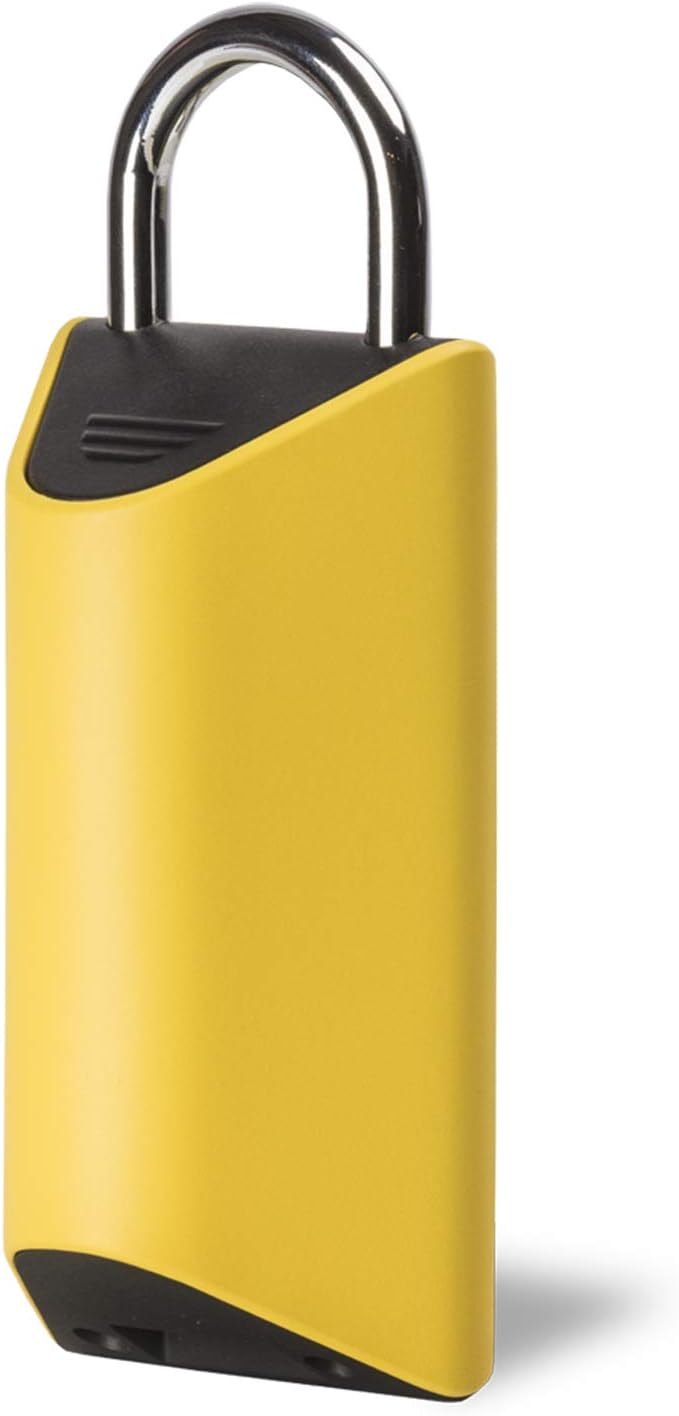
BoxLock Smart Padlock
A different angle: turn any container you already own into a smart parcel box. Hardened alloy steel padlock with a built-in barcode scanner — when a driver scans a tracking barcode that matches a real expected delivery, the lock opens automatically. App lets you assign codes for friends and family, monitor lock activity, and check battery status. Best for: people who already have a deck box, garage cabinet, or porch storage they can repurpose.
Check on Amazon →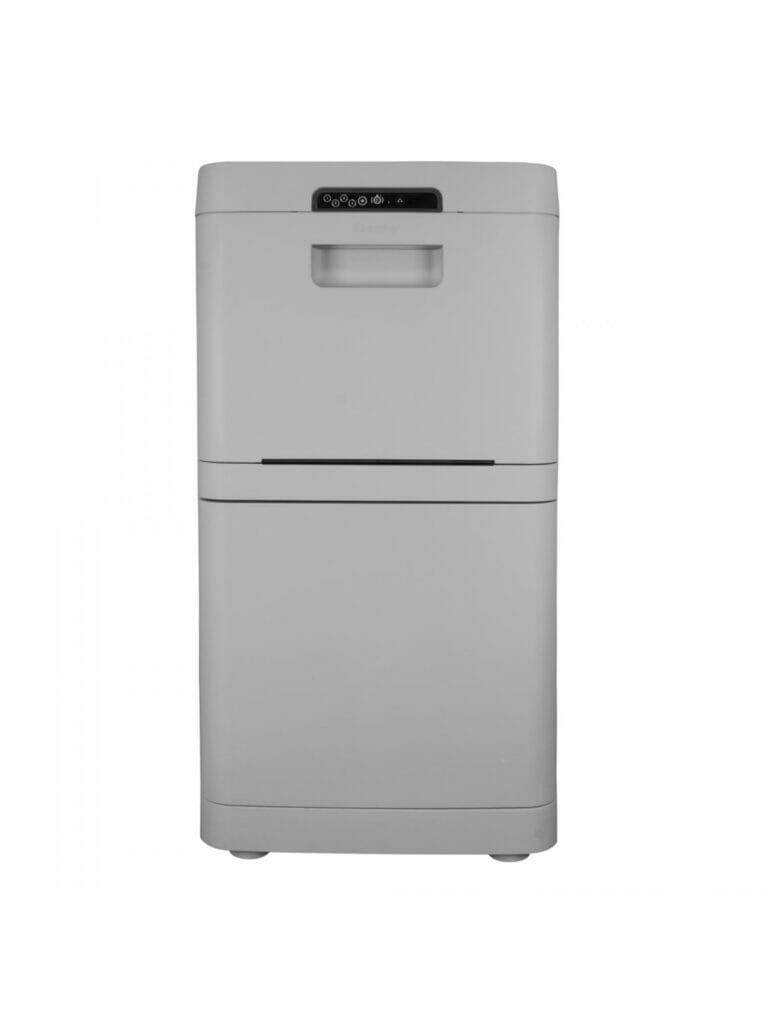
Danby Parcel Guard HIGH-END
App-controlled smart box with a tamper alarm, motion-activated camera, and remote unlock. Driver drops a package through the top chute; you get a notification and a photo. Bolts to the porch with the included hardware. The downside is the price, and like all smart boxes, the WiFi/app side can be a hassle. Best for high-volume households or anyone in a true high-theft area.
Check on Amazon →Real-world reality check: Even the best lockbox depends on the driver actually using it. To maximize compliance: place the box near the door (not off to the side), keep the lid open during the day so it's visible as a delivery destination, attach a clear printed sign, and add explicit delivery instructions on every order ("PLEASE PLACE IN BLACK BOX ON FRONT PORCH"). Treat the lockbox as 80% of the solution — Tier 1 free fixes are still your most reliable safety net.
In-Home Delivery (Amazon Key & Smart Locks)
The most secure option for Amazon deliveries specifically: have the driver unlock your front door, garage, or car and place the package inside. Amazon Key supports all three. The driver doesn't get a key — they get one-time access through the Amazon delivery app, the door unlocks for the duration of the drop, the entire process is recorded by your camera, and you get a notification. Some people find it deeply weird. Others won't use anything else.
You'll need a compatible smart lock. The strongest options match locks we've already reviewed in detail:
- Schlage Encode Plus — built-in WiFi, Apple Home Key support, the most reliable smart lock we've tested
- Yale Assure Lock 2 — modular WiFi/Z-Wave/Bluetooth, works well with Amazon Key
- August Smart Lock — retrofit option that fits over your existing deadbolt
- Best Smart Locks of 2026 for the full roundup
For the garage option, you need a myQ-compatible garage door opener (most major brands made after 1993). For Amazon Key for Garage specifically, you can also buy the myQ Smart Garage Hub as a retrofit. The car version requires a compatible vehicle from a participating manufacturer (Volvo, GM, Ford, Buick, and a few others).
Worth saying out loud: in-home delivery requires you to trust Amazon's vetting of contract delivery drivers. The system is solid — vetted drivers, recorded footage, time-limited access, no key handoff — but the trust threshold is real. If the idea makes you uncomfortable, that's a perfectly valid reason to stick with Tier 3. Lockboxes give you 90% of the security with 0% of the "stranger in my house" tradeoff.
The Holiday Playbook
About 57% of all annual package theft happens between Black Friday and New Year's. The first ten days of December are statistically the worst window of the year. If you only ramp up your defense for one stretch, this is it.
- Switch to Hub Lockers for everything possible from late November through mid-January. Yes, it's a small inconvenience. Yes, it's worth it.
- Require signature on anything over $100. Your kid's iPad does not need to be left on a porch in December.
- Watch for "lithium battery" stickers — organized theft rings have started specifically targeting these because they signal electronics. If your order ships with one visible, request rerouting.
- Use Amazon Day to consolidate deliveries onto a Saturday so you're home when the truck arrives.
- If you're traveling for the holidays, set vacation holds with USPS, UPS, and FedEx before you leave. Multiple boxes piling up is also a burglary signal — see how burglars choose targets.
- Be aware of Prime Day in July too — one analysis found a 40% jump in package theft in the week after Prime Day as thieves trail delivery vans through neighborhoods.
What to Do If Your Package Was Stolen
Roughly 1 in 5 "stolen" packages turn up misplaced — behind a planter, in a side yard, with a neighbor. Start by ruling that out, then work the recovery process. Most refunds and replacements happen quickly, but you have to follow the right order. Here's the playbook.
Confirm the package is actually missing
Check the carrier's delivery photo (Amazon and most carriers include one), walk the property — back porch, side gate, behind planters, the bushes — and ask housemates and neighbors. Carriers also occasionally mark packages "delivered" up to 24 hours early. Wait at least until end of day before assuming theft.
Wait 48 hours, then contact the seller or Amazon
For Amazon orders sold and shipped by Amazon, contact Amazon directly. For third-party sellers, contact the seller first through the order page — they have 48 hours to respond before you can escalate.
File an A-to-z Guarantee claim (Amazon)
Go to Your Orders → Problem with Order → Package never arrived. You have up to 90 days from estimated delivery to file. Most claims resolve in 3–5 business days as a refund or replacement, often without requiring a police report.
File a carrier claim if it's not Amazon
USPS, UPS, and FedEx each have online claim processes for missing packages. Important detail: USPS theft is a federal felony in every state, while UPS and FedEx fall under state law. If your package was sent USPS, consider also reporting to USPIS (US Postal Inspection Service) at uspis.gov.
Check credit card purchase protection
Many credit cards — especially premium and travel cards — include purchase protection that covers stolen items for 60–120 days after purchase. Call your card issuer or check your benefits guide. Cards like Chase Sapphire Reserve, Amex Platinum, and Citi Premier all offer this coverage. Often easier than fighting with the seller.
Consider homeowners or renters insurance (last resort)
Only worth filing if the stolen item value clearly exceeds your deductible — and even then, a claim can raise your premium. Reserve this for high-value items only ($500+ after deductible). Document everything: order confirmation, delivery photo, police report, correspondence.
File a police report
Required for some insurance and credit card claims. Realistically, only about 3% of reports lead to an arrest, but the report itself is leverage. If you have camera footage, share it. If your area has a pattern of thefts, the report contributes to that pattern. Filing online is usually fine — most jurisdictions don't dispatch officers for property crimes under $1,000.
Avoid the police-report / claim-number deadlock. Some Amazon reps tell you to file a police report first; some police departments tell you to get a claim number from Amazon first. If this happens, file the police report online (most jurisdictions accept online reports), screenshot the confirmation page with the case number, and use that as your "filed report" when going back to Amazon. Don't get stuck in the loop.
Layer Your Defense. Free Fixes Carry the Weight.
If you take one thing from this article: Tier 1 is the entire game. Amazon Hub Lockers, signature required, custom delivery instructions, and bundled delivery days will eliminate the vast majority of your package theft risk for $0 and 15 minutes of setup. Most readers shouldn't buy any product at all.
If you do want a physical layer, the Step2 Express ($60) with a clear "PUT INSIDE BOX" sign is the right answer for 80% of porches. It's cheap, it's durable, and the friction of a box — even an unlocked one — is enough to make most opportunistic thieves move on. If you want smart features and you're already in a smart home ecosystem, the Yale Smart Delivery Box is the upgrade pick.
If you live in a high-theft city or you're shipping high-value electronics regularly, layer everything: Hub Locker for Amazon, signature-required for everything else, a lockbox for the few packages that still come to your porch, and a doorbell camera for evidence. That stack costs maybe $300 once, plus ongoing $0, and it's about as close to porch-pirate-proof as a residential setup gets.
And if a package already disappeared — start with the delivery photo, file your A-to-z claim, and don't let anyone bounce you between Amazon and the police forever. This stuff is recoverable. For the broader context of how this fits into your full home security, see our Home Security Guide.
Related Reading
The doorbell and camera setup mentioned in Tier 2 has dedicated reviews — start with the Best Video Doorbells of 2026 roundup or our Ring vs Google Nest Doorbell head-to-head. For the smart lock side of the in-home delivery section, our best smart locks guide and individual reviews of the Schlage Encode Plus and Yale Assure Lock 2 cover what to put on your door. And for the bigger picture of physical security, see our Home Security Guide and the deep cut on how burglars actually choose which homes to target — package theft and burglary share more signals than most people realize.
Stopping Porch Pirates: FAQ
How common is package theft?
Roughly 31% of Americans have been victims, with about 104 million packages stolen in the most recent reporting year. The total estimated value of stolen packages reaches $37 billion annually. Around 250,000 packages are stolen per day on average, with the heaviest concentration between Black Friday and New Year's. Repeat victimization is common — over a quarter of victims have had three or more packages stolen.
Will Amazon refund a stolen package?
Usually yes, through Amazon's A-to-z Guarantee. For items sold and shipped by Amazon, customer service typically issues a refund or replacement within 3–5 business days, often without requiring a police report. For third-party sellers, you contact the seller first and escalate to Amazon if the seller is unresponsive after 48 hours. Claims must be filed within 90 days of estimated delivery.
Do doorbell cameras actually deter porch pirates?
Not by themselves. Roughly 30% of theft victims had a doorbell camera at the time of the theft, and 38% of consumers no longer believe cameras are an effective deterrent. Cameras are great for documentation and identification, but a camera alone is not deterrence — porch pirates are usually masked, hooded, and away in under 30 seconds. Cameras work best as part of a layered defense, paired with lights, two-way audio, visible signage, and a physical lockbox.
What is the most effective free way to stop package theft?
Amazon Hub Lockers and similar carrier pickup points (UPS Access Point, FedEx Hold) are the single most effective free option — your package never sits unattended. There are over 2,800 Amazon Hub Locker locations in the US, mostly inside Whole Foods, Rite Aid, and convenience stores. For non-Amazon packages, requiring a signature on delivery is the next best free option. Both are completely free and dramatically reduce theft risk.
Are package lockboxes worth it?
If you regularly receive deliveries and live somewhere with theft risk, yes — a quality lockbox bolted or anchored to your porch is one of the most effective single purchases you can make. The catch: delivery drivers don't always use them. A 2022 Consumer Reports test found that even with clear instructions, drivers often dropped packages next to the box rather than inside it. Choose a lockbox with an obvious open lid (not a separate retrieval door), use Amazon's delivery instructions to spell out the use case, and consider laminating a "PUT INSIDE BOX" sign on the lid.
Can I legally shoot a porch pirate?
In almost all jurisdictions, no. US castle doctrine generally protects defensive force inside the home, not outside it, and using lethal force to defend property (rather than your person) is unlawful in nearly every state. Canada, the UK, and Australia are even more restrictive — force must be proportionate to a threat against you personally, not your stuff. Beyond the legality, escalating violence over a $50 package is a terrible trade in any country. The realistic options are all preventative.
Is package theft a felony?
It depends on the carrier. Stealing US Postal Service mail is a federal felony in every state. Theft of UPS, FedEx, Amazon, and other private carrier packages is governed by state law and usually classified as a misdemeanor unless the value exceeds a state-specific threshold. Several states (Alabama, Kansas, Maryland, New York, South Carolina) have proposed elevating package theft from misdemeanor to felony regardless of value.
When is package theft most common?
About 57% of all annual package thefts occur in November and December. Los Angeles, for example, recorded a 48% jump above the monthly average in December 2024. Theft also spikes after Amazon Prime Day in July (one analysis found a 40% jump in the week after Prime Day). The first ten days of December are statistically the worst window of the year for porch piracy.