Mostly researched — see the tags
Some of these we've had in hand and some we haven't, so read the tags rather than the tone. Where a claim comes from manufacturer specification, it says so. Where it comes from our own bench, it says so. Where an earlier version of this page asserted something the evidence doesn't support — and there were several — the correction is visible and logged at the end.
Let's be clear upfront: Home Depot sells plenty of good locks. Schlage B60N deadbolts, a decent range of ABUS padlocks, and hardware that will genuinely secure a door. This article is not about those. It's about the endcap.
How to read this guide
Several entries below were rewritten because the original criticism attacked the wrong component. A lock can absolutely deserve a place on this list and still be unfairly described.
TestedPhysically in hand, by us. Rare, and marked where it applies.
DocumentedPublished specification or standard.
ManufacturerThe maker's own claim. A claim, not a fact.
CommunityLocksmith and locksport consensus.
CorrectedSomething we previously published that doesn't hold.
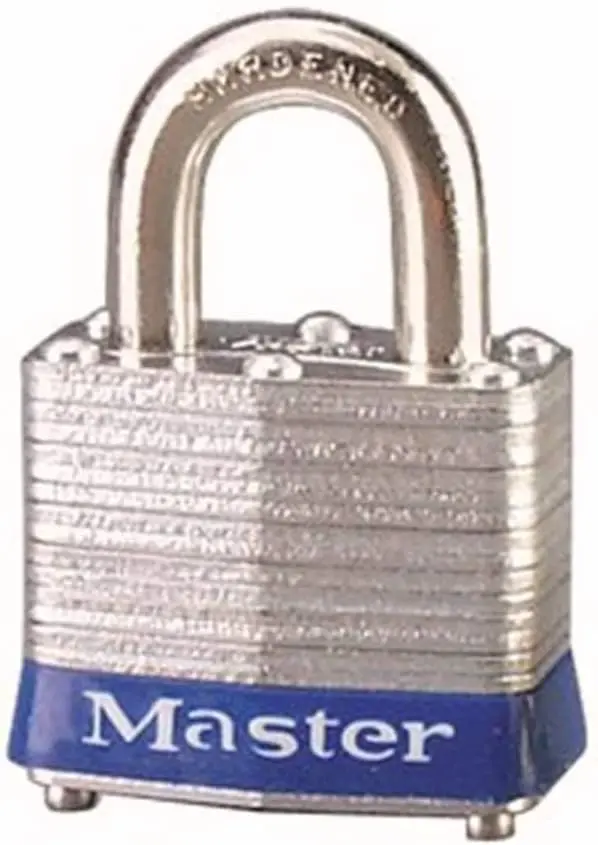
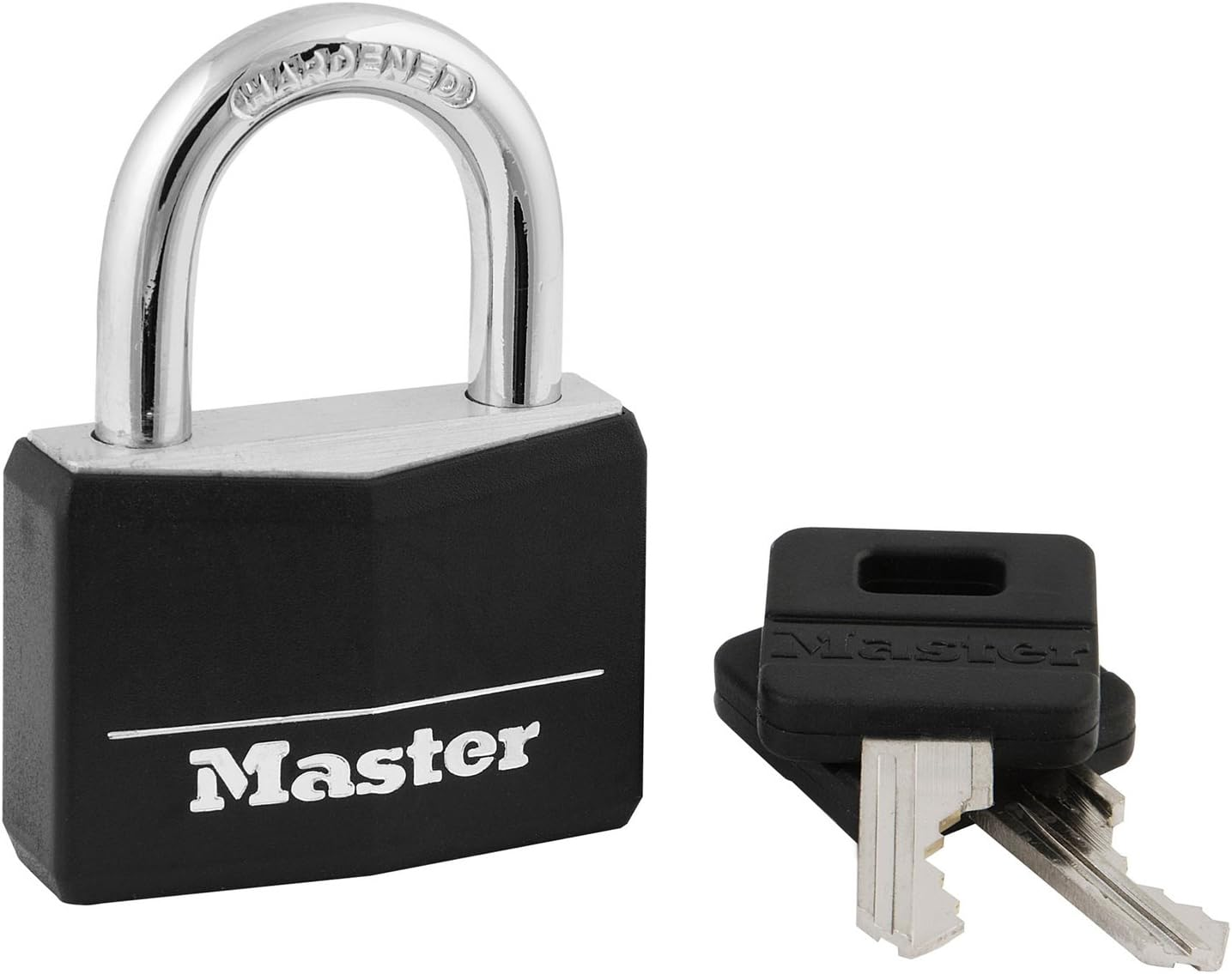
Master Lock No. 3 — the cylinder, not the body
Roughly $7–10 · laminated steel padlock
The most recognised padlock on earth, and it belongs on this list — but our earlier version put it here for two reasons that turn out to be wrong, and one that's right.
Start with what's actually true. The No. 3 has a non-rekeyable four-pin W1 cylinder. Documented Four pins, no security pins, loose tolerances. On our own bench it opened to a rake in under a second — insert tension wrench, run the rake through twice, done. Tested That is the disqualifying flaw and it is entirely sufficient.
"The shackle can be shimmed with a piece cut from an aluminium can."
Not any more. Shimming works by sliding a thin shim down the shackle to depress a spring-loaded locking pawl, and it used to work here — older No. 3 production shimmed open, and it stayed that way for far longer than it should have before Master dealt with it. Community They did deal with it. Every current variant of the No. 3 specifies dual ball-bearing locking, which presents no pawl for a shim to act against. Documented Our entry was written against a lock that no longer ships, and left standing after it stopped being true.
VerdictWas true of the old one. Isn’t true of the new one. Took them long enough.
The second correction is more awkward, and it needed correcting twice.
We originally wrote that bolt cutters go through the shackle "like it's not there." Our first pass at fixing that pointed out the No. 3's shackle is 9/32" (7 mm) against the ABUS 55/40's 1/4" (6 mm) — more steel in the part that gets cut, on the lock we were calling cuttable. Documented True, and not the whole story.
Why diameter alone doesn’t answer it
Cut resistance is diameter multiplied by metallurgy, and the second term is the bigger one. A thicker mild-steel shackle is not automatically harder to cut than a thinner hardened or boron-alloy one. Hardness, tensile strength, and whether the piece is hard through or only case-hardened at the surface all change the answer. Community
And here is the catch: “hardened steel” is not a specification. It carries no published hardness value and no defined process, and both of these locks use the phrase. ABUS describes the 55 series shackle as hardened and triple plated. Manufacturer Master describes the standard No. 3 shackle as hardened steel — while reserving “hardened boron alloy shackle for superior cut resistance” for the 3UP variant of the same lock. Manufacturer Master’s own wording tells you the standard shackle isn’t the better alloy.
Our own experience matches that. Cutting an ABUS 55/40 shackle was genuinely hard work. Tested Master Lock No. 3 shackles going quickly under cutters is something we have seen repeatedly, though not measured ourselves. Community
So the honest position is narrower than either version we have published: the No. 3 has the thicker shackle and, on the available evidence, the softer one. We can't give you a hardness figure for either, because neither manufacturer publishes one — which is itself the useful thing to know when you're holding two blister packs that both say "hardened steel." Our head-to-head between the two works through the rest.
Master sells the No. 3 into construction sites, tool cribs and commercial gates, and for pry and cut resistance it is a reasonable industrial padlock. Manufacturer Then they put a four-pin non-rekeyable cylinder in it. The body is fine. The lock is not.
The honest one-line version
Buy the No. 3 if what you need is something weatherproof that resists being levered off a gate and signals "this is locked." Do not buy it if anyone attacking it might own a $12 rake, because the cylinder is the softest part of the whole assembly.
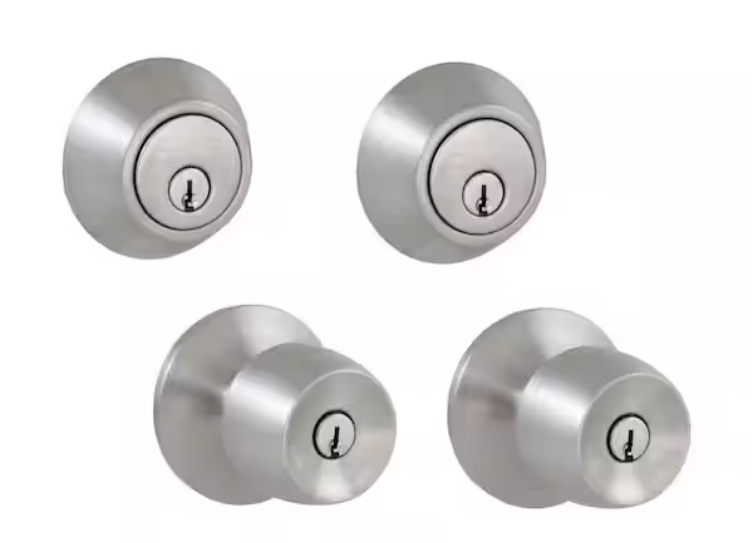
Defiant Brandywine Entry Knob (Keyed)
Roughly $25–30 · ANSI Grade 3 keyed entry knobset
The real problem here isn't the knob. It's that people buy it as their only door hardware.
A keyed entry knob is a convenience product. The spring latch exists so the door closes behind you, not so it resists anything. It is not a deadbolt, has never been a deadbolt, and the packaging does not go out of its way to explain the difference to a first-time renter.
Grade 3 means something specific and measurable: during certification the lock survived two blows from a 75 foot-pound impact ram. Grade 2 must take five. Grade 1 must take ten and still function. Documented Our grades explainer walks through the full test programme.
"A credit card and 10 seconds is all it takes."
Only if the deadlatch is defeated or missing. Loiding — slipping a card past an angled spring latch — is a real technique, but almost every modern entry knob including this one has a small deadlatch plunger beside the main latch. When the door is closed properly, the plunger rests against the strike plate and blocks the latch from being pushed back. The attack works when the strike is misaligned, the gap is generous, or the plunger drops into the strike hole alongside the latch — which is a common installation fault rather than a property of the lock. Community We stated it as a flat fact and it isn't one. Corrected
VerdictReal attack, conditional on a bad install.
So the criticism stands, just relocated: this is a Grade 3 convenience latch being sold in a way that lets people believe it's securing a front door. Fit a deadbolt. Then check that your knob's deadlatch actually lands on the strike plate rather than in the hole.
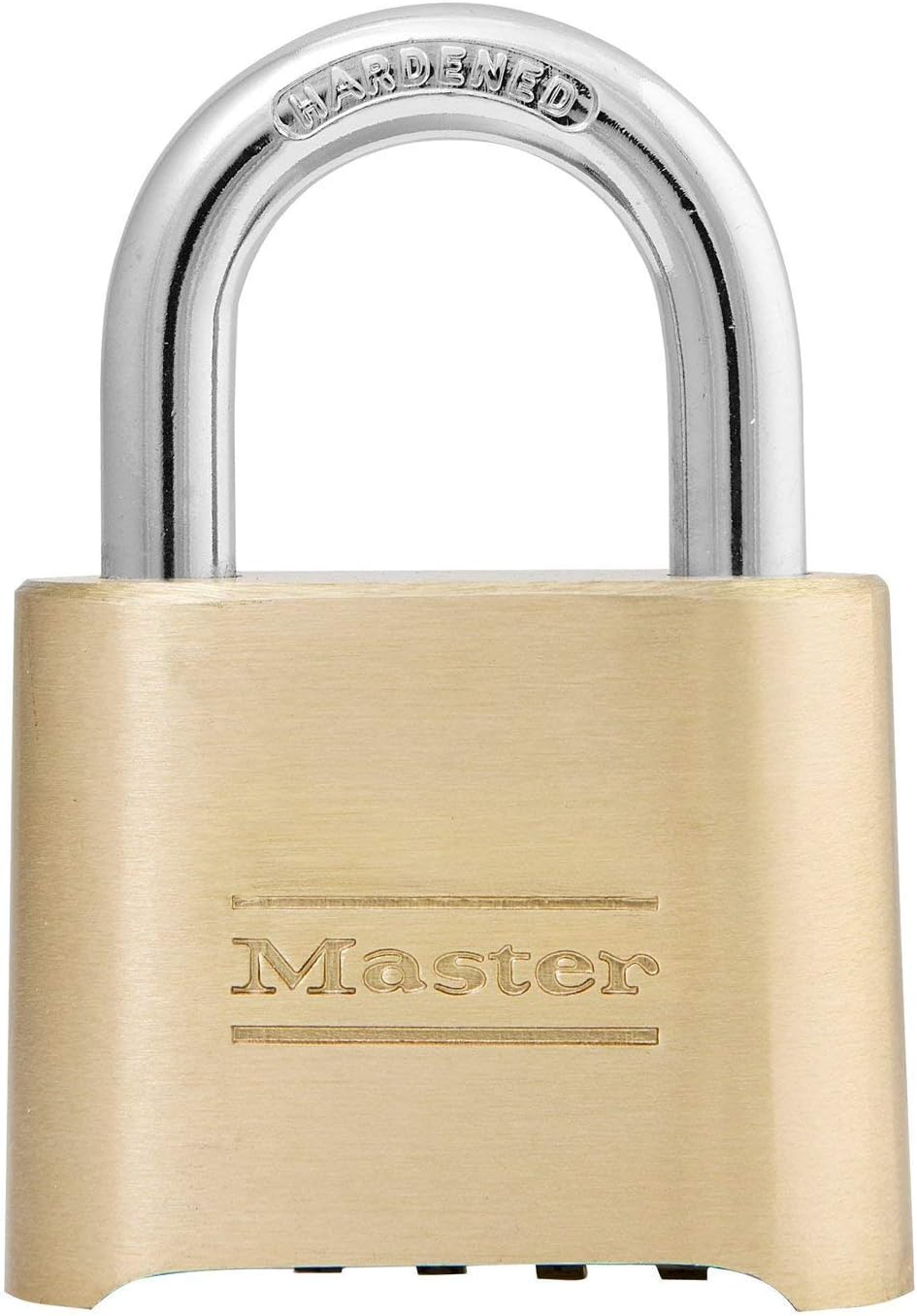
Master Lock 175D Set-Your-Own Combination Padlock
Roughly $9–12 · four-dial resettable combination padlock
Resettable combination padlocks in this class share a structural weakness: the wheels and the internal locking bar are manufactured to tolerances loose enough that applying light tension to the shackle and turning each wheel slowly produces a detectable difference at the correct digit. Work the dials one at a time and the combination falls out without any tool at all. Community
That is a genuine and well-known vulnerability. What we can't support is the precision we previously wrapped around it — "under two minutes" and "instructional videos with millions of views" were figures we could not source, and they're gone. Corrected The honest statement is that this is decodable by feel by someone who knows the technique, and that the technique is widely published.
The shackle is also thin enough to be within reach of modest bolt cutters, so even a perfect combination wouldn't save it. The resettable feature is genuinely convenient. Convenience is what you're buying.
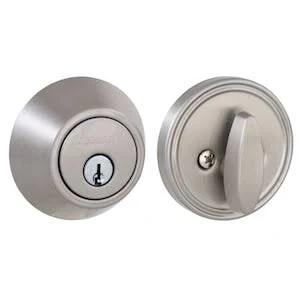
Defiant Single Cylinder Deadbolt (Entry Level)
Roughly $15–20 · ANSI Grade 3 single cylinder deadbolt
At least it's a deadbolt, which is more than the knob above manages. And here we owe it a correction that cuts in its favour.
"Basic pin tumblers and no security pins. Pickable by beginners."
Wrong, and our own
full Defiant review says so. Working locksmiths who have stripped these report
five pin stacks with three security spools on the KW1 keyway.
Community Three spools in a $20 lock is more cylinder than the price demands, and it will genuinely frustrate a beginner — a spool produces a false set, so the plug rotates a few degrees and stops, and the novice reads that as progress. This page had the cylinder exactly backwards.
CorrectedVerdictThe best part of the lock, described as the worst.
The actual failure point is the one the original page identified correctly, so it survives intact: the strike plate and the screws in the box. A one-inch bolt anchored by short screws into pine trim fails when the trim splits, and the trim splits early. The bolt never gets tested.
The fix is eight dollars and twenty minutes: a reinforced strike plate and three-inch screws that cross the shim gap into the king stud. Fitted to this deadbolt, that buys more real resistance than replacing it with something four times the price and leaving the factory screws in. Full job here.
Master Lock 141D (Brass Padlock)
Roughly $5–8 · solid brass padlock
Our original entry for this lock was built entirely on one claim, and the claim was wrong.
"Brass shackle = soft metal = cuttable with basic hand tools."
The body is brass.
The shackle is hardened steel. Our own
140D review — same family, same construction — records solid brass body, hardened steel shackle and dual locking levers, and its whole argument is that Master Lock builds a perfectly decent piece of hardware and then puts a four-pin cylinder in it.
Documented "Cut it with a hacksaw because the shackle is brass" was simply not true.
CorrectedVerdictRight conclusion, invented reason.
It still belongs here, for the same reason as the No. 3 and for the same reason we scored the 140D at 3.5 out of 10: a four-pin cylinder with no security pins, in a body that deserved better. The 55/40 is the same physical size, takes the same shackle, and costs about three dollars more for five pins and spools. Three dollars is the entire difference between the two locks.
For deadbolts
The Schlage B60N, at roughly $33–$52 against the Defiant's $15–$25. Documented An earlier version of this page put the gap at "$30–50 more," which overstated it by a wide margin — the real difference is closer to ten to thirty dollars. Corrected
What that buys: ANSI/BHMA A156.36 Commercial Grade 1 and A156.40 Residential Grade AAA — ten certified impact blows against the Defiant's two — a hardened free-spinning anti-saw insert in the bolt, and a strike reinforcer with 76 mm screws in the box rather than sold separately. Documented
A note on terminology we previously got loose: Grade 1 is the commercial scale, not "the highest residential rating." The residential standard is A156.40 and its top mark is AAA. The B60N holds both, which is why it's the recommendation. Corrected
"Home Depot also carries the Kwikset 980, which is solid Grade 1 as well."
We recommended it here while scoring it
4.8 out of 10 two clicks away, which is not a position. Grade 1 is accurate — Kwikset certifies the 980 across Security, Durability and Finish. But Grade 1 measures bolt strength, impact and cycle endurance, not resistance to bypass, and the SmartKey cylinder inside has a documented attack in which a four-inch screwdriver turned with a wrench opened it in about fifteen seconds.
Documented It is also, separately, structurally immune to bumping and unrakeable — a genuinely mixed product, covered properly in our
SmartKey 980 review. It should not have been listed here as an untroubled alternative.
CorrectedVerdictTwo pages, two opinions. This one loses.
For padlocks
The ABUS 55/40 is the direct swap for the Master Lock 140D or 141D — same size, same shackle, about three dollars more, five pins with spool security pins instead of four plain ones. We score it 8 out of 10.
For anything outdoors or exposed to a cutting attack, the shrouded and disc-body options do considerably more work: the ABUS Diskus 20/70 for a shackle that barely presents itself to a cutter, and the ABUS 83/55 Rock where you want serious body mass. Both are covered in full, and both appear in our storage unit roundup.
An earlier version pointed readers at a "Master Lock Magnum M1" and an "M40XD" as alternatives. We could not verify those model designations and have replaced them with locks we've actually reviewed. Corrected
Home Depot isn't the problem. It stocks what people buy, and people buy cheap locks. The problem is that cheap locks get the same shelf space — sometimes better shelf space — as the ones that work, and nothing on the packaging tells you where the money went.
Which is the pattern this rewrite made obvious. Go back through the list: the Master No. 3 has a good body and a four-pin cylinder. The 141D has a brass body, a hardened steel shackle and a four-pin cylinder. The Defiant deadbolt has three spool pins and a strike plate that anchors to trim. In almost every case the manufacturer spent real money somewhere and saved it somewhere else — and the place they saved it is the place you can't see through the blister pack.
That's also why writing this list carelessly is easy. It is tempting to say a cheap lock is bad in every dimension, and it usually isn't. Half our original entries attacked the component that was actually fine. The locks still belong on the list; they just belong here for the right reasons, and being precise about which reason is the entire value of doing this at all.
So: next time you're in aisle 10, skip the endcap. Spend the extra twenty dollars. And whatever you buy, put the long screws in.
The Point
Nearly all of these fail at the cylinder, not the metal. Buy pins, not packaging — and spend eight dollars on the strike plate regardless of which lock you end up with.